The intersection of artificial intelligence and blockchain is no longer a future concept—it is actively reshaping how digital systems are built, scaled, and used. Yet despite the rapid growth of AI-driven applications, much of today’s Web3 infrastructure remains poorly equipped to support them. Most blockchains were designed for simple transactions and decentralized finance use cases, then later modified to accommodate more advanced functionality. This retrofitted approach creates limitations, especially when AI agents, real-time reasoning, and large-scale user adoption are involved.
Vanar emerges as a fundamentally different solution. Rather than adapting old systems to new demands, Vanar is a Layer 1 blockchain designed from inception with an AI-first philosophy. Its purpose is not simply to exist as another network competing for attention, but to act as a foundational infrastructure layer where AI, Web3, and real-world applications naturally converge. By prioritizing usability, scalability, and intelligent automation, Vanar aims to bridge the long-standing gap between blockchain technology and mainstream adoption.
This article explores Vanar’s vision, architecture, ecosystem, and token utility, highlighting why it represents a meaningful shift in how blockchains can support the next phase of the internet.
The Problem with Traditional Web3 Infrastructure
To understand Vanar’s relevance, it is important to examine the shortcomings of existing blockchain systems. Most popular networks were originally designed with limited objectives: value transfer, smart contracts, or decentralized finance. While these use cases have proven successful, they were never intended to handle intelligent agents, persistent memory, or automated decision-making at scale.
As AI becomes more integrated into digital products, these limitations become increasingly apparent. AI applications require fast finality, predictable execution, secure data handling, and the ability to reason across multiple inputs. When such capabilities are layered onto blockchains that were not built for them, developers face high costs, performance bottlenecks, and fragmented tooling.
Moreover, mainstream users often struggle with Web3’s complexity. Wallet management, gas fees, and fragmented ecosystems create friction that prevents mass adoption. For Web3 to reach billions of users, infrastructure must evolve beyond speculative trading and toward real, intuitive utility.
Vanar addresses these challenges by rethinking blockchain architecture from the ground up.
An AI-First Philosophy from Day One
Vanar is not a blockchain that happens to support AI—it is a blockchain designed specifically for it. An AI-first approach means that intelligence is treated as a core system requirement, not an optional feature. Every layer of the network, from consensus to execution, is optimized to support intelligent behavior.
This design enables AI agents to operate directly on-chain with greater efficiency. Instead of relying entirely on off-chain computation and fragmented integrations, Vanar allows reasoning, memory, and execution to exist closer to the protocol level. This reduces latency, improves transparency, and creates a more cohesive environment for advanced applications.
By aligning blockchain mechanics with AI needs, Vanar transforms the network into more than a transaction ledger. It becomes a programmable environment where intelligent systems can interact with users, applications, and enterprises in real time.
A Team Rooted in Real-World Experience
One of Vanar’s defining strengths lies in the background of its team. Rather than emerging solely from crypto-native circles, the project draws heavily on experience from gaming, entertainment, and global brand ecosystems. These industries understand user engagement, scalability, and digital experiences at a mass-market level.
This perspective influences Vanar’s priorities. Instead of building technology for developers alone, the network focuses on end users, creators, and businesses. The goal is to enable seamless interaction with Web3 without forcing users to understand its underlying complexity.
By applying lessons from mainstream digital platforms, Vanar positions itself to onboard the next wave of users—people who may never identify as “crypto users” but will still benefit from decentralized, AI-powered infrastructure.
Architecture Designed for Intelligent Applications
At a technical level, Vanar’s architecture is built to support high-performance and intelligent execution. Traditional blockchains often struggle with scalability and speed, especially when advanced logic is involved. Vanar addresses this through a combination of fast transaction finality, optimized execution environments, and native support for AI-oriented workflows.
One key component is the ability to handle automated reasoning and settlement efficiently. AI-driven applications frequently require conditional execution, data validation, and real-time responses. Vanar’s design allows these processes to occur reliably without introducing excessive costs or delays.
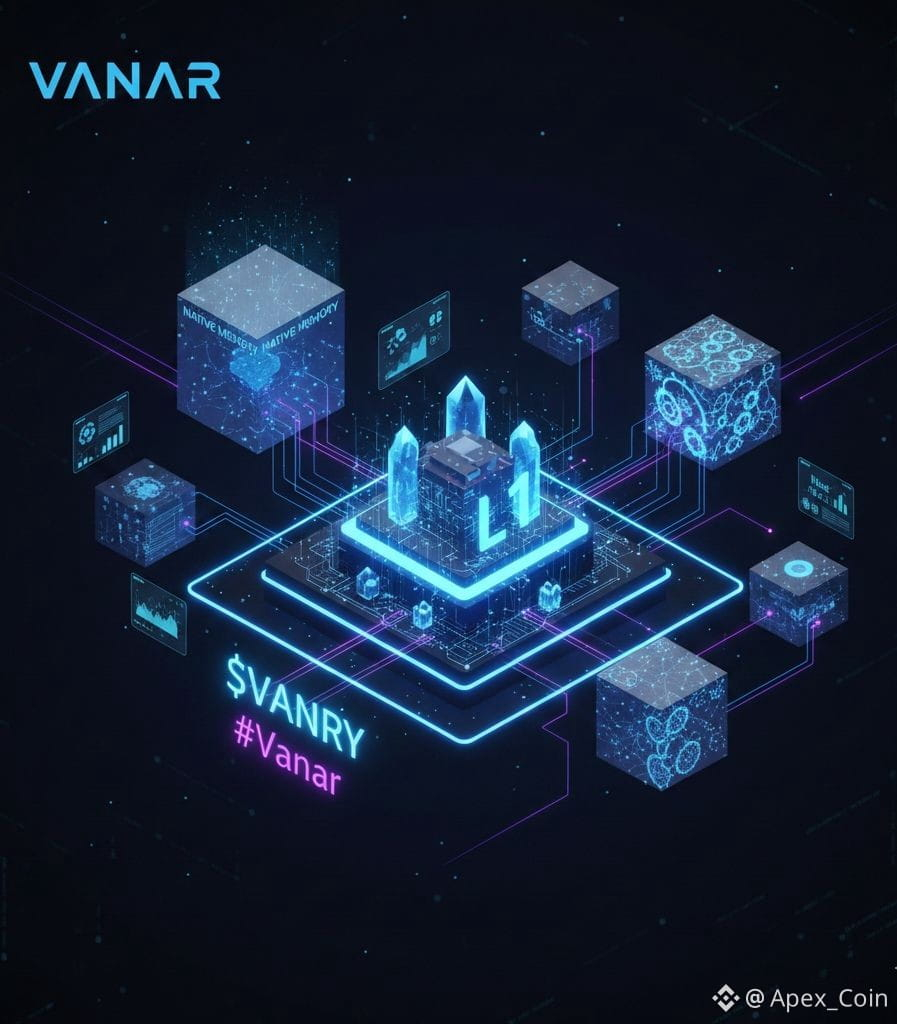
Additionally, the network supports persistent state and memory structures that are critical for AI agents. Rather than treating every interaction as isolated, Vanar enables applications to maintain context over time. This is essential for intelligent behavior, personalization, and long-term automation.
Enabling the Next Three Billion Users
Mass adoption has always been one of Web3’s most ambitious goals, yet it remains largely unrealized. Complex interfaces, technical jargon, and inconsistent user experiences continue to hinder growth. Vanar directly targets this problem by prioritizing accessibility and integration.
Through its ecosystem and tooling, Vanar abstracts away much of the friction traditionally associated with blockchain use. Users can interact with applications powered by AI without needing to manage private keys or understand gas mechanics in depth. This approach aligns Web3 with the expectations of modern digital users.
By lowering the barrier to entry, Vanar opens the door for billions of people to access decentralized services through familiar interfaces, whether in gaming, entertainment, or enterprise environments.
A Multi-Product Ecosystem with Live Use Cases
Unlike many blockchain projects that rely heavily on future promises, Vanar demonstrates its capabilities through an active, multi-product ecosystem. These products serve as proof that AI-first infrastructure can deliver real-world value across different industries.
Virtua Metaverse
Virtua is an immersive digital environment where users can interact, create, and own assets in a virtual space. Built on Vanar’s infrastructure, Virtua showcases how AI-driven systems can enhance digital experiences through intelligent interactions and persistent environments.
Rather than functioning as a standalone metaverse, Virtua integrates with Vanar’s broader ecosystem, allowing assets, identities, and logic to move seamlessly across applications.
VGN Games Network
Gaming represents one of the most promising areas for Web3 adoption. The VGN Games Network connects gaming communities with blockchain-native assets, enabling true ownership and interoperability.
By leveraging Vanar’s AI-first design, VGN supports intelligent matchmaking, automated economies, and dynamic gameplay mechanics. This creates experiences that go beyond simple NFT integration and toward fully interactive digital worlds.
Brand and Enterprise Solutions
Beyond entertainment, Vanar provides tools for brands and enterprises to engage users through Web3. These solutions focus on real-world utility, such as loyalty programs, digital identity, and sustainable engagement models.
AI plays a crucial role in these applications by enabling personalization, automation, and data-driven decision-making. Vanar’s infrastructure ensures that these processes remain secure, transparent, and scalable.
The Role of vanary in the Ecosystem
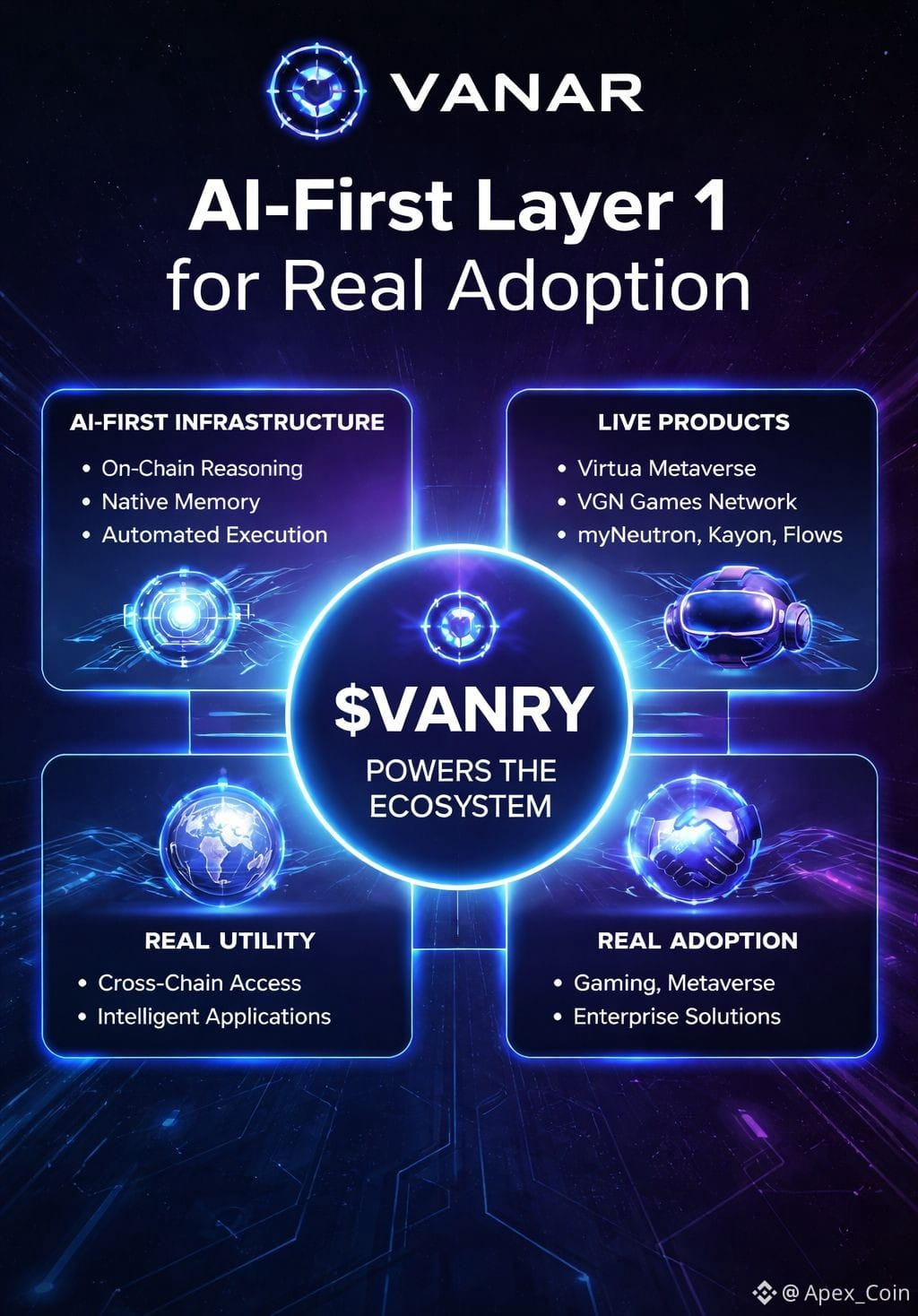
At the center of Vanar’s network is the $VANRY token. Unlike tokens designed primarily for speculation, $VANRY is deeply integrated into the network’s functionality. It serves as a utility asset that powers transactions, settlements, and participation across the ecosystem.
By aligning token usage with live products, Vanar ensures that demand for $VANRY is driven by actual activity rather than narrative hype. Users, developers, and enterprises interact with the token as part of their engagement with AI-driven applications.
This utility-focused model creates a more sustainable economic structure, where value accrues through usage and adoption rather than short-term market cycles.
Cross-Chain Compatibility and Ecosystem Reach
Interoperability remains one of the most significant challenges in Web3. Many applications operate in isolated environments, limiting liquidity and user access. Vanar addresses this by supporting compatibility with other ecosystems, including platforms like Base.
This cross-chain approach allows developers to build AI-native applications that interact with multiple networks. Users benefit from greater flexibility, while liquidity can flow more freely across ecosystems.
For AI agents, this interoperability is especially important. Intelligent systems often require access to diverse data sources and execution environments. Vanar’s design enables agents to operate across chains while maintaining security and compliance.
Proof of AI Readiness Through Live Components
Vanar’s AI-first claims are supported by concrete implementations within its ecosystem. Several protocol-level components demonstrate how intelligence is embedded directly into the network.
myNeutron: Native Memory
myNeutron illustrates how Vanar supports persistent memory for AI agents. This allows applications to retain context, track interactions, and improve over time. Native memory is a critical requirement for intelligent behavior, and its integration at the protocol level sets Vanar apart from traditional blockchains.
Kayon: On-Chain Reasoning and Explainability
Kayon focuses on reasoning and explainability, enabling AI systems to operate transparently on-chain. This is particularly important for trust, compliance, and enterprise adoption. By making decision-making processes auditable, Vanar aligns AI functionality with real-world requirements.
Flows: Automated and Secure Execution
Flows ensures that automated actions by AI agents are executed safely and predictably. This component handles conditional logic and task execution, reducing the risk of unintended behavior. Together, these tools demonstrate that Vanar is not merely AI-compatible but fundamentally AI-native.
Differentiation in a Crowded Layer 1 Landscape
The blockchain space is saturated with new Layer 1 networks, many of which struggle to define a clear purpose. Vanar differentiates itself by focusing on three key pillars: real products, intelligent infrastructure, and cross-ecosystem integration.
Rather than competing solely on transaction speed or fees, Vanar emphasizes usability and adoption. Its success is measured not just by technical benchmarks, but by how effectively it supports real-world applications and users.
This approach positions Vanar as a long-term infrastructure provider rather than a short-lived speculative project.
A New Standard for Web3 Adoption
As AI and Web3 continue to converge, the need for purpose-built infrastructure becomes increasingly clear. Vanar represents a shift away from retrofitted solutions and toward systems designed for intelligence from the start.
Through its AI-first architecture, multi-product ecosystem, and utility-driven token model, Vanar bridges the gap between advanced technology and practical use cases. From gaming and virtual environments to enterprise solutions and brand engagement, the network demonstrates how blockchain can support meaningful, scalable innovation.
For developers and users seeking a platform built for the AI era, Vanar offers a cohesive ecosystem where infrastructure, applications, and economics align. In this vision, $VANRY is not just a token—it is a functional component of an intelligent, interconnected Web3 future.