
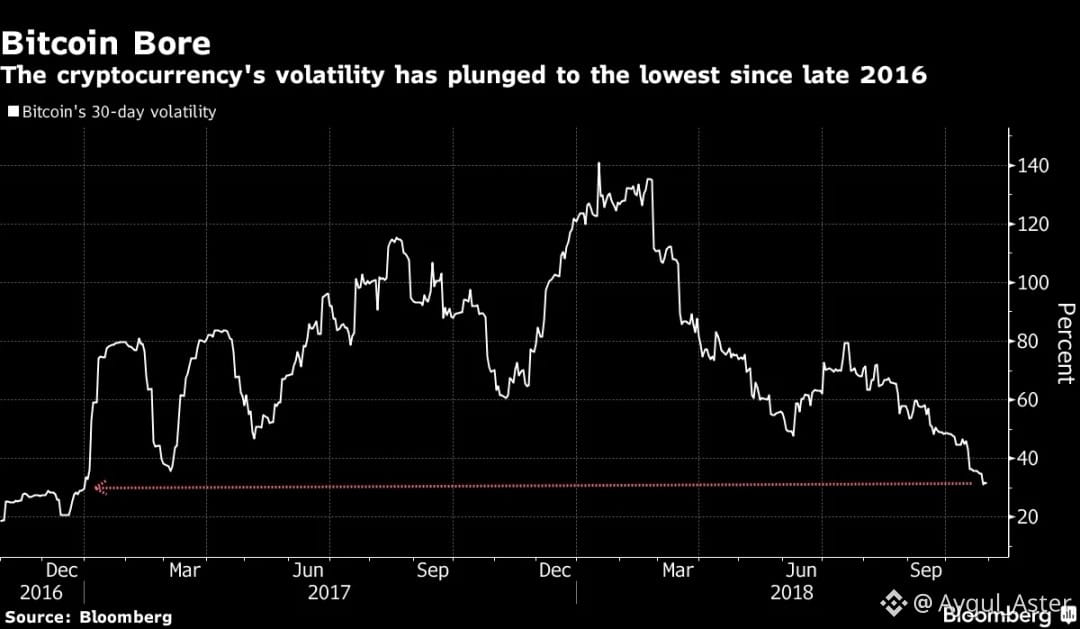
Not every market phase announces itself with volatility. Sometimes the most important shifts happen when prices move less, liquidity stays put, and participants stop rushing to react. That kind of stillness is often misunderstood as uncertainty, but in reality, it can signal something more deliberate: capital taking time to assess whether a system is built to last.
That context matters when looking at Vanar (VANRY) right now.
Across the broader crypto market, liquidity hasn’t collapsed or fled to safety. Instead, it has slowed. Capital remains deployed, but it’s rotating less aggressively and responding with smaller adjustments. Historically, this behavior shows up when participants are no longer trading narratives—they’re studying mechanics.
Capital That Waits Is Capital That’s Thinking
Fast exits usually reflect fear or fragility. Slow liquidity, on the other hand, tends to reflect evaluation. When providers don’t rush to pull funds at the first sign of pressure, it suggests they’re more focused on how the system absorbs stress than on short-term price swings.
Around VANRY, liquidity behavior has started to resemble this second category. Rather than sharp inflows followed by rapid withdrawals, the pattern has shifted toward longer holding periods and fewer short-term rotations. Total capital levels may not be expanding dramatically, but the capital that is present appears more intentional.
That distinction matters. Markets driven by speculation react instantly. Markets driven by structure react selectively.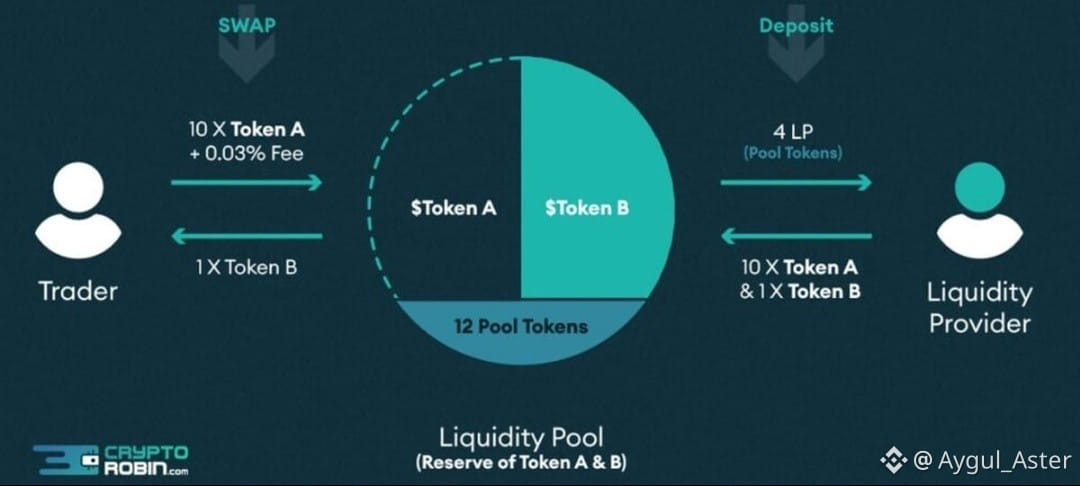
Incentives Shape Behavior More Than Sentiment
One reason this shift feels structural rather than emotional is a change in how incentives are distributed. Recent protocol adjustments placed greater emphasis on how long liquidity stays deployed, rather than how quickly it moves or how much volume it generates in short bursts.
That change quietly reshapes the ecosystem. Participants who optimize for duration rather than speed become more influential. Liquidity becomes stickier. Depth doesn’t disappear at the first sign of stress. Instead of sharp cliffs, the market develops smoother contours.
This doesn’t eliminate volatility, but it changes its character. Moves become less erratic, and exits tend to unfold over time rather than all at once. For a network designed to support persistent digital environments—games, virtual worlds, and interactive systems—that behavior aligns far better with real usage than with speculative churn.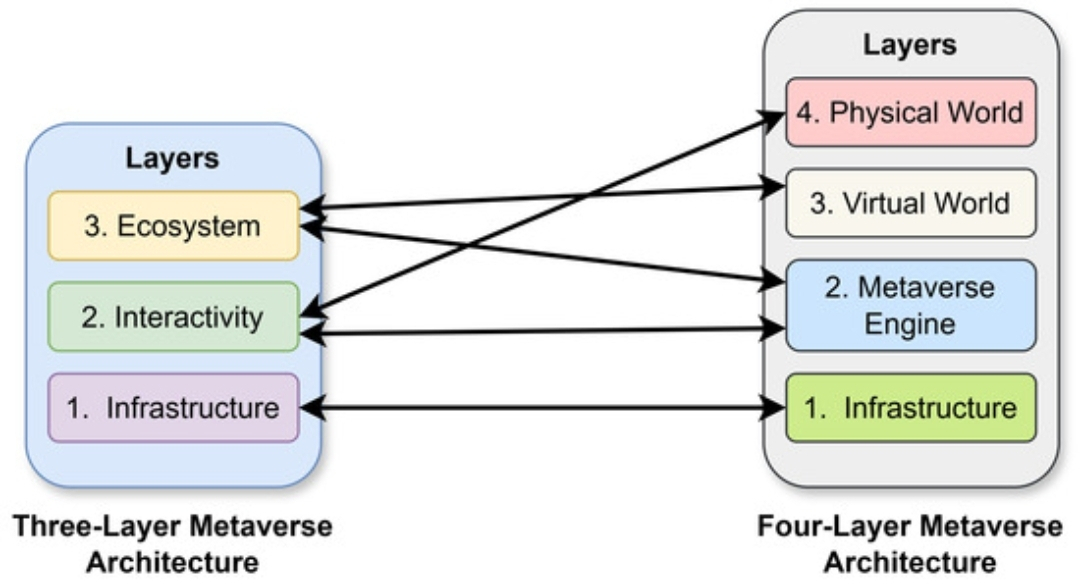
Vanar’s Design Philosophy Shows Up in the Market
Vanar has consistently positioned itself as an infrastructure layer rather than a hype-driven gaming chain. Its architecture emphasizes persistence, real-time state updates, and the ability to support continuous activity rather than isolated transactions.
Liquidity behavior now appears to be reflecting that same philosophy.
Infrastructure networks don’t need explosive, short-lived attention to prove value. They need consistency. They need systems that remain functional when conditions are quiet, when pressure is moderate, and when users aren’t being incentivized purely by momentum.
The current phase gives Vanar a chance to demonstrate exactly that. How liquidity behaves when there’s no urgency often says more about network health than how it behaves during a rally.
A Market Phase That Rewards Patience Over Reflex
For participants, this environment requires a different mindset. Speed matters less than positioning. Composition matters more than size. Being aligned with longer-term incentives can reduce exposure to sudden shocks, even if it doesn’t guarantee upside.
Liquidity providers who commit for longer periods contribute to stability, but they also benefit from reduced competition from fast-rotating capital. In effect, patience becomes both a stabilizing force and a strategy.
This kind of setup doesn’t produce dramatic headlines. It produces quieter signals—retention instead of rotation, evaluation instead of speculation, and structure instead of noise.
The Signal Beneath the Silence
Markets don’t always communicate through movement. Sometimes they communicate through what doesn’t happen. The absence of panic, the absence of mass exits, and the absence of reactive behavior can all be signals in their own right.
For Vanar, the current liquidity pause doesn’t look like abandonment. It looks like observation. Capital appears willing to stay and watch how the system performs without artificial excitement.
For an infrastructure-focused blockchain, that may be one of the strongest validations it can receive.
