
Vanar Chain is often described as an AI-first network, but that phrase only begins to make sense when you look closely at how Vanar Chain is structured and how VANRY fits into it. Vanar was not built as a general-purpose chain that later decided to add artificial intelligence features. Vanar Chain was designed from the start around the needs of intelligent systems, and VANRY quietly underpins how that system operates. If you spend time understanding Vanar Chain, you begin to see that the focus is less about speed headlines and more about readiness for a different kind of digital economy.
A few years ago, most blockchain conversations revolved around transactions per second. Faster blocks. Lower fees. Bigger numbers. But AI systems do not really care about those metrics in isolation. They need memory. They need reasoning. They need automation. They need settlement that works without friction. Vanar Chain approaches infrastructure from that perspective. Instead of asking how to make a chain faster, Vanar Chain asks what an intelligent agent actually requires to function safely and consistently.
This is where the idea of AI-first versus AI-added becomes practical rather than theoretical. Many networks attempt to retrofit AI on top of existing infrastructure. It is a bit like adding solar panels to a house that was never wired for renewable energy. It can work, but there are constraints everywhere. Vanar Chain, on the other hand, built its wiring with AI in mind. That difference shapes everything.
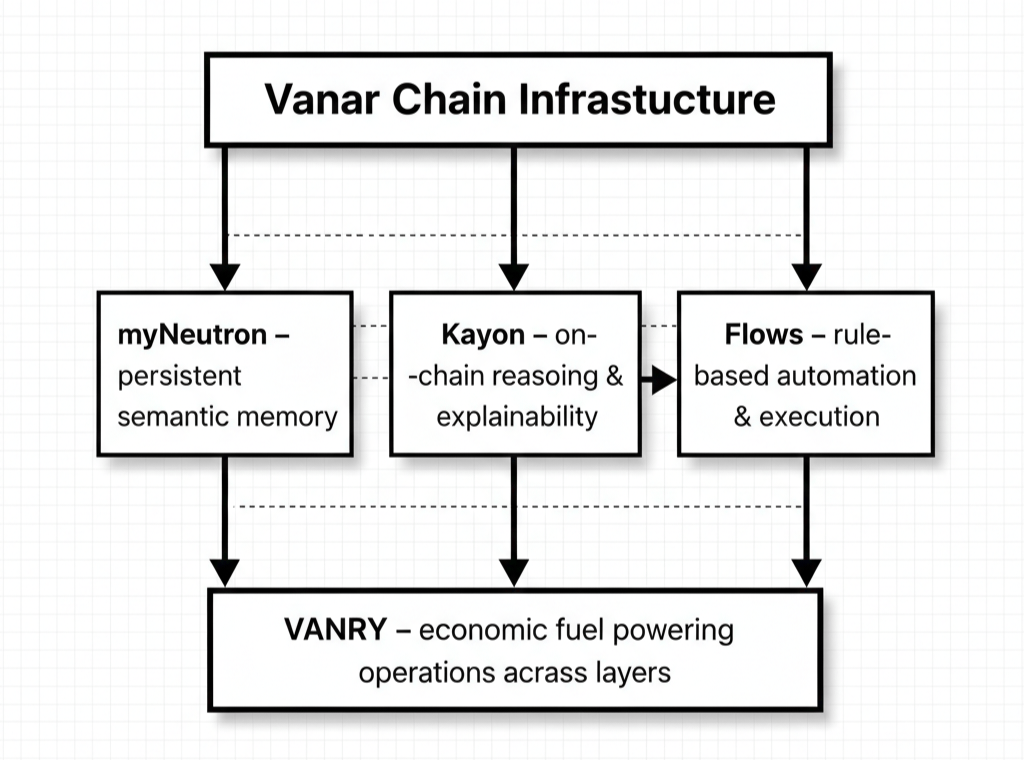
Take myNeutron, for example. On Vanar Chain, myNeutron demonstrates how semantic memory can live at the infrastructure layer. Instead of an AI system constantly forgetting context, it can anchor persistent knowledge directly on Vanar Chain. The technology behind Neutron compresses large data into smaller seeds, making storage verifiable and efficient. It feels less like attaching a memory card to a device and more like building memory directly into the foundation.
Then there is Kayon. Kayon on Vanar Chain introduces reasoning and explainability at the protocol level. Rather than treating AI output as a black box, Vanar Chain supports structured, on-chain reasoning. That matters because enterprises and agents cannot operate on blind trust alone. VANRY is used as gas and as part of the economic flow that keeps this reasoning layer functioning. When you look at VANRY in this context, it stops being a speculative ticker and starts resembling infrastructure fuel.
Flows extends this logic further. Automation sounds simple until you realize how risky automated execution can be without guardrails. On Vanar Chain, Flows translates intelligence into safe, rule-based action. An AI agent can trigger operations with defined constraints. It is a quiet detail, but on Vanar Chain these layers connect. Memory through Neutron. Reasoning through Kayon. Execution through Flows. VANRY sits beneath them, enabling staking, settlement, and usage across the stack.
Another piece often overlooked is cross-chain availability. AI systems rarely operate in isolation. Users and liquidity already exist across multiple ecosystems. By expanding its technology beyond a single environment including integration with Base Vanar Chain increases the surface area where AI-native tools can operate. This cross-chain presence allows Vanar to meet developers and users where they already are, rather than expecting migration into a silo. As activity spreads, VANRY gains exposure to broader usage not just activity confined to one network.
It also helps to consider payments. Human users tolerate wallet interfaces and manual confirmations. AI agents do not. They require compliant, programmable settlement rails that operate quietly in the background. Vanar Chain treats payments as a core primitive, not a decorative feature. For agents coordinating services or data exchanges, settlement must be seamless and reliable. VANRY becomes part of that economic loop, connecting usage to value in a way that is grounded in activity rather than narrative cycles.
Sometimes when explaining Vanar Chain to a friend, I compare it to building a city. Many cities expand outward first and only later worry about water systems and electricity grids. Vanar Chain feels more like a city that started by designing its utilities before constructing skyscrapers. It may not always look flashy from a distance, but the internal structure supports long-term growth. Vanar is positioning itself around readiness, not momentary excitement.
There is also a broader industry reality. Web3 does not lack base infrastructure anymore. There are enough chains. What remains scarce is proof of AI readiness. Vanar Chain demonstrates this readiness through live products rather than whitepapers alone. When myNeutron stores semantic context, when Kayon processes reasoning on-chain, when Flows executes automated logic, Vanar Chain shows how intelligence can be native to the system. In that environment, VANRY aligns with real usage patterns rather than abstract promises.
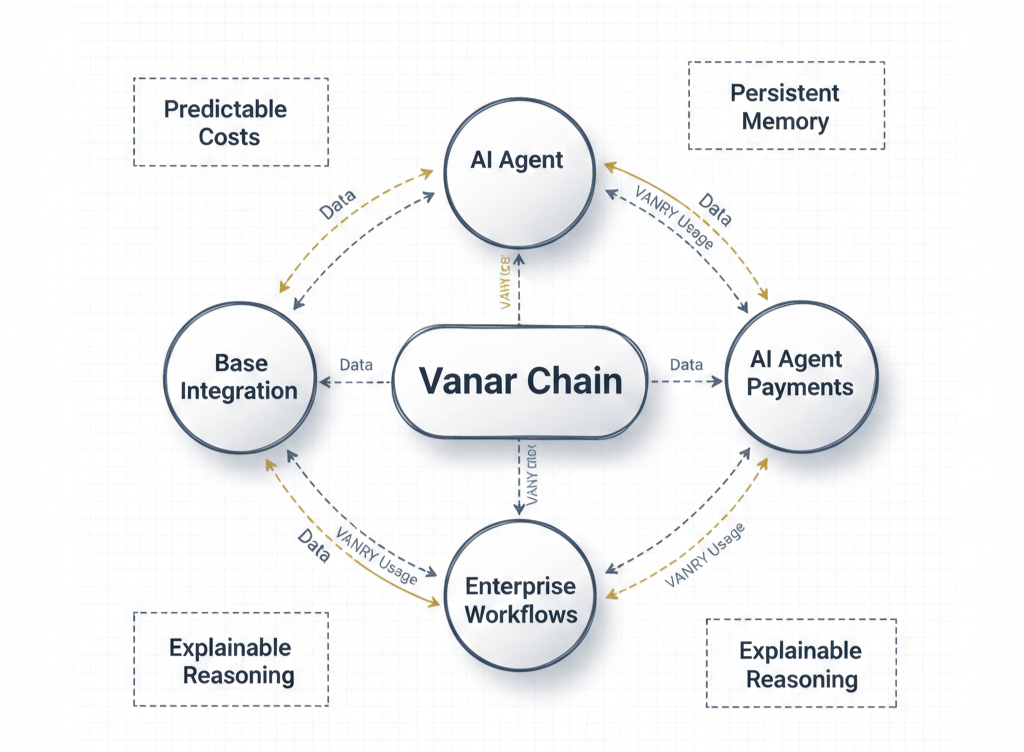
None of this guarantees dominance. Infrastructure rarely announces itself loudly. But Vanar Chain is quietly aligning design decisions with how AI systems actually behave. Vanar is less concerned with retrofitting old models and more focused on preparing for autonomous agents, enterprise workflows, and persistent digital memory. VANRY, in turn, reflects exposure to that readiness.
Over time, narratives rotate quickly. Infrastructure that works tends to remain. Vanar Chain is building around the assumption that AI will not be an add-on feature but a foundational layer of the digital economy. If that assumption holds, then Vanar Chain may not need dramatic headlines. It will simply need to keep functioning, block by block, memory by memory, settlement by settlement.
