
Vanar Chain has been appearing more often in discussions about infrastructure, and after spending time studying how Vanar Chain actually works, it becomes clear that Vanar is not following the usual blueprint. VANRY sits at the center of this design, but the real story of Vanar Chain is not the token alone. It is the way the entire system has been shaped around the needs of intelligent software rather than traditional crypto users.
One afternoon not long ago, I was explaining blockchains to a friend who works in software but has little interest in markets. He asked a simple question: if machines are going to interact with each other in the future, where do they keep memory, and how do they trust it? That question stayed with me, because most chains were never built to answer it. Vanar Chain, in contrast, seems to start precisely there.
To understand why Vanar Chain takes this path, it helps to step back and look at how most networks approach artificial intelligence. Many treat AI as a feature. A tool layered on top. Something that can be integrated later. The problem is that AI systems are demanding in ways traditional applications are not. They need persistent memory, structured reasoning, reliable automation, and frictionless settlement. When any one of those pieces is missing, the whole system becomes fragile. Vanar Chain is structured so these pieces exist at the infrastructure level rather than being improvised later.
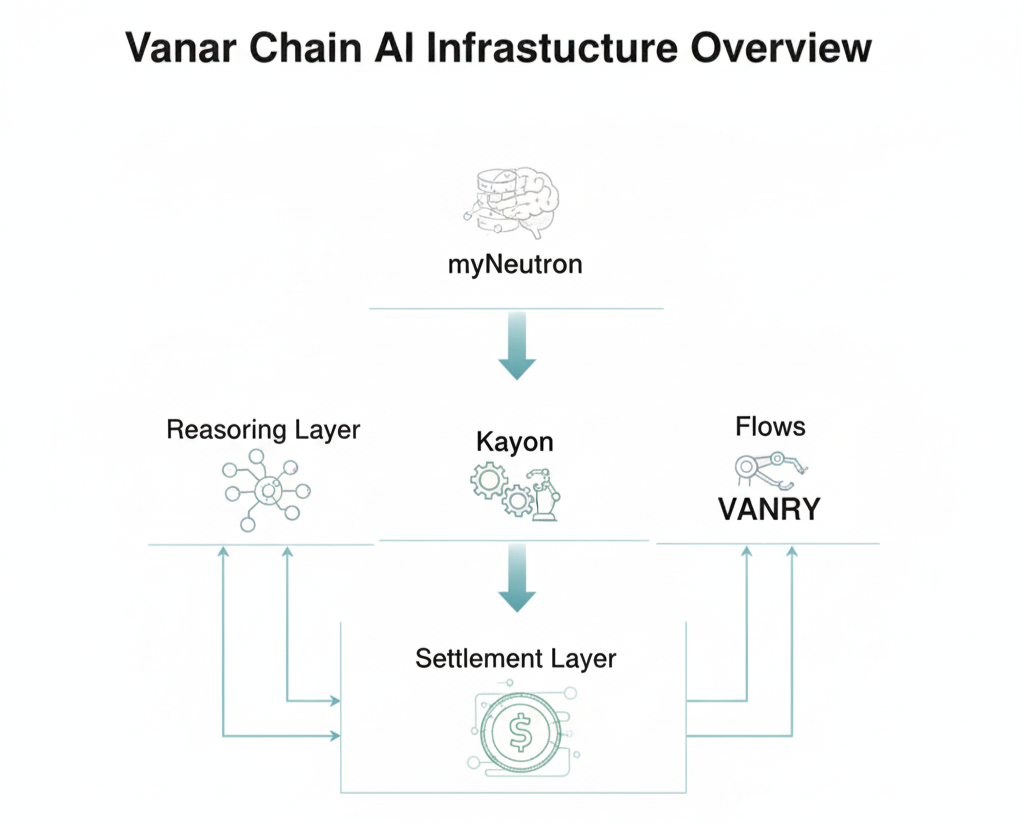
The clearest example of this philosophy is myNeutron. On Vanar Chain, myNeutron demonstrates how semantic memory can be stored and retrieved in a meaningful way. Instead of data being scattered or temporary, information can remain accessible to intelligent systems over time. VANRY plays a role here through transaction costs and economic incentives that keep the network functioning. It is easy to overlook this detail, but without a working economic layer, even the best technical design would stall.
Kayon is another piece of the puzzle. Reasoning sounds abstract until you see why it matters. If an AI agent makes a decision that affects payments, logistics, or contracts, someone eventually needs to understand why that decision was made. Kayon allows reasoning processes to be anchored in a verifiable way. On Vanar Chain, this creates a bridge between automation and accountability. Vanar benefits from this because it turns AI output into something that can be trusted rather than merely observed.
Flows extends the chain of logic further. Automation is powerful, but uncontrolled automation can be dangerous. Flows on Vanar Chain allows intelligent processes to translate into safe, rule-based actions. The effect is subtle but important. Systems can act, but within boundaries that are transparent and auditable. VANRY again connects to this activity, supporting execution and settlement as actions move through the network.
Another dimension that deserves attention is scale. AI infrastructure cannot remain confined to a single environment. Developers and users are already distributed across multiple ecosystems. By making its technology accessible across chains, including expansion toward Base, Vanar Chain increases the number of environments where its tools can operate. Vanar does not need every user to migrate. Instead, Vanar Chain extends outward, allowing intelligent services to meet users where they already are. As this happens, VANRY becomes tied to a wider surface of activity.
Payments are often discussed as a secondary feature in blockchain systems, but for AI they are fundamental. Machines cannot rely on manual approvals or complicated interfaces. They require settlement that is predictable, compliant, and globally accessible. Vanar Chain treats payments as infrastructure rather than decoration. This approach feels practical. It acknowledges that intelligent agents will eventually need to exchange value in ways that are routine and invisible, much like background processes in modern software.
One of the more interesting aspects of studying Vanar Chain is realizing how much of the work happens quietly. There are no dramatic shifts in direction, no constant reinvention of purpose. Vanar moves steadily, building components that connect logically: memory through myNeutron, reasoning through Kayon, automation through Flows, and settlement supported by VANRY. Each piece reinforces the others. The design feels less like a collection of features and more like a system that was planned as a whole.
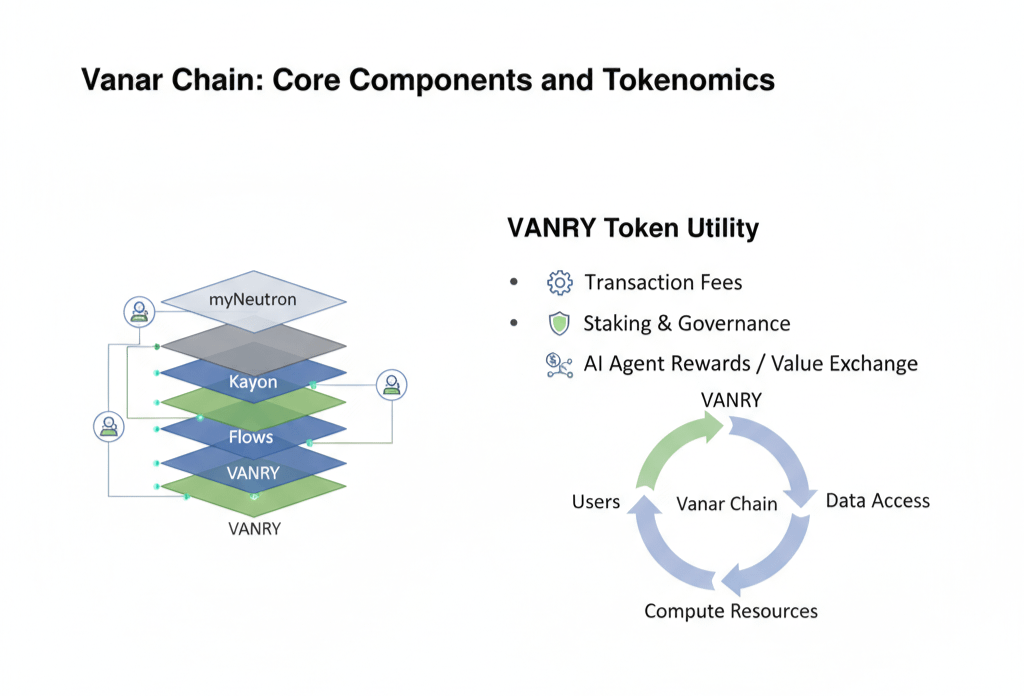
There is also a broader lesson here about the state of Web3. The industry does not lack blockchains anymore. What it lacks are infrastructures that prove they are ready for intelligent systems operating at scale. Vanar Chain attempts to fill that gap by focusing on readiness rather than narrative. VANRY reflects this focus because its value is linked to usage across real products, not just expectations about future possibilities.
Watching the space evolve, it becomes clear that technology cycles often reward patience. Tools that solve real problems tend to matter long after trends fade. Vanar Chain is positioning itself in that quieter category, building for a world where software agents act, remember, and transact as naturally as people do today. And if that world arrives gradually, as most technological shifts do, Vanar Chain may already feel like a familiar part of the landscape rather than a sudden arrival.
In the end, the significance of Vanar Chain is not in any single feature or release. It is in the way the pieces fit together, forming an infrastructure designed for intelligence rather than speculation, and that quiet coherence is what gives VANRY its long-term meaning.
