
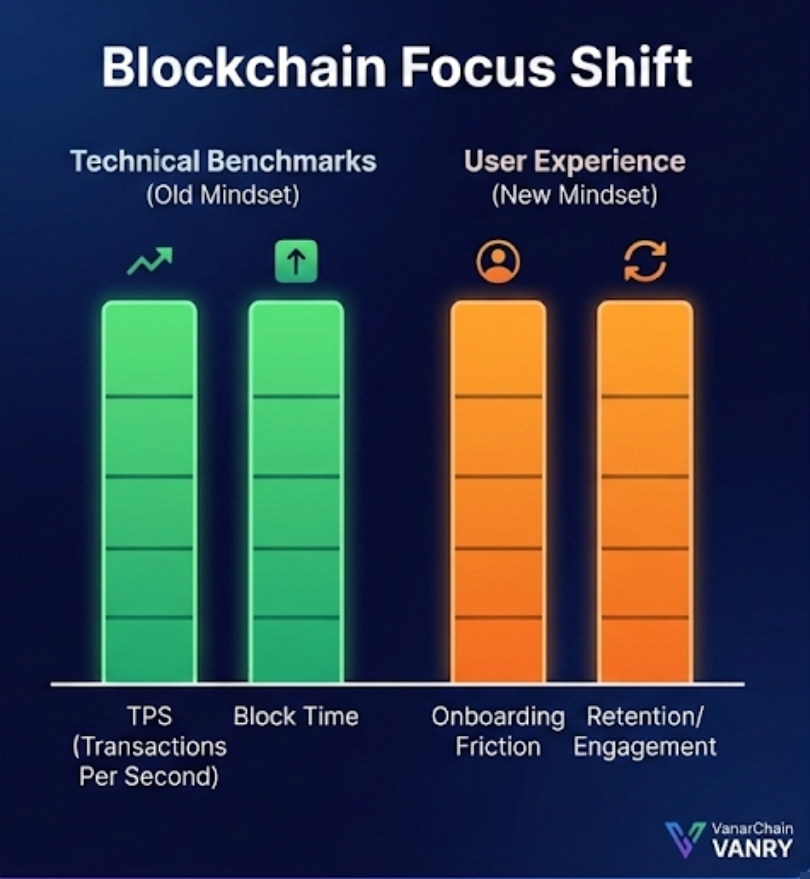
I stopped checking TPS numbers the same way I stopped checking how many megapixels a phone camera has. At some point, the spec sheet stopped telling me how the experience would feel. It’s the same with blockchains. For years, we’ve been trained to look at transactions per second as if that alone decides the future. Bigger number, better chain. That was the logic.
But most people don’t wake up thinking about throughput. They just want something to work.
When I look at VanarChain, what stands out isn’t a race to print the highest TPS headline. It’s the quieter shift toward consumer-facing infrastructure. Gaming roots. Brand integrations. Digital assets that aren’t just minted and flipped but actually used. That’s a different mindset. Gaming ecosystems obsess over retention, not just how many users show up once, but how many come back tomorrow. Blockchain rarely talks that way.
And that’s interesting.
Block time, finality, throughput to these things matter. Block time is how often new batches of transactions are added. Finality is how quickly a transaction becomes irreversible. They affect responsiveness. But if confirmation drops from two seconds to half a second, most regular users won’t feel the difference. They will, however, notice if onboarding is confusing. Or if gas fees pop up unexpectedly. Or if wallets feel like developer tools instead of everyday apps.
VanarChain seems to be building around that friction layer. Not eliminating performance metrics, just treating them as background infrastructure rather than the headline product. That’s subtle. It’s also risky. Consumer markets are emotional. Gaming trends shift. Brand partnerships look impressive on paper and disappear quietly six months later. Building for consumers is messier than building for benchmarks.
I also think something else is happening beneath the surface. On places like Binance Square, credibility isn’t awarded just for speed claims. It’s shaped by visible ecosystem activity. Engagement metrics, ranking dashboards, AI recommendation systems that they amplify what looks alive. If developers are launching games, if communities are interacting with digital assets, that activity feeds perception. TPS alone doesn’t trend. Usage does.
Still, focusing on consumer adoption raises uncomfortable questions. Does the token become a utility people genuinely need, or does speculation swallow everything again? Sustainable demand means users interacting because they want the service, not because they expect price movement. That balance is hard. Especially in cycles where trading volume overwhelms real usage.
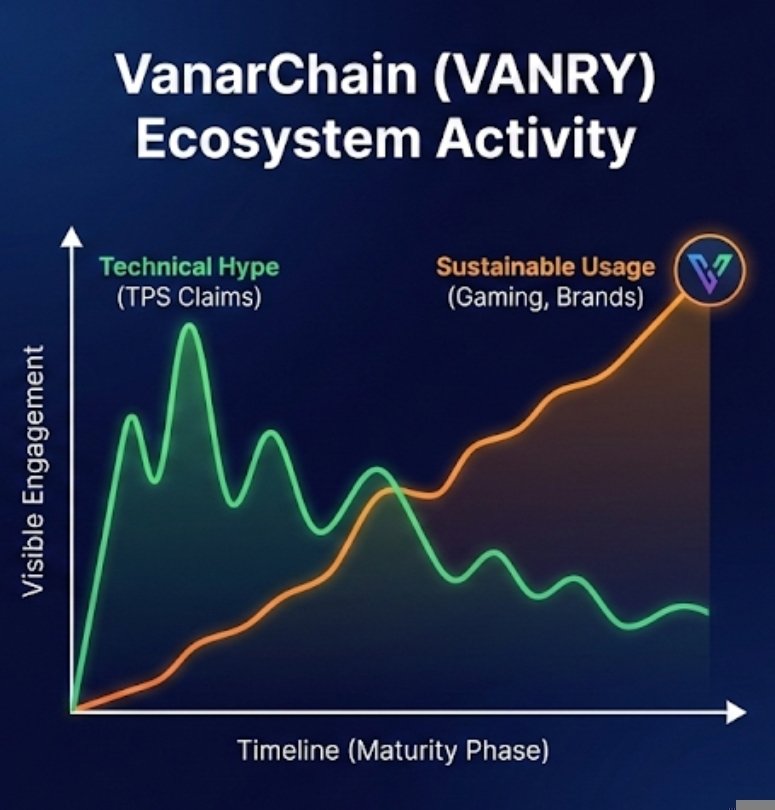
Here’s the part I don’t see discussed enough: adoption might be less about performance ceilings and more about cognitive load. Cognitive load is just the mental effort required to use something. If interacting with a chain feels like configuring software, mainstream users stay out. If it feels invisible like streaming a video and adoption becomes possible without explanation.
That’s where VanarChain’s positioning feels different to me. It’s not trying to win the arms race on paper. It’s trying to make the infrastructure disappear behind experience. Whether that works depends on execution. Security still matters. Scalability still matters. If consumer demand arrives and the network can’t handle it, goodwill evaporates quickly.
But the broader shift is clear. The industry is maturing past the phase where louder numbers automatically mean stronger networks. Speed is necessary. It just isn’t persuasive anymore on its own.
Maybe the real milestone won’t be when a chain hits some new TPS record. Maybe it’ll be when users are interacting daily and don’t even realize which chain they’re on. When performance becomes invisible. When the metric that matters most is how little people have to think about the technology underneath.
That’s a harder benchmark to measure. And probably the one that matters.