
Most software forgets you the moment you leave. You open an app, do something useful, close it, and the relationship resets. Even many AI tools behave this way. They respond well in the moment, but there’s no lasting continuity. Every session starts from zero. That limitation has quietly shaped how people design applications for years.
What Vanar is doing with Neutron suggests a different direction.
The recent example of OpenClaw integrating with Neutron shows what happens when memory stops being an external add-on and becomes part of the foundation. Instead of storing context in scattered databases or temporary sessions, agents can now retain identity and history directly within the network layer. That changes how these systems behave over time. They don’t just respond. They accumulate experience.
This is where the idea of a “second brain” begins to feel practical rather than symbolic.
When an agent remembers earlier interactions, it can make adjustments, preserve continuity, and operate with a sense of persistence. This isn’t about making responses faster. It’s about making them more informed. A system that remembers doesn’t need constant re-instruction. It becomes more useful simply by existing longer and interacting more.
Neutron plays a quiet but critical role here. It provides a structured way for information to remain accessible without depending on centralized control. The goal of adding identity to agents that resolve identities across multiple applications, sessions, and environments creates a level of continuity that enables new types of assistants, tools, and services that are able to act as much more than disposable scripts.
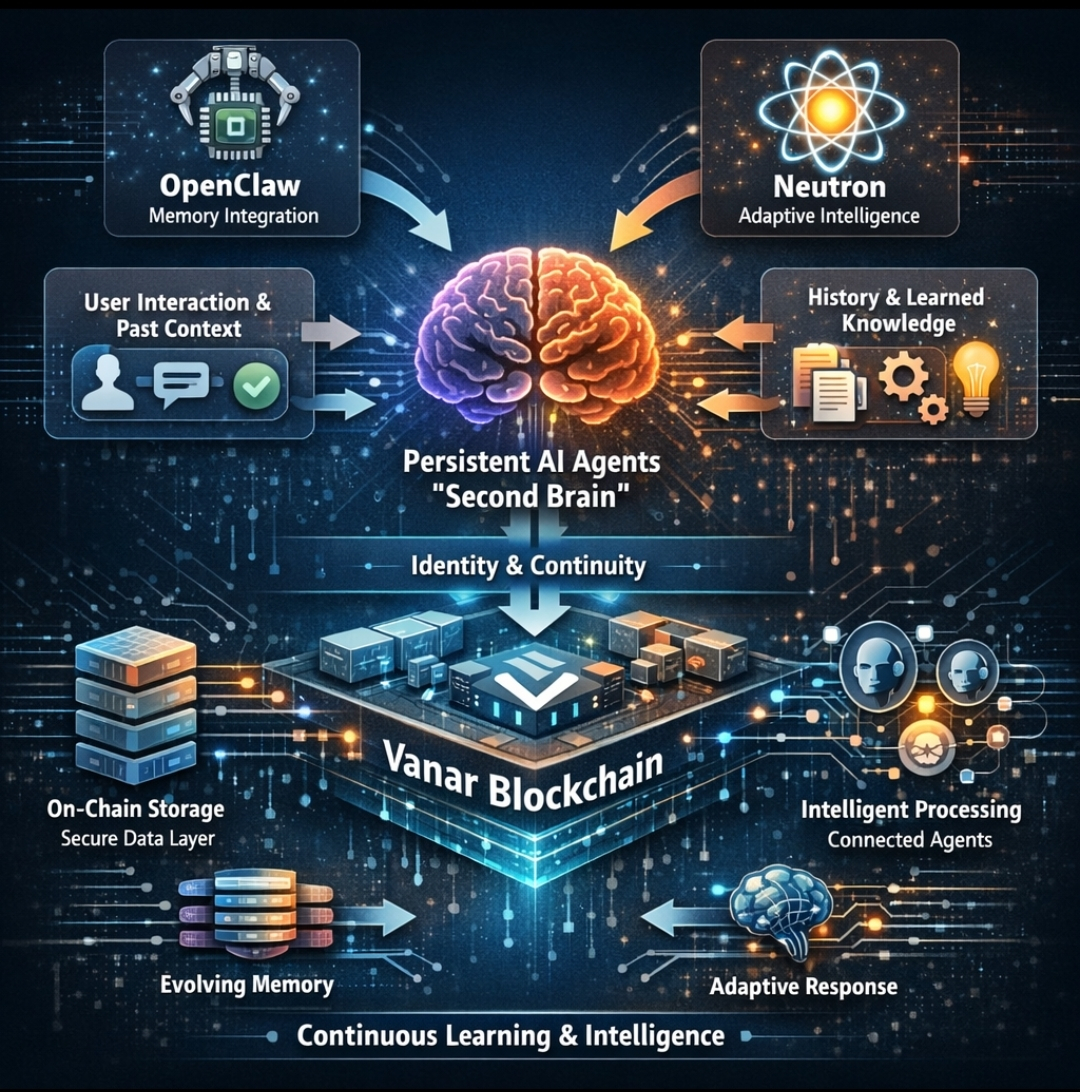
This is not obviously significant when you first look at it – it may not lead to any major headline changes or major activity spikes. Instead, it lays groundwork. Developers gain the ability to build systems that improve through use rather than reset with each interaction.
@Vanarchain isn’t just supporting execution. It’s supporting persistence.
Over time, this difference may matter more than raw speed or transaction counts. Systems that remember can build trust. Systems that remember can adapt. And systems that remember can eventually operate with a level of continuity that feels natural to the people using them.
That’s how infrastructure stops being invisible and starts becoming essential.



#