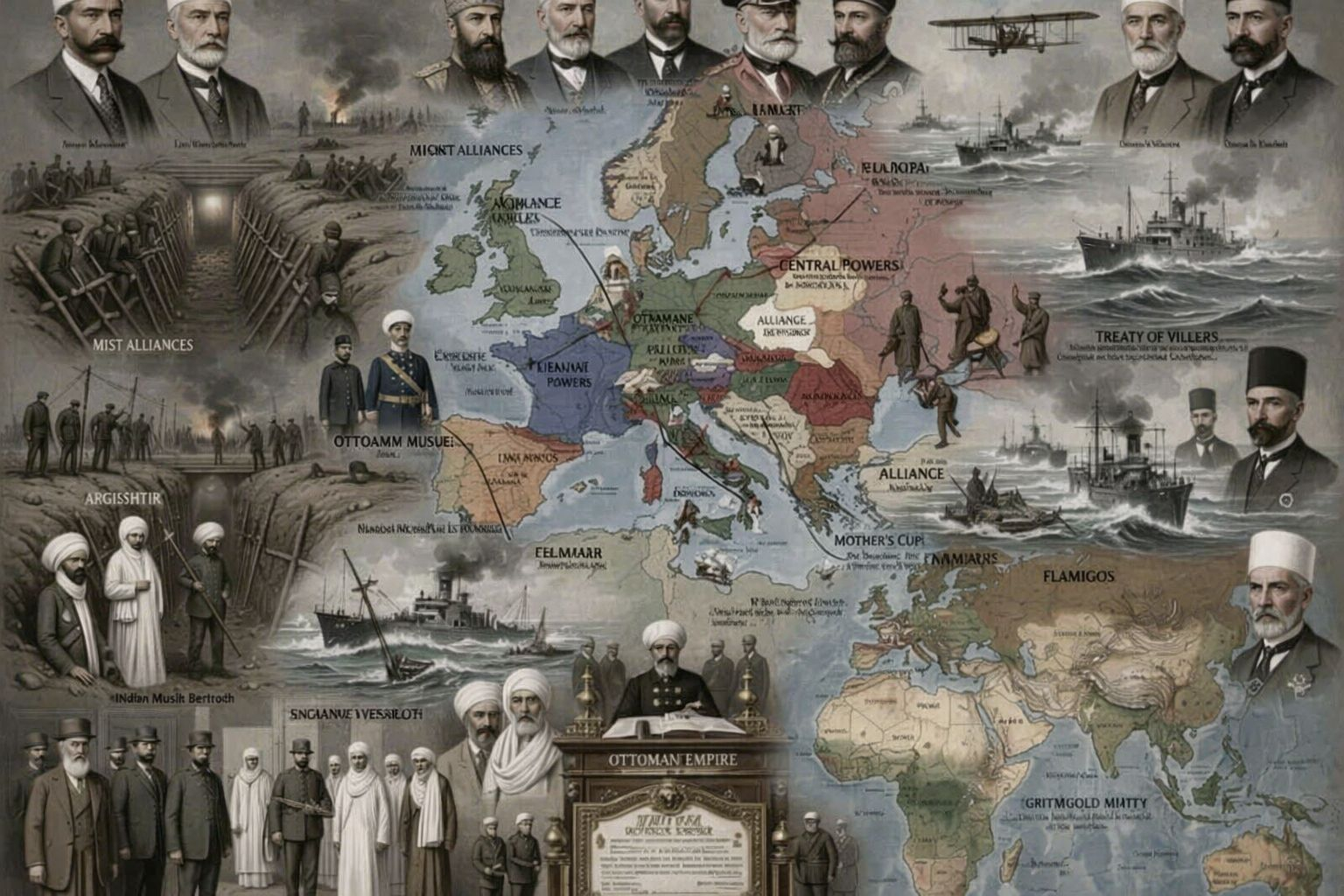
At the beginning of the twentieth century, Europe seemed to be the center of progress, power, and civilization. The great cities were bright, industries were flourishing, and nations considered themselves the most civilized powers in the world. But beneath this apparent calm, a dangerous fire of political tension was burning.
Instead of trusting each other, the great powers of Europe were filled with suspicion and fear. Each country feared that its neighbor might one day wage war against it. Because of this fear, each state was busy strengthening its army.
At that time, a few large empires in Europe were considered centers of power. These included Germany, Great Britain, France, Russia, and Austria-Hungary. Each empire was trying to increase its power and influence over other countries.
Germany was emerging as a new and powerful state. Its industrial development was very rapid and its army was also considered very strong. This growing power of Germany was a cause of concern for other European countries.
On the other hand, Britain was the world's greatest naval power. It had a vast empire that stretched across Asia, Africa, and other continents. Britain did not want any other power to challenge its supremacy.
France had a strong animosity towards Germany because it had been defeated in past wars. France was burning with the desire for revenge and wanted to avenge its past defeats whenever it got the chance.
Russia was also one of the major powers in Europe. It wanted to increase its influence in Eastern Europe and the Balkans. This policy of Russia was becoming a threat to Austria-Hungary.
Thus, Europe gradually began to divide into two major political groups. On one side, an alliance of Britain, France, and Russia was formed, which was called the Allied Powers.
On the other hand, Germany and Austria-Hungary formed an alliance. Later, some other states also joined this alliance.
These alliances were ostensibly formed to defend each other, but in reality they were laying the groundwork for a major war to come.
Nationalism was also growing rapidly in different parts of Europe. Different nations were struggling for their independence and power. This nationalism also made the political environment of Europe more tense.
The Balkan region in particular had become like a dangerous powder keg. Here, small countries and nations had become a battlefield between large empires.
At the same time, the Ottoman Empire, a great Muslim empire in the world, was also under pressure from European politics. European powers had been trying to weaken this empire for a long time.
Apparently, the cities of Europe were populated, trade was going on and people were going about their daily lives. But political leaders and military experts knew that the situation had become very critical.
Every country was collecting weapons, increasing the number of armies and making secret preparations for war.
It felt as if all of Europe was standing in the silence before a great storm.
People probably had no idea that in a few years an event would occur that would plunge the entire world into the flames of war.
This war would not be limited to Europe but would engulf many continents of the world.
A new and terrifying chapter in human history was about to begin.
And this was the political environment that ignited the flames of World War I a few years later.
If you liked this historical scene, share your opinion in the comments,
#worldwar #HISTORY #usahistroy