
Disclaimer: This article is written by another person.
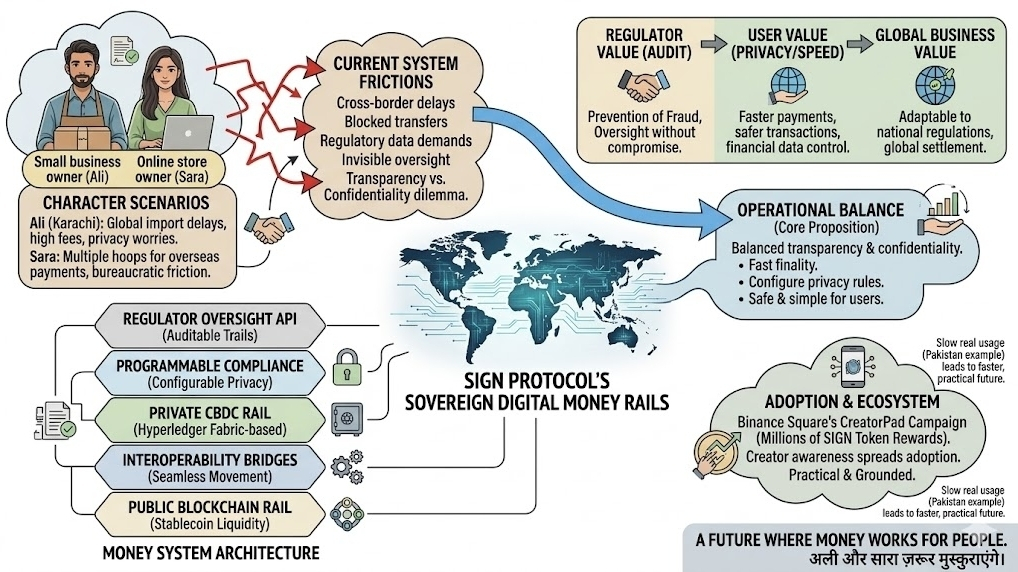
He just came across something that made me reevaluate the operation of digital currency. He was chatting with his friend Ali, who runs a Karachi-based small business, the previous week. He told him how frustrating it is for his import business to send money across borders. Occasionally, transactions take days. They are sometimes stopped. Frequently, the charges are absurd. He is also concerned about his privacy. He doesn't want anyone to see his financial transactions. However, regulators and banks consistently request more and more documentation. It made him consider how a system can be private, fast, and secure while still satisfying governments. That’s when he came across Sign Protocol’s New Money System.
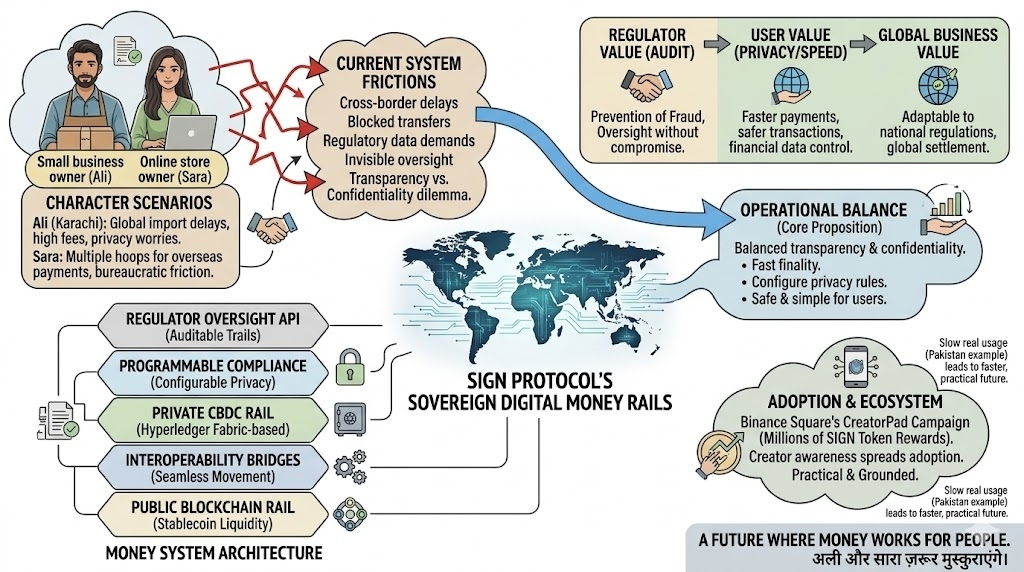
Ali’s story isn’t unique. This dilemma affects millions worldwide and in Pakistan. To prevent fraud, governments require oversight. Convenience and privacy are desired by citizens. Current systems prioritize speed while ignoring privacy. Or they safeguard privacy but prevent audits from taking place. There’s this constant tension between transparency and confidentiality. For example, Sara, another friend who runs an online store, recently tried to pay a supplier overseas. She had to jump through multiple hoops just to confirm the transaction. Due to bureaucratic delays, she lost hours. Simple friction, but cumulative. Sign Protocol solves this issue. He found it fascinating because it doesn’t aim to be just another cryptocurrency. Its goal is to provide nations with a digital money system that works for both citizens and government officials. There is a public, transparent blockchain that is ideal for cross-border payments and business dealings. Then there is a private, permissioned blockchain that is ideal for sensitive operations like digital currencies issued by the central bank. Personal interactions remain private on this private rail. However, if necessary, regulators can access them. The issue with Ali's international transfer could be resolved quickly. Sara's concerns about privacy would be respected. The way the two rails work together really impressed me. People can seamlessly transfer funds between the public stablecoins and the private CBDC system using bridges. Imagine Ali sending money to other countries. In a private CBDC channel, it begins. After that, it changes into a stablecoin that can be used for cross-border payments and reaches the recipient immediately without compromising any personal information. It's like plumbing that goes undetected behind the scenes. Smooth, yet secure. Because it’s programmable, the system can adapt to different countries’ regulations. For global businesses, that is huge. The architecture is clever on its own. The private blockchain makes use of technology that is based on Hyperledger Fabric and allows for configurable privacy, quick finality, and strong governance. While high-volume transactions remain private, authorities can audit them. This demonstrates that operational scale and privacy do not conflict. Ali kept coming to mind. He wouldn't have to wait in bank lines or answer calls for hours anymore. The beauty, in his opinion, lies in how easy it is to use. Citizens are given more control over their financial data, faster payments, and safer transactions. At the same time, regulators get what they need. Audit trails and visibility are available without jeopardizing privacy. It seems practical, solid, and prepared for use in the real world. Additionally, he discovered that the Sign Protocol ecosystem is beginning to involve communities. CreatorPad by Binance Square recently launched a campaign that provides creators with millions of SIGN tokens as rewards. These platforms could be used by Ali or Sara to learn more about digital finance. They could also get incentives for early participation. Technology that is not just theoretical but also feels approachable. Systems like Sign Protocol have the potential to alter how nations view money if they plan ahead. The flow of daily business would be improved. Adoption would expand more quickly. It is possible for trust in digital financial systems to grow. Adoption naturally increases as more creators take part in Binance Square campaigns. This could be the moment when digital currency begins to feel real, useful, and safe. So, keep this in mind the next time you're annoyed by bank delays or problems with online payments. There’s a system being built that respects privacy, satisfies regulatory needs and moves money faster than ever. This is more than just a technical achievement, so I'm sharing it. It provides a glimpse into a future where people benefit from money rather than the other way around. Ali and Sara would certainly smile if they knew such solutions are coming.@SignOfficial #signdDigitalSovereignInfra $SIGN
