
Bitcoin hat seinen Ruf auf eine zentrale Idee aufgebaut: Sicherheit, die du ohne Vertrauen in jemanden vertrauen kannst. Aber während sich die Technologie weiterentwickelt, kommt immer wieder eine Frage auf
Was passiert, wenn eine neue Art von Computer die Schlösser brechen kann, die es schützen? Das ist der Punkt, an dem Quantencomputing ins Gespräch kommt.
Einige Leute sagen, es wird Bitcoin zerstören, andere sagen, es ist überbewertet.
Aber die Wahrheit liegt irgendwo in der Mitte, und sie richtig zu verstehen, kann ändern, wie du Kryptowährungen für immer siehst.
Was Bitcoin heute sicher macht
Bevor wir über Bedrohungen sprechen, müssen Sie verstehen, warum Bitcoin überhaupt sicher ist.
Bitcoin verlässt sich nicht auf Banken oder Zwischenhändler .... Stattdessen nutzt es Mathematik, insbesondere Kryptografie.
Im Zentrum dessen steht etwas, das elliptische Kurven-Kryptografie genannt wird.
Das macht Ihre Wallet praktisch unmöglich zu hacken, selbst mit den heutigen Computern. Die Anzahl der möglichen Schlüssel ist so groß, dass selbst die schnellsten Maschinen länger als das Alter des Universums brauchen würden, um einen zu erraten.
Deshalb wird Bitcoin momentan als extrem sicher angesehen.
Zwei Schlüsselsysteme halten alles zusammen:
▪️ Private Schlüssel: Ihr persönlicher Zugang zu Ihren Mitteln.
▪️ Blockchain-Überprüfung: Ein öffentliches System, das jede Transaktion bestätigt.
Wo kommt also das Quantencomputing ins Spiel?
Traditionelle Computer lösen Probleme Schritt für Schritt, Quantencomputer halten sich nicht an diese Regeln.
Sie können mehrere Möglichkeiten gleichzeitig verarbeiten, was sie unglaublich leistungsstark für bestimmte Arten von Berechnungen macht, insbesondere für die Art, die in der Kryptografie verwendet wird.
Zwei große Durchbrüche werden oft erwähnt:
▫️ Shor’s Algorithmus
▫️ Grover’s Algorithmus
Dies sind nicht nur Theorien, sie repräsentieren echte mathematische Methoden, die in der Zukunft aktuelle Verschlüsselungssysteme schwächen oder sogar brechen könnten.
Wenn Quantencomputing mächtig genug wird, könnte es.
Offenbaren Sie private Schlüssel von öffentlichen Adressen.
Unbefugten Zugriff auf Wallets gewähren.
Geben Sie einen unfairen Vorteil beim Mining.
Das ernsthafteste Risiko ist das erste, die Offenlegung des privaten Schlüssels.
Denn sobald jemand Ihren privaten Schlüssel hat, gehören Ihre Mittel nicht mehr Ihnen.
Aber hier ist, was die meisten Menschen falsch machen.
Die Angst ist real, aber das Timing wird missverstanden, wir sind noch nicht dort ... nicht einmal annähernd, denn selbst Unternehmen wie Google und IBM sind noch in den frühen Phasen des Aufbaus stabiler, groß angelegter Quantencomputer.
Das ist also kein "heute"-Problem, es ist ein zukünftiges Risiko, das Vorbereitung, nicht Panik, erfordert.
Wer wäre zuerst gefährdet?
Wenn Quantenangriffe jemals praktisch werden, sind dies die anfälligsten:
Alte Wallets, die bereits ihre öffentlichen Schlüssel offengelegt haben.
inaktive Wallets (wie früh geminte Coins)
Große, zentralisierte Inhaber (Börsen, Institutionen)
Ein berühmtes Beispiel ist die unberührte Wallet, die Satoshi Nakamoto zugeschrieben wird und über 1 Million $BTC hält.
Wenn diese Schlüssel jemals offengelegt und nicht aktualisiert werden, könnten sie in einer quantenbasierten Zukunft ein Ziel werden.
Das Erstaunliche daran ist, dass Bitcoin sich anpassen kann, und das ist der Teil, den viele Menschen übersehen.
Bitcoin ist nicht statisch. Es entwickelt sich weiter ... unten ist eine Antwort von Satoshi Nakamoto aus dem Jahr 2010 zu Quantencomputern: "Wenn es allmählich passiert, können wir immer noch zu etwas Stärkerem übergehen."
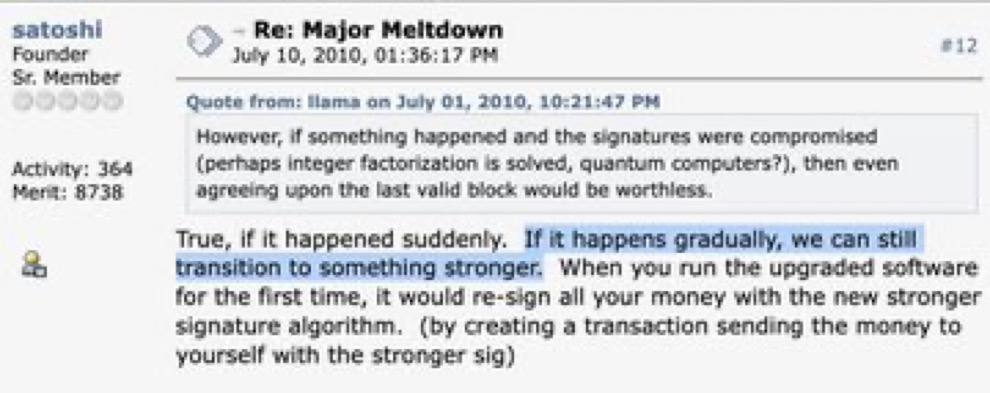
Wenn Quantencomputing eine echte Bedrohung wird, können Entwickler das System mit dem, was als gitterbasierte Kryptografie bekannt ist, aktualisieren.
Dies ist eine neuere Form der Verschlüsselung, die darauf ausgelegt ist, gegen Quantenangriffe zu widerstehen.
Einfach gesagt, das alte Schloss wird ersetzt, während das neue Schloss viel schwieriger zu brechen ist, selbst für Quantenmaschinen.
Aber es gibt einen Haken.
Benutzer müssten ihre Mittel in aktualisierte Wallets verschieben, und jeder, der dies nicht tut, könnte ungeschützt bleiben.
Trotz all des Lärms um Quantencomputing kommen die meisten Bitcoin-Verluste heute nicht von fortschrittlicher Technologie.
Sie kommen von schlechten Sicherheitsgewohnheiten, Phishing-Angriffen, dem Speichern von Mitteln auf Börsen, emotionalen Handelsentscheidungen.
Mit anderen Worten, die größte Bedrohung im Moment ist nicht die Zukunft, sondern das Verhalten der Benutzer.
Meine abschließenden Gedanken zum Quantencomputing sind, dass es eine ernsthafte und faszinierende Herausforderung für die langfristige Sicherheit von Bitcoin darstellt.
Aber es signalisiert nicht das Ende, es signalisiert die nächste Phase der Evolution.
Bitcoin hat mehrere Herausforderungen überstanden, von Skepsis über Regulierung bis hin zu Skalierungsproblemen. Dies ist einfach ein weiteres Kapitel und eine Phase von Bitcoin.
Die wirkliche Frage ist nicht, ob Quantencomputing Bitcoin beeinflussen wird.
Es geht darum, ob Benutzer und Entwickler schnell genug anpassen werden, wenn die Zeit kommt. Und basierend auf der Geschichte ist Anpassung genau das, was dieser Bereich am besten kann.