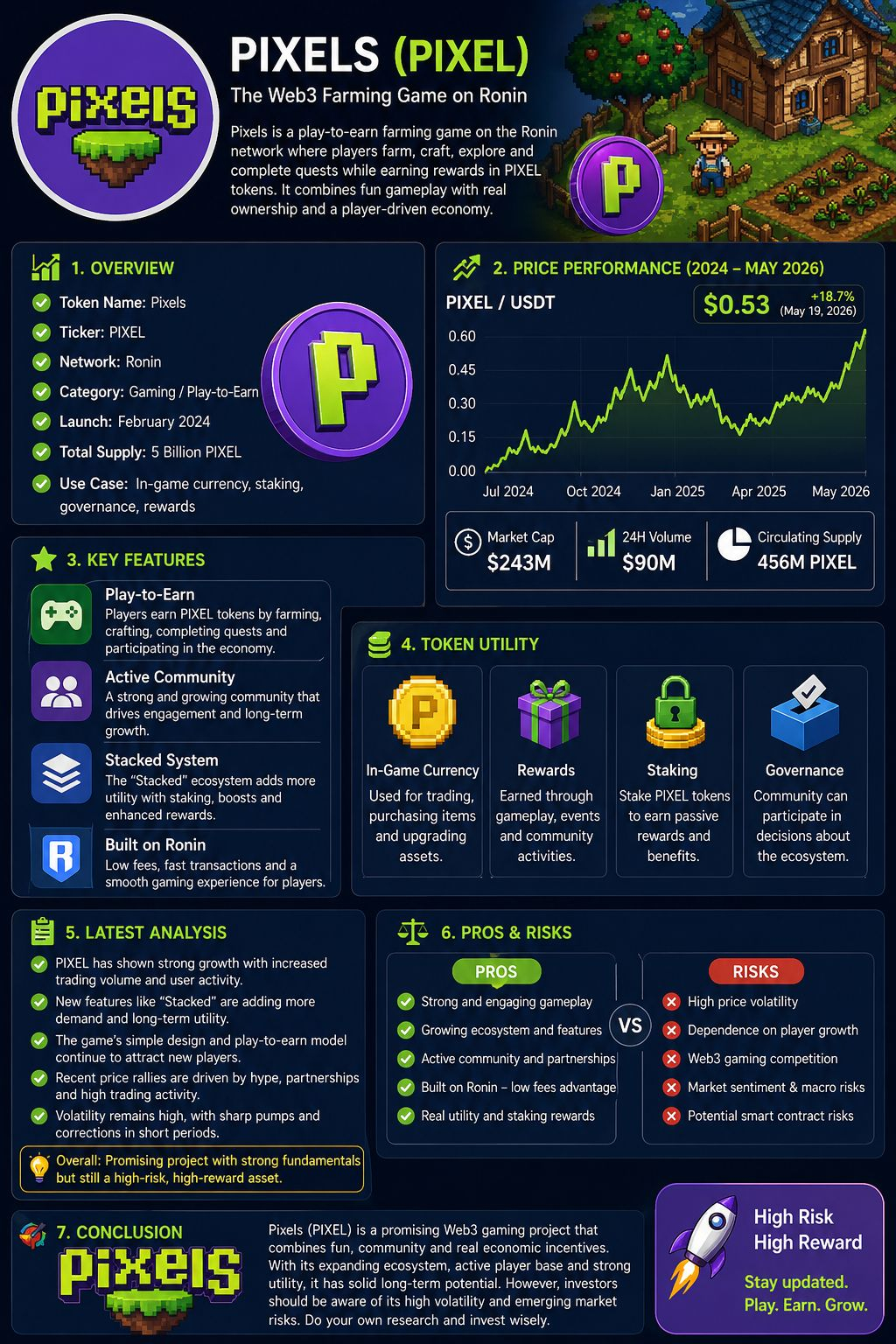
$PIXEL ist eines der am häufigsten besprochenen Projekte im Web3-Gaming-Bereich im Jahr 2026 geworden, hauptsächlich weil es einfaches Gameplay mit realen wirtschaftlichen Anreizen kombiniert. Auf dem Ronin-Netzwerk aufgebaut, @Pixels ein farming-basiertes Play-to-Earn-Spiel, bei dem Nutzer Pflanzen anbauen, Ressourcen handeln und sozial interagieren, während sie Belohnungen im PIXEL-Token verdienen. Was es besonders macht, ist seine Zugänglichkeit—Spieler benötigen kein tiefes Krypto-Wissen, um zu starten, was hilft, ein breiteres Publikum im Vergleich zu komplexeren Blockchain-Spielen anzuziehen.
Aus Marktperspektive hat PIXEL starke, aber hochvolatile Preisbewegungen gezeigt. Das Diagramm im Bild spiegelt einen stetigen Aufwärtstrend über die Zeit wider, jedoch mit spürbaren Schwankungen. Diese Schwankungen werden größtenteils durch plötzliche Handelsvolumenspitzen, Ankündigungen neuer Funktionen und Veränderungen der allgemeinen Stimmung im Krypto-Markt angetrieben. Kürzlich hat die Handelsaktivität erheblich zugenommen, was sowohl auf steigendes Interesse als auch auf spekulatives Verhalten hinweist. Das bedeutet, dass kurzfristige Trader aktiv sind, was oft zu schnellen Preis-Pumps und Korrekturen führt.
Eine der größten Stärken von Pixels ist sein wachsendes Ökosystem. Die Einführung von Funktionen wie dem "Stacked"-System verleiht dem Token über einfache In-Game-Belohnungen hinaus mehr Nutzen. Spieler können von Staking, verbesserten Belohnungen und tiefergehenden wirtschaftlichen Interaktionen profitieren. Dies hilft, das Projekt von nur einem Spiel zu einer umfassenderen digitalen Wirtschaft zu entwickeln. Darüber hinaus spielt die starke und aktive Community eine entscheidende Rolle bei der Aufrechterhaltung des Engagements, was sich direkt auf die Nachfrage nach dem PIXEL-Token auswirkt.
Ein weiterer wichtiger Faktor ist die Ronin-Blockchain selbst. Bekannt für niedrige Gebühren und reibungslose Transaktionen, bietet Ronin eine solide Grundlage für Gaming-Anwendungen. Dies stellt sicher, dass Spieler häufig mit dem Spiel interagieren können, ohne sich um hohe Transaktionskosten sorgen zu müssen, was auf anderen Netzwerken oft ein Problem ist. Dadurch sind Nutzerbindung und Aktivität tendenziell stärker, was die langfristige Nachhaltigkeit des Ökosystems unterstützt.
Trotz seines Potenzials ist PIXEL jedoch nicht ohne Risiken. Die größte Sorge ist die Abhängigkeit von kontinuierlichem Spielerwachstum. Wenn die Nutzeraktivität nachlässt, könnte die Nachfrage nach dem Token sinken, was zu Preisrückgängen führen könnte. Darüber hinaus befindet sich der Web3-Gaming-Sektor noch im Wandel und ist stark umkämpft, mit vielen neuen Projekten, die den Markt betreten. Dies schafft Unsicherheit über die langfristige Dominanz. Die Marktvolatilität bleibt ebenfalls ein ständiges Risiko, da externe Faktoren wie Bitcoin-Trends und globale Stimmungen die Preise beeinflussen können.
Wenn wir nach vorne schauen, hängt die Zukunft von von seiner Fähigkeit ab, sich zu erweitern und zu innovieren. Wenn das Entwicklerteam weiterhin ansprechende Funktionen einführt und neue Nutzer anzieht, könnte der Token ein nachhaltiges Wachstum erleben. Die Verbindung zwischen Spieleraktivität und Token-Nachfrage gibt ihm eine starke fundamentale Basis im Vergleich zu rein spekulativen Coins. Anleger sollten jedoch vorsichtig bleiben und verstehen, dass hohes Belohnungspotenzial oft mit hohem Risiko einhergeht.
Insgesamt stellt @Pixels eine vielversprechende Gelegenheit im Blockchain-Gaming-Sektor dar. Es kombiniert erfolgreich Gaming und Finanzen auf einfache, benutzerfreundliche Weise. Obwohl das Projekt starke Wachstumssignale und zunehmende Akzeptanz zeigt, machen seine Volatilität und Abhängigkeit von Nutzerengagement es zu einem riskanten, aber potenziell lohnenden Asset im Jahr 2026.