

In April 2026, Bitcoin rose over 10%, climbing from around $66,000 to nearly $79,000. While this appears to signal a strong recovery, on-chain data reveals a structurally different dynamic from a typical bull market.
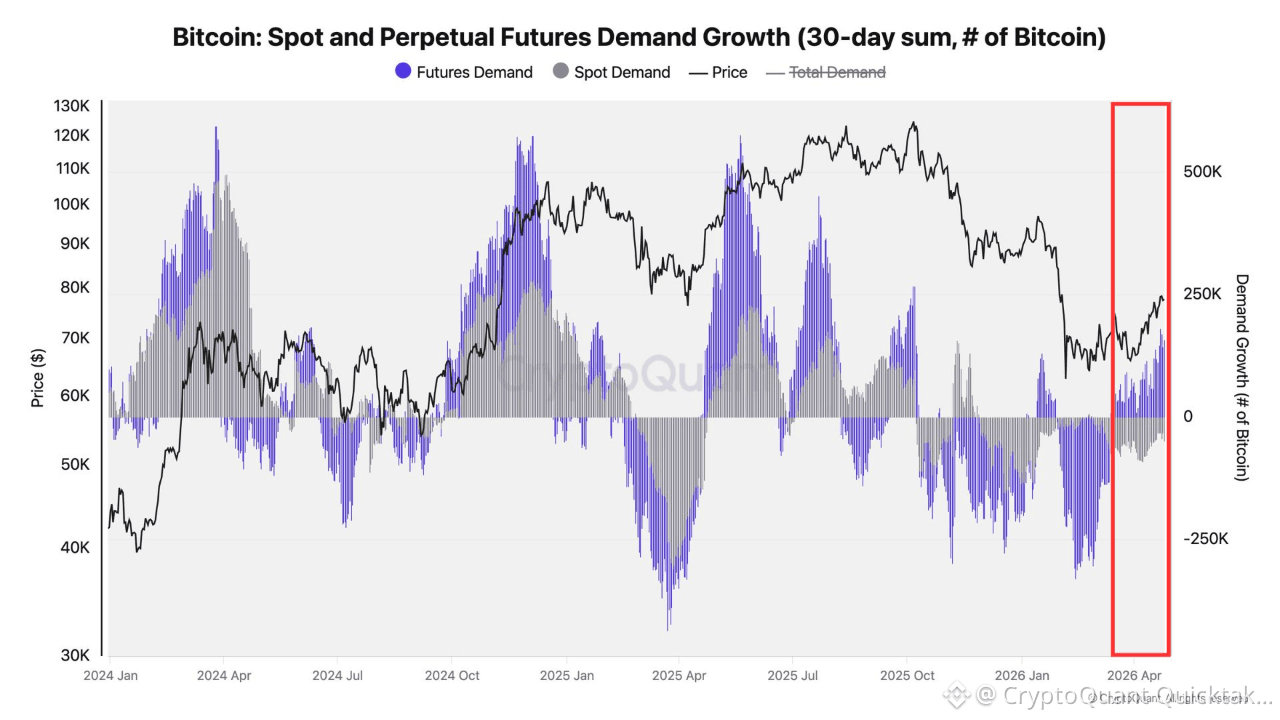
The key indicator is “Bitcoin: Spot and Perpetual Futures Demand Growth (30-day sum),” which highlights the quality of capital entering the market. In healthy uptrends, both spot and futures demand expand together, reflecting a balance between real investment and speculation.
This time, that balance has broken down. Futures demand surged, while spot demand remained negative. In other words, capital is not accumulating Bitcoin directly; instead, leveraged positions are driving price action. This creates an illusion of strength while the underlying market remains fragile.
Such futures-led rallies lack durability. Similar patterns appeared in early 2022, preceding a major decline. Without sustained spot inflows, price gains are often temporary and vulnerable to reversal.
More importantly, this structure is inherently unstable. As leveraged positions unwind, the absence of real buyers leaves prices exposed to downside pressure. The pullback from $79,000 to around $75,000 reflects this typical late-stage behavior of a futures-driven rally.
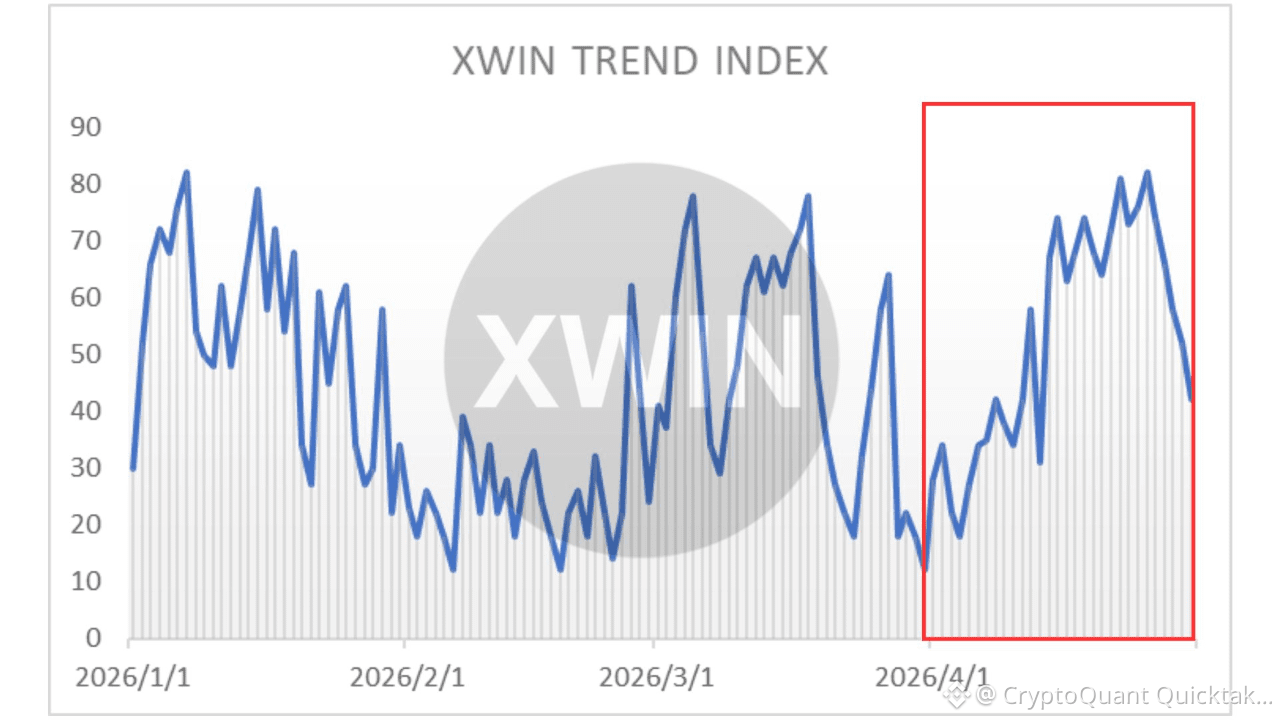
Another critical signal is the divergence between price and internal indicators. While price increased, broader market conditions weakened, suggesting that sentiment, flows, and demand did not support the rally.
In conclusion, Bitcoin is “rising, but not strong.” A sustainable trend requires a recovery in spot demand. Until that shift occurs, the current rally risks being only a temporary move.
Written by XWIN Japan