

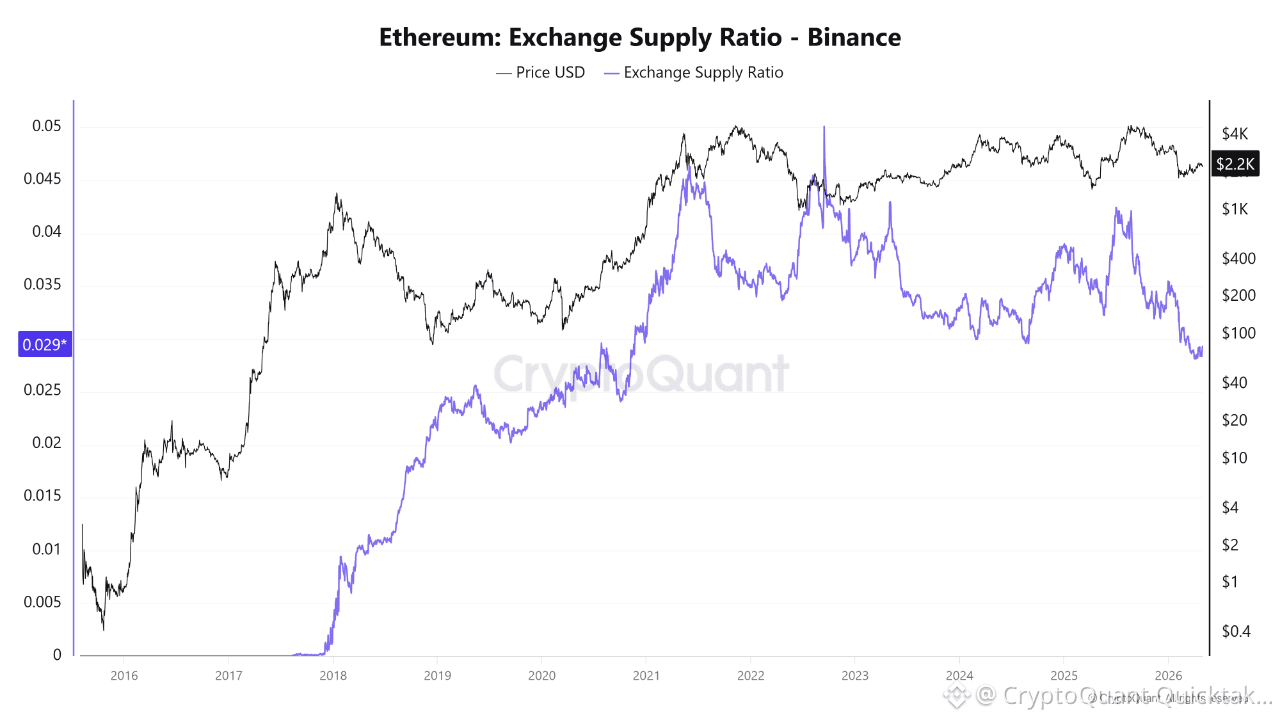
Whenever the Exchange Supply Ratio drops sharply, it has historically been accompanied by price declines forming a bottom. In other words, when the ratio falls, the supply on exchanges decreases. This typically indicates reduced selling pressure and suggests that the price is entering a bottoming zone.
However, there is a notable divergence in the current chart. The ratio has once again fallen to low levels, but the price has not formed a corresponding bottom and is still holding relatively high. This suggests that the price has not yet reached a true bottom.
Even though the reduction in supply indicated by the ratio has occurred, the market may not have fully priced it in yet. This increases the likelihood of a delayed downward move. One possible reason is that the market is being artificially supported. Especially with the influence of derivatives, the price may remain resilient for a while longer. However, such divergences typically do not last long.
In summary, the ratio has already bottomed, and the price should have followed but it hasn’t. These types of divergences are usually resolved by the price moving downward to align with the ratio. Therefore, the current setup suggests downside risk and the possibility of a delayed dip still on the table. The market may soon close this gap.
Written by PelinayPA