

Even though Bitcoin has been rebounding since February 6 and is now up around 30%, it is still too early to conclude that BTC has shifted into a new regime.
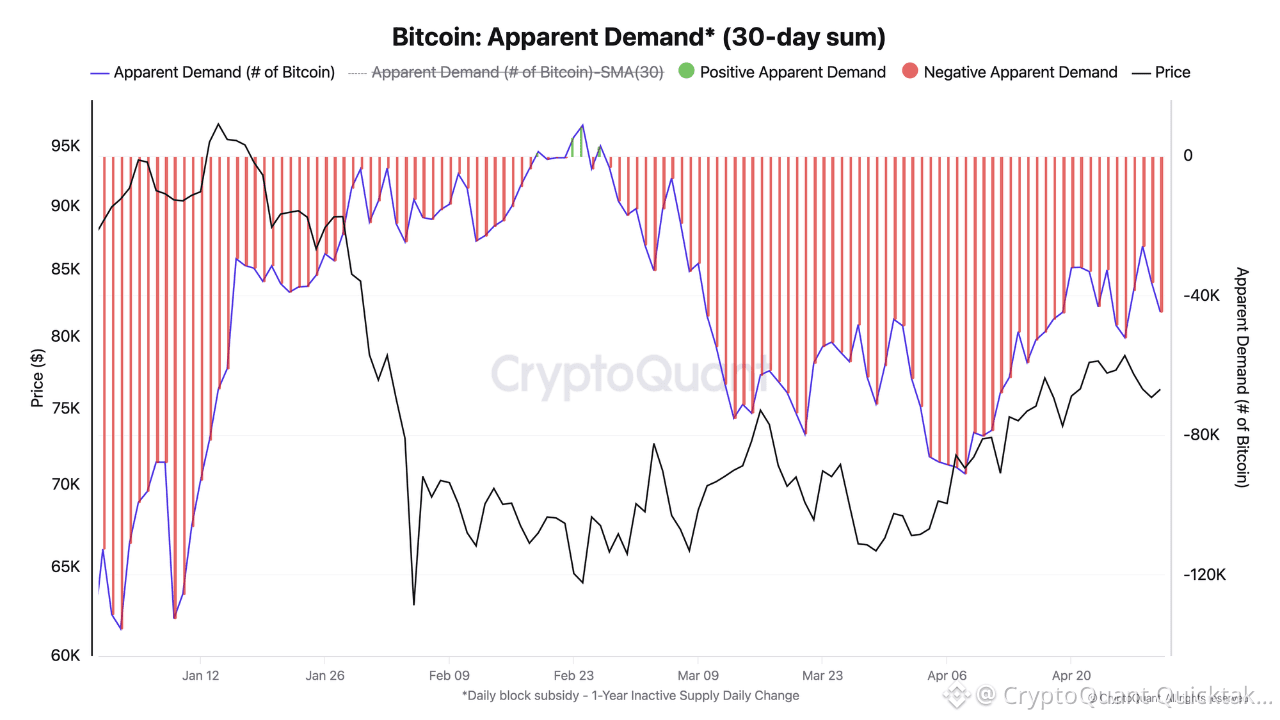
This is notably reflected in demand, which remains relatively weak. As a result, apparent demand (30-day sum) is still negative at -44,700 BTC.
That said, this is a clear improvement compared to the -89,000 BTC observed in early April.
Since the beginning of the year, apparent demand has remained negative throughout. I am excluding the brief positive shift at the end of February, as it was not driven by a genuine increase in demand, but rather by a sharp drop in BTC issuance. This was mainly due to a significant decline in mining activity, particularly linked to severe weather conditions in the United States earlier in the year.
In this context, apparent demand is calculated as the difference between new BTC issuance and the amount of supply that has remained inactive for more than one year. In other words, it helps estimate whether structural accumulation is sufficient to absorb newly created supply.
That said, the trend is showing some early signs of improvement. However, at this stage, a more decisive recovery in demand is still needed to sustainably support Bitcoin’s rebound.
Written by Darkfost