

Bitcoin is showing a fresh short-term holder capitulation signal, but the broader on-chain structure does not look like simple panic selling.
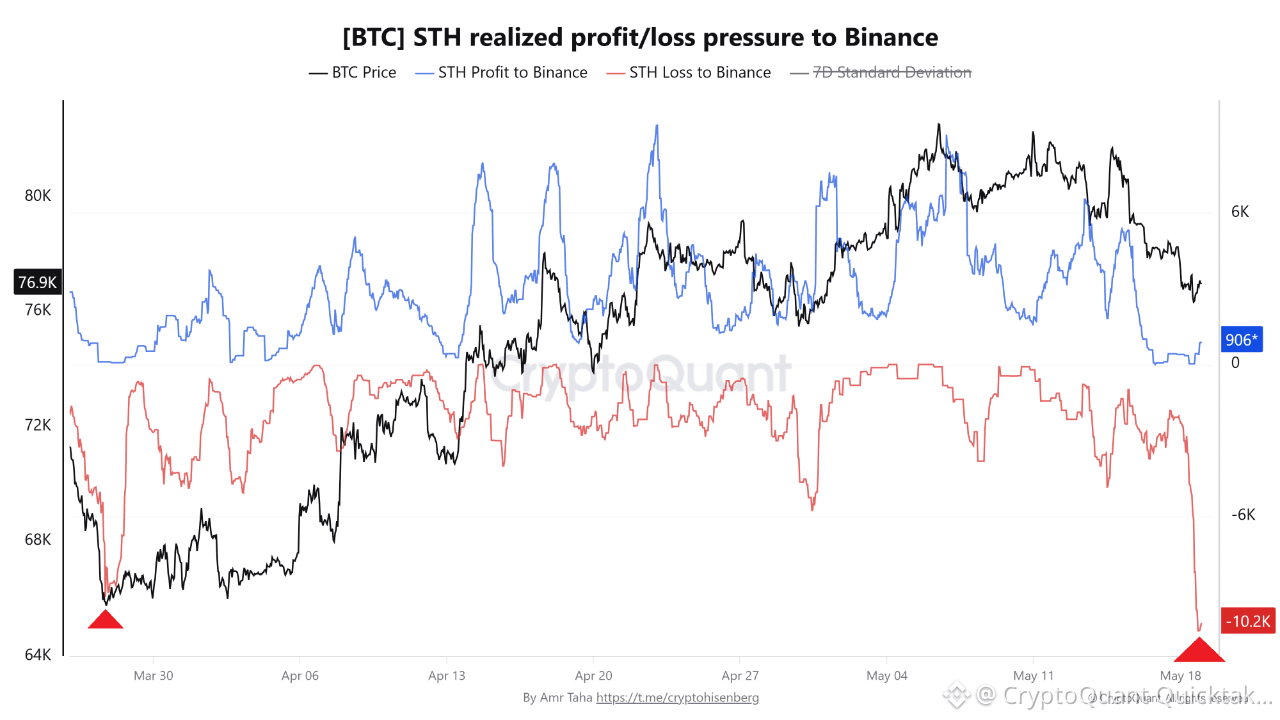
New data shows that Short-Term Holder Loss to Binance has exceeded 10,000 BTC for the first time since March 27, 2026. This does not mean these losses have necessarily been realized yet. Rather, it means short-term holders are sending Bitcoin balances to Binance while those coins are already in loss.
If these balances are sold after reaching the exchange, they would turn into realized losses.
The signal is notable because the previous March stress zone appeared when Bitcoin was trading near $66,000, with STH Loss to Binance around 8,600 BTC.
After that phase, Bitcoin later recovered and moved above $80,000 by May 6.
This time, the current loss-pressure reading is even higher than the March level, suggesting that recent buyers are once again sending coins to Binance at a loss.
In market terms, this often reflects short-term holder stress, forced selling, or capitulation from weaker hands during a correction.
However, the second chart adds an important contrast.
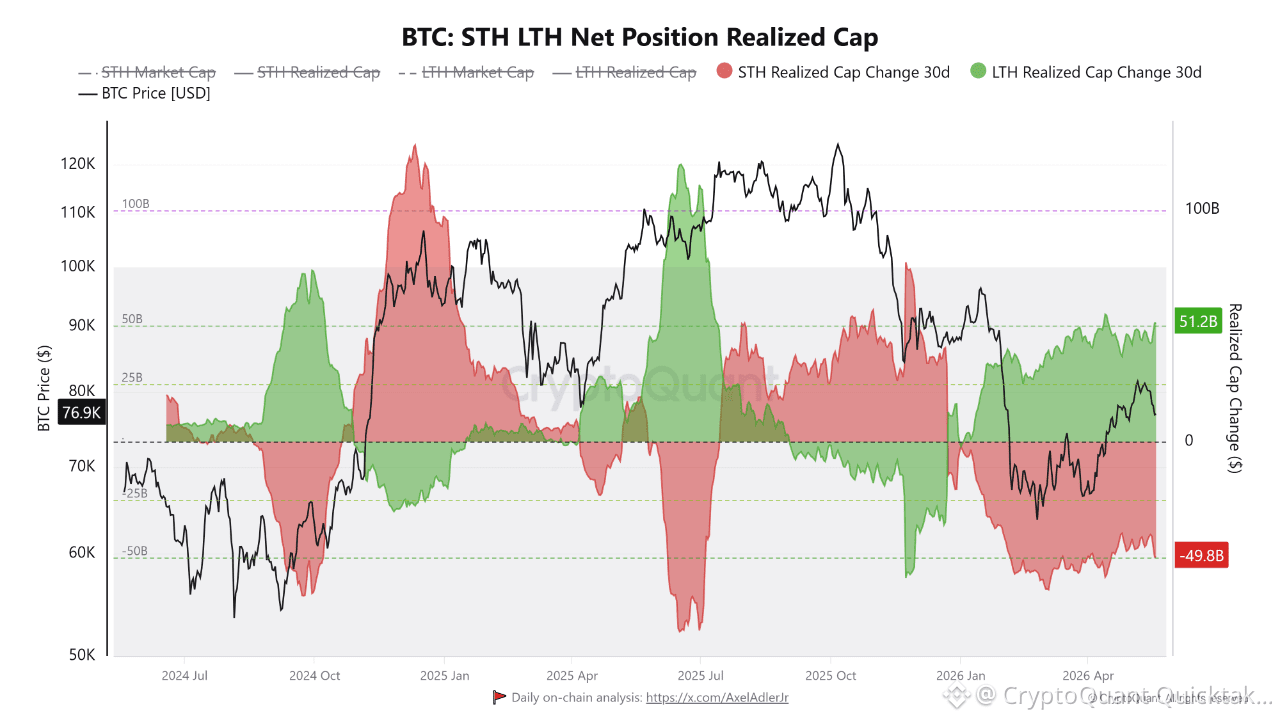
Bitcoin’s Long-Term Holder Realized Cap Change 30D has crossed above $50 billion, reaching around $51.2 billion. This is the second time the metric has moved above the $50 billion zone after April 14.
That divergence creates a more balanced market signal: short-term holders are realizing losses, while long-term holders continue to show strong realized-cap expansion.
This doesn’t guarantee Bitcoin will repeat the March-to-May rebound, but the market is showing signs of short-term holders giving in.
If Bitcoin stabilizes around current levels, the combination of rising STH losses and expanding LTH realized cap could become an important accumulation-versus-capitulation signal for the next major market move.
Written by Amr Taha