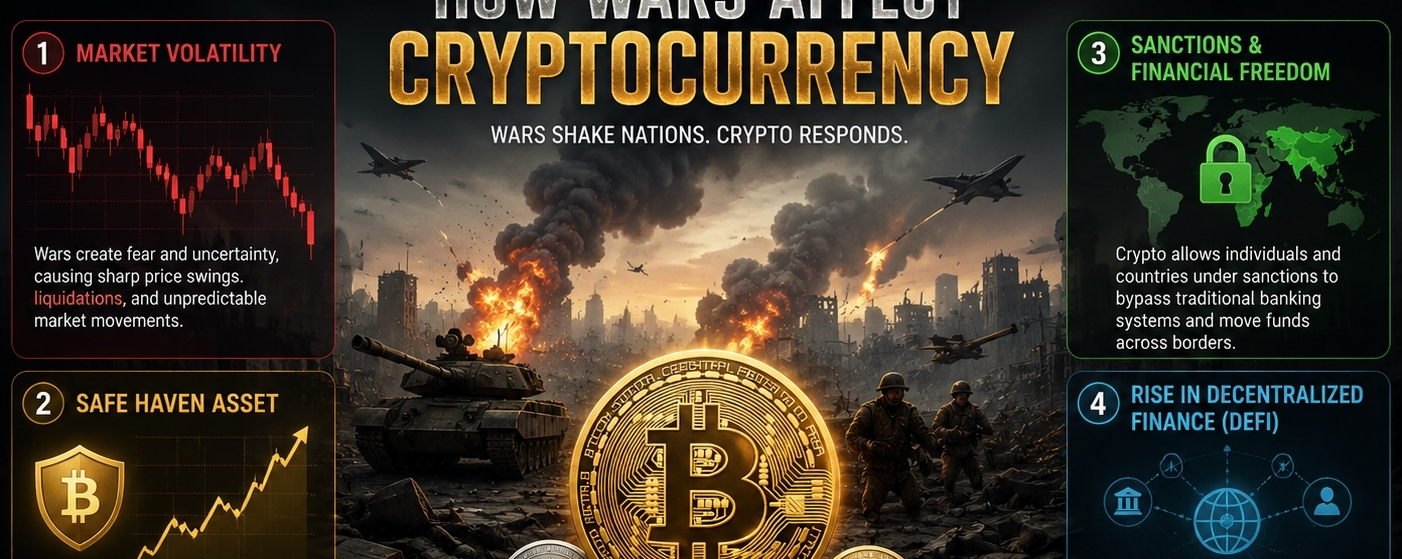
Global wars and geopolitical conflicts have a major impact on the cryptocurrency market. During wars, investors, governments, and ordinary people often turn to crypto for protection, payments, or speculation.
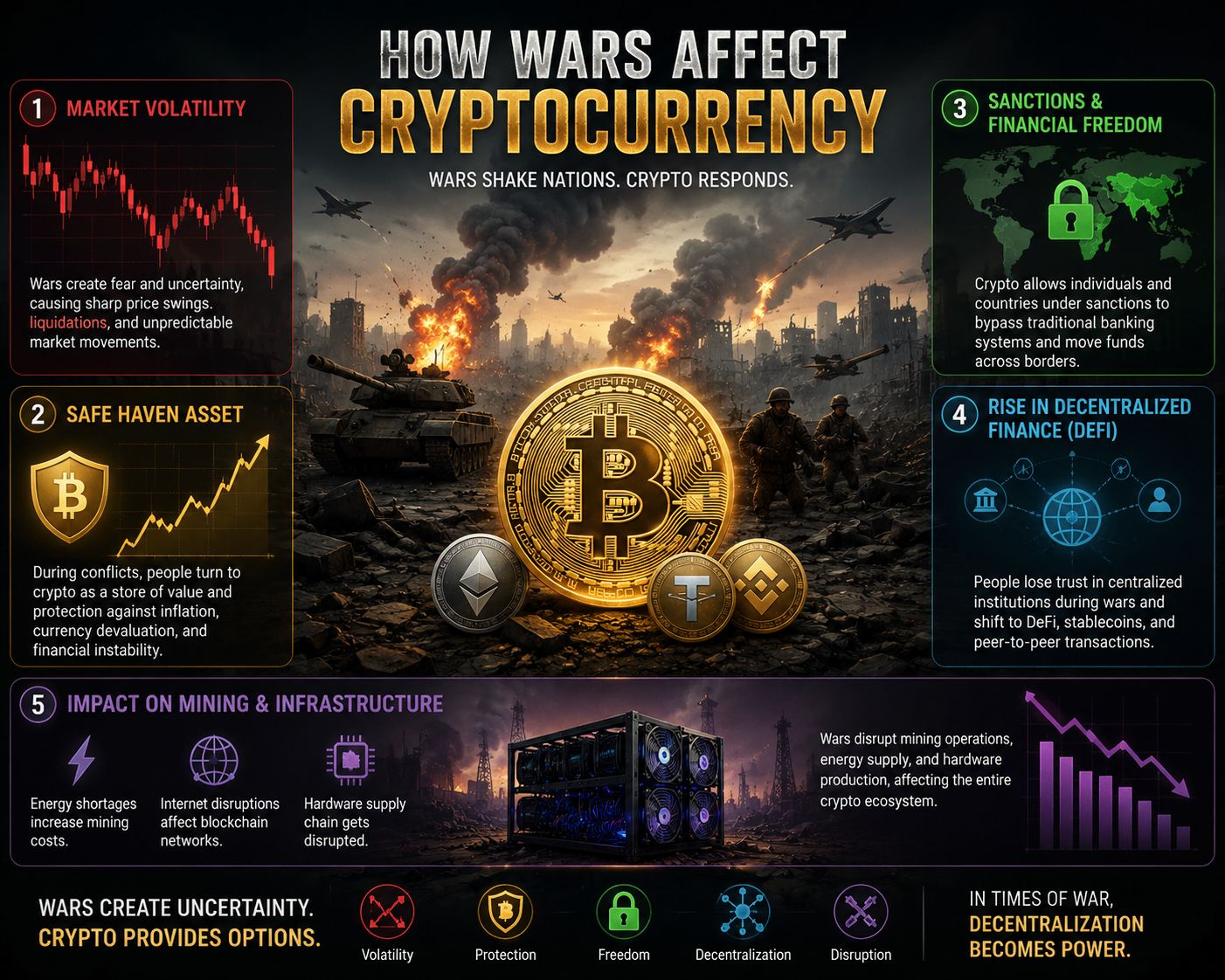
1. Extreme Market Volatility
Wars create fear in financial markets.
As a result:
Bitcoin prices can rise sharply or crash suddenly
Investors move money rapidly between crypto, gold, and cash
Trading volumes increase dramatically
Crypto markets often react instantly to military news, sanctions, or political announcements.
2. Inflation & Currency Collapse
In war-affected countries:
Local currencies may lose value
Banks may restrict withdrawals
Inflation can rise rapidly
People sometimes use cryptocurrencies as an alternative store of value or to transfer money internationally.
3. Economic Sanctions
Countries under sanctions may explore crypto to:
Bypass traditional banking restrictions
Move money across borders
Continue international trade
This has increased global attention on crypto regulation and blockchain monitoring.
4. Increased Demand for Decentralized Finance
Wars can weaken trust in governments and banks.
Some users turn to:
Decentralized wallets
Peer-to-peer payments
Stablecoins
Blockchain-based financial systems
Because crypto operates globally, it can remain accessible even during banking disruptions.
5. Cyber Warfare & Security Risks
Modern wars include cyberattacks.
Crypto-related risks include:
Exchange hacks
Wallet theft
Phishing attacks
Infrastructure disruptions
Cybersecurity becomes more important during geopolitical instability.
6. Mining & Energy Disruptions
Wars can affect:
Electricity supplies
Internet infrastructure
Semiconductor production
Energy prices
This impacts crypto mining profitability and blockchain operations globally.
7. Government Regulation Increases
During conflicts, governments may tighten crypto laws to:
Prevent illegal financing
Track cross-border transactions
Enforce sanctions
Increase financial surveillance
This can influence market confidence and adoption.
8. Rise of Stablecoins
During uncertain periods, many traders move funds into stablecoins instead of volatile cryptocurrencies.
Examples include:
Tether
USD Coin
These are often used for quick transfers and temporary protection against volatility.
Final Thought
Global wars create uncertainty, and cryptocurrency often becomes both:
A financial refuge for some users
A highly volatile risk asset for investors
Wars accelerate discussions about decentralization, digital money, cybersecurity, and the future of global finance.
#crypto #Bitcoin #blockchain #Web3 #CryptoNewss