

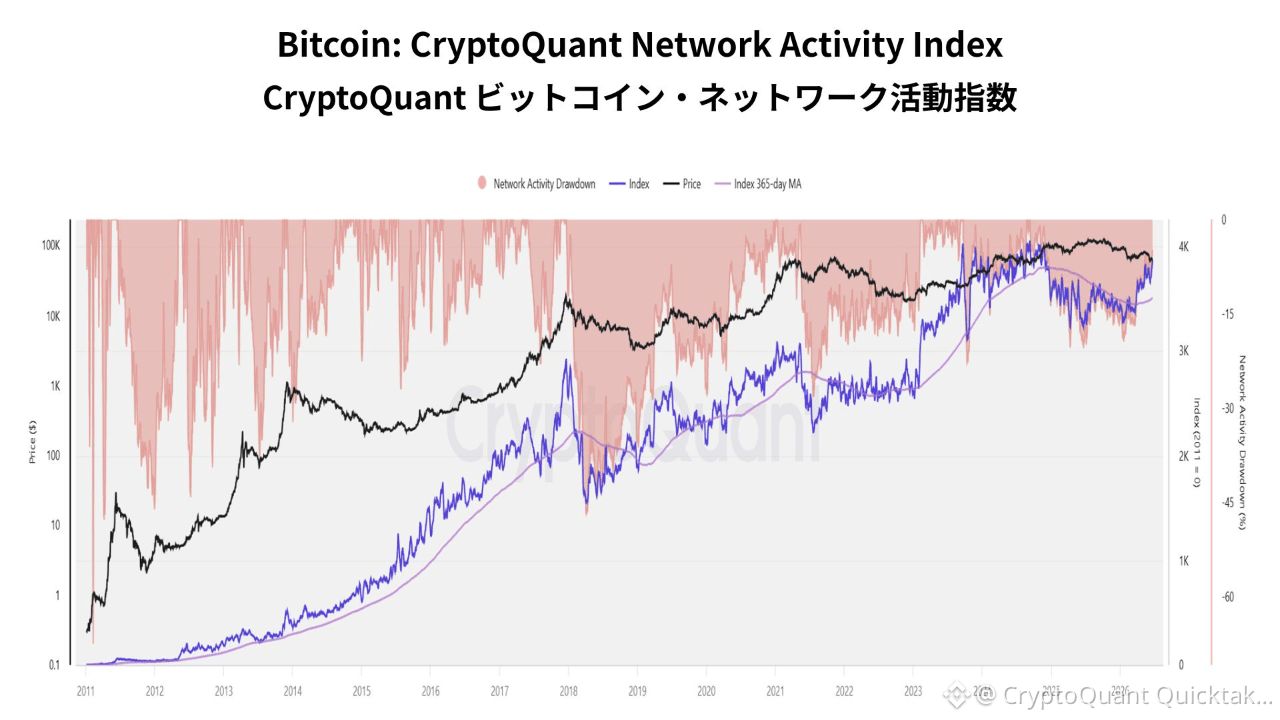
According to CryptoQuant’s Bitcoin Network Activity Index, Bitcoin network usage remains near record highs. The index combines metrics such as active addresses, transaction counts, UTXOs, and block space demand to measure real network activity.
What makes this trend notable is that activity is rising even while Bitcoin remains below its all-time high. Historically, higher prices attracted more users. Today, however, network usage is expanding independently of price performance.
A key driver is the emergence of new Bitcoin applications:
Ordinals allow data such as images, text, and NFTs to be permanently inscribed onto individual satoshis, creating a Bitcoin-native digital asset ecosystem.
BRC-20 introduced token creation on Bitcoin using Ordinals, enabling meme coins and community tokens without smart contracts.
Runes, developed by Ordinals creator Casey Rodarmor, improves token efficiency by leveraging Bitcoin’s native UTXO model, reducing network overhead.
These innovations have increased demand for block space and expanded Bitcoin’s role beyond payments. Bitcoin is increasingly being used not only to transfer value, but also to store and verify data.
At XWIN, we view this as an important structural shift. While ETF inflows, institutional demand, and macro conditions continue to influence price, network adoption is growing beneath the surface. This suggests Bitcoin’s usage cycle and price cycle may be beginning to diverge.
The lesson from on-chain data is clear: Bitcoin should not be evaluated by price alone. Its network is continuing to evolve, even during periods of market weakness.
Written by XWIN Japan