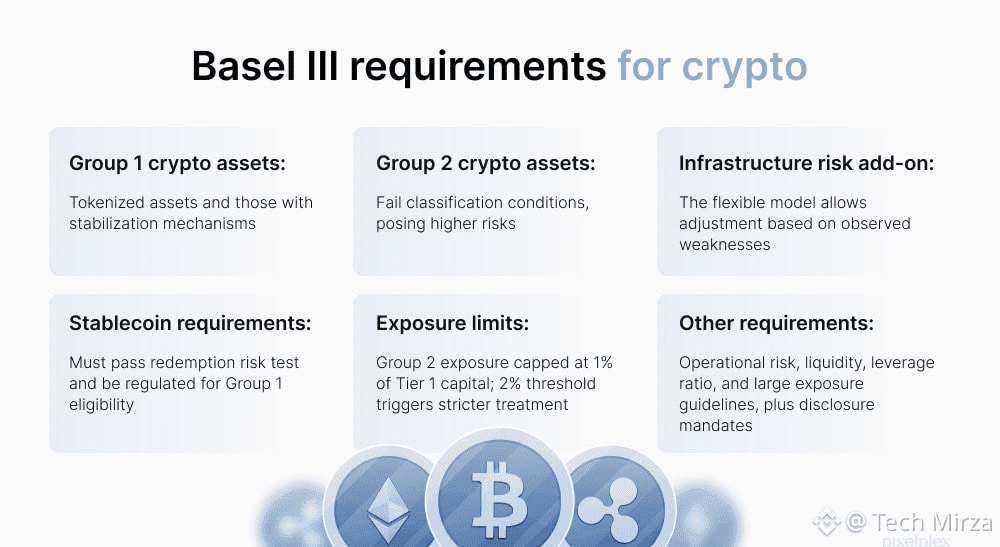
Under the Basel III framework, XRP is currently classified under "Type 2 crypto exposure," which comes with an extremely high 1250% risk weight.
Translation for Wall Street:
👉 Holding XRP on a bank's balance sheet is incredibly capital-inefficient—essentially irrational. For every $1 worth of XRP exposure, banks must set aside $12.50 in capital reserves. This is why banks have hesitated for years—not because of demand or the technology itself, but because of the regulatory capital requirements.
The Turning Point:
What many investors are missing is that as legal and regulatory clarity around XRP evolves, there is a real possibility that it could be reclassified into a lower-risk category (such as Type 2B or "qualifying exposure"). This reclassification could drastically reduce or even eliminate the current punitive capital requirements.
If this happens, the implications are massive:
XRP becomes much easier for banks to hold on their balance sheets.
Banks can begin to custody, deploy, and settle transactions using XRP without facing extreme capital penalties.
Liquidity provisioning would shift from off-balance-sheet activity to direct institutional ownership.
This shift isn't about speculation on price—it’s about how banks and financial institutions handle capital and risk. The same capital rules that determine whether trillions of dollars move or stay on the sidelines are at play here.
The Endgame:
XRP is positioning itself to become a Tier-1 digital asset for global institutions.
When regulatory rules around capital treatment change, it's not a slow trickle of demand—it’s a flood. Investors who are focused only on price speculation might not see it, but the real game-changer is regulatory reclassification. And when that happens, the dynamics will shift rapidly.