
Honestly, lately I've been feeling it more and more: maybe Web3 has burned out for a lot of people. The big promise was always "be your own bank" total freedom, no intermediaries, full control over your money and assets. In the short term, that sounds empowering. But in the long run? It turns out being your own bank is exhausting.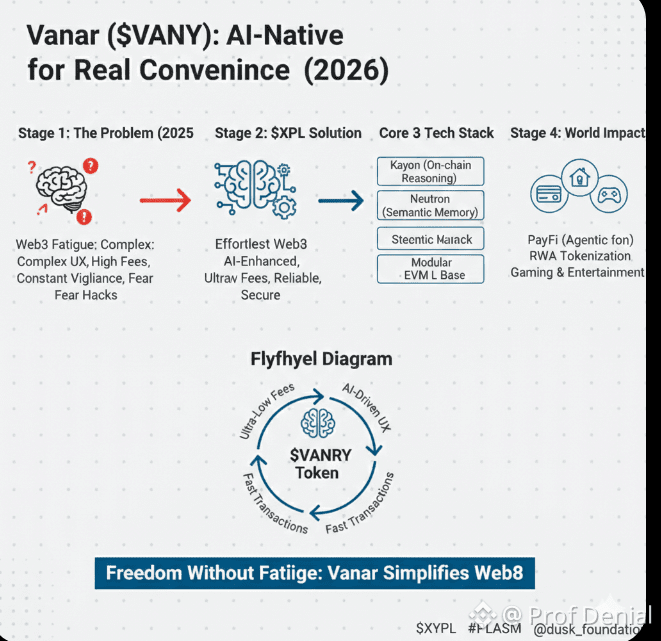
You have to memorize or securely store your seed phrase forever, double check every transaction to avoid mistakes, live in fear of hacks or phishing, pay unpredictable gas fees, switch networks constantly, wait for confirmations that sometimes take minutes (or longer during congestion), and juggle multiple wallets or tools. If you're not tech-savvy, it's pure chaos lost funds, confusing interfaces, endless tabs open. Many aren't tired of crypto itself; they're tired of the constant responsibility that "freedom" brings. What was sold as liberation feels like 24/7 stress and vigilance. True freedom shouldn't require so much mental load.
This is "fatigue from freedom." People don't want to babysit their wallet anymore. They want things to just work beautifully, fast, reliably, without nerves. And that's exactly where projects like Vanar Chain start looking extremely relevant in January 2026.
Vanar isn't pushing "more decentralization for decentralization's sake." From day one, it acknowledges the pain: ordinary users care about costs, speed, and simplicity, not ideology. Vanar Chain is the first AI-native Layer 1 blockchain, built as a fully integrated stack for PayFi (AI-powered programmable payments and finance) and tokenized real-world assets (RWA). It focuses on making Web3 accessible and low-friction out of the box.
Key ways Vanar addresses the fatigue:
Ultra-low, predictable fees Transfers cost around $0.0005 (nearly negligible), removing the anxiety of high gas eating your funds or surprise spikes.
Fast, high-throughput transactions The modular EVM-compatible L1 base delivers quick blocks and scalability, so you don't wait endlessly for confirmations.
AI-native intelligence for better UX Through layers like Neutron (semantic memory compressing data into smart on-chain "Seeds" for verifiable proofs like deeds or invoices) and Kayon (on-chain reasoning for natural-language queries, compliance automation, and explainable decisions), interfaces become smarter. dApps can feel intuitive, with AI helping reduce dumb errors or complex steps no more "wrong network" disasters.
Focus on real-world use cases PayFi enables seamless, compliant agentic payments (e.g., Worldpay partnership from Dec 2025); RWA tokenization makes assets programmable and verifiable on-chain; gaming/entertainment roots (from Virtua rebrand) target fun, not just speculation. It's geared toward things people actually want to spend time on, not endless management.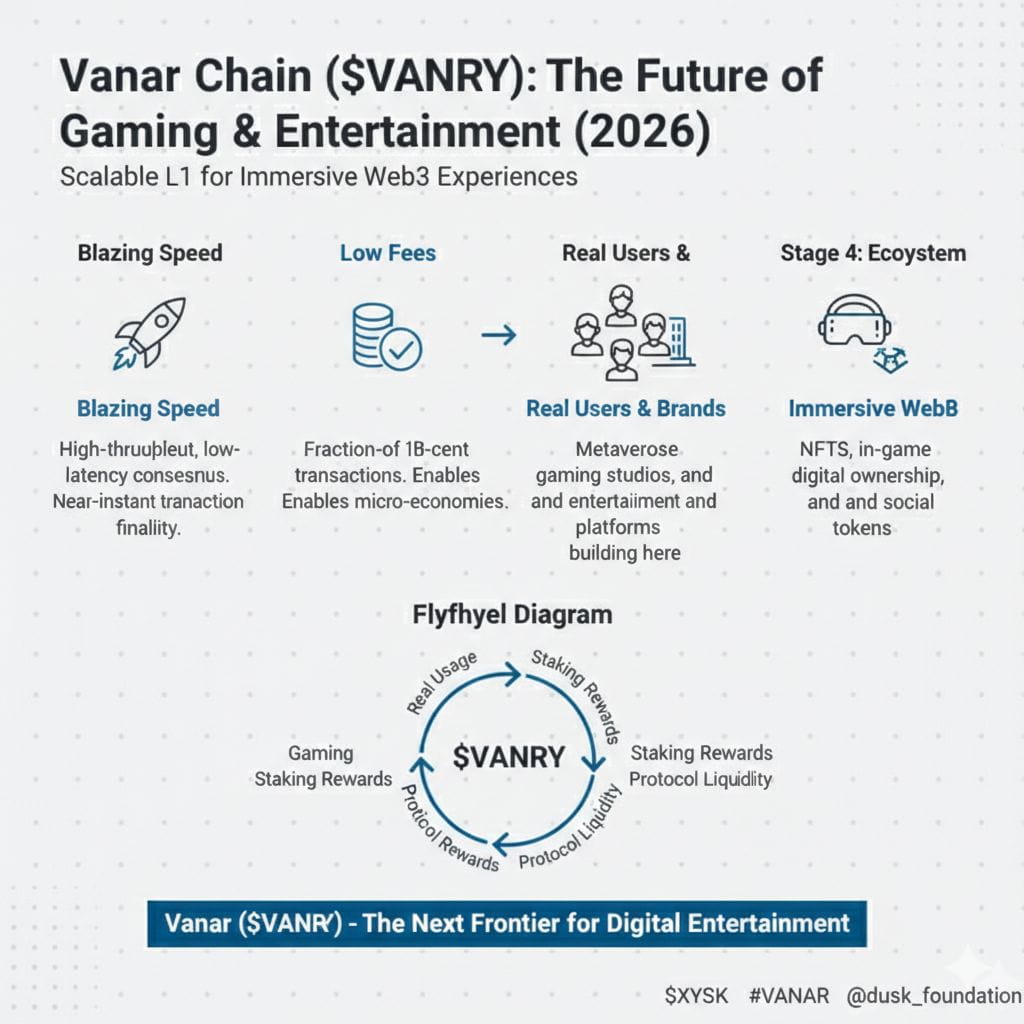
Developer-friendly tools Easy SDKs (JS/Python/Rust), quick integrations, and no middleware hassles mean builders can create user-centric apps faster, hiding blockchain complexity behind clean experiences.
Vanar doesn't preach that decentralization is sacred above all. It says: if convenience and security can coexist, let's deliver both. That's more honest than endless hype about revolution, only to leave users struggling with unusable tools.
The reality? Most people aren't rebels fighting the system they want the system to work for them. If Web3 keeps forcing 15 tabs, MetaMask headaches, and constant paranoia, users will drift back to Web2, where things "just click" despite the trade offs (censorship, control). Whoever makes decentralization comfortable and human-first will win the masses.
In my view, Vanar is asking the right question: what if freedom didn't have to be so tiring? With its AI-embedded stack (live since Jan 19, 2026 milestones), low-friction design, and focus on PayFi/RWA, it bridges the gap between the Web3 ideal and everyday reality. I don't know if it'll go fully mainstream, but it's tackling the burnout head-on and that's why it's gaining attention now, as fatigue becomes a mainstream conversation in crypto.
What do you think? Is there still energy left to "be your own bank," or are we ready for projects that handle the hard parts so we can actually enjoy the freedom?
