
Vanar is founded on a clear yet far-reaching belief: for blockchain to reach mainstream relevance, it must fade into the background rather than dominate the experience. From its inception, Vanar has been built as a Layer 1 blockchain focused on practical adoption instead of technical showmanship. Rather than pursuing short-lived hype or purely financial experiments, it concentrates on familiar digital spaces—such as gaming, entertainment, brand engagement, and interactive online environments—enhancing them with Web3 technology that operates seamlessly behind the scenes.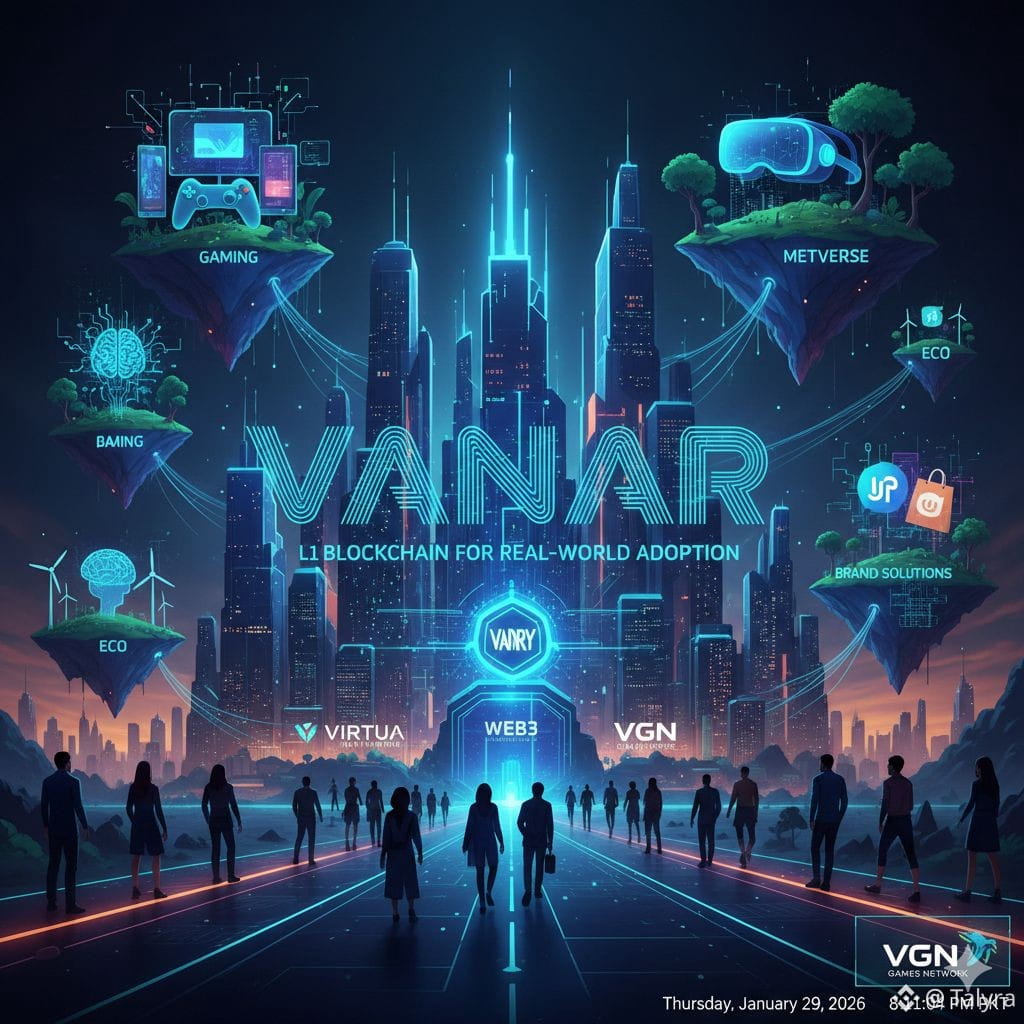
A defining strength of Vanar lies in the team’s extensive experience with consumer-driven industries. This is not a blockchain created in abstraction; it is shaped by years of hands-on work with games, entertainment ecosystems, and global brands. That real-world insight informs every design decision. Transactions are optimized for speed because user patience is limited. Costs are kept minimal because features like microtransactions, in-game items, and digital incentives only function when fees are barely noticeable. The network is also architected for horizontal scalability, allowing it to handle high levels of activity without sacrificing performance—an essential requirement for reaching a broad user base.
Although Vanar spans several sectors, each use case supports a single overarching objective: making digital ownership intuitive. Within gaming, the network enables assets to move effortlessly across experiences without requiring players to manage wallets or understand gas fees. In metaverse environments, it supports persistent digital identities and assets that remain under user control rather than platform ownership. For brands, Vanar provides tools to build loyalty programs, digital collectibles, and interactive campaigns that feel purposeful and engaging instead of experimental. Its initiatives around AI and sustainability further reinforce a commitment to long-term value rather than chasing fleeting trends.
Vanar’s journey is also central to its identity. The project originally emerged as Virtua before evolving into a fully independent Layer 1 blockchain—a transition that marked its shift from a single-product vision to a broader infrastructure-focused approach. This evolution included the introduction of the VANRY token, which now serves as the backbone of the network. VANRY is designed with utility in mind: it enables transactions, incentivizes validators, and supports the economic framework that maintains network security and stability. Its function aligns closely with Vanar’s belief that tokens should enable ecosystems, not dominate them.
Platforms such as the Virtua Metaverse and the VGN games network demonstrate how this philosophy is applied in real-world scenarios. These are not isolated proofs of concept, but active ecosystems intended to attract users who may never identify as crypto participants. People play, explore, trade, and interact naturally, while Vanar quietly manages the underlying blockchain processes. This approach turns the idea of onboarding billions of users from marketing language into a practical design principle that influences every layer of the technology.
Rather than positioning itself as a loud disruptor, Vanar operates like dependable infrastructure—something that fades into the background when it functions correctly. Its emphasis on sustainability, developer-friendly tools, and genuine user behavior sets it apart from many other Layer 1 networks. Instead of forcing people to learn blockchain, Vanar reshapes blockchain to fit existing user habits.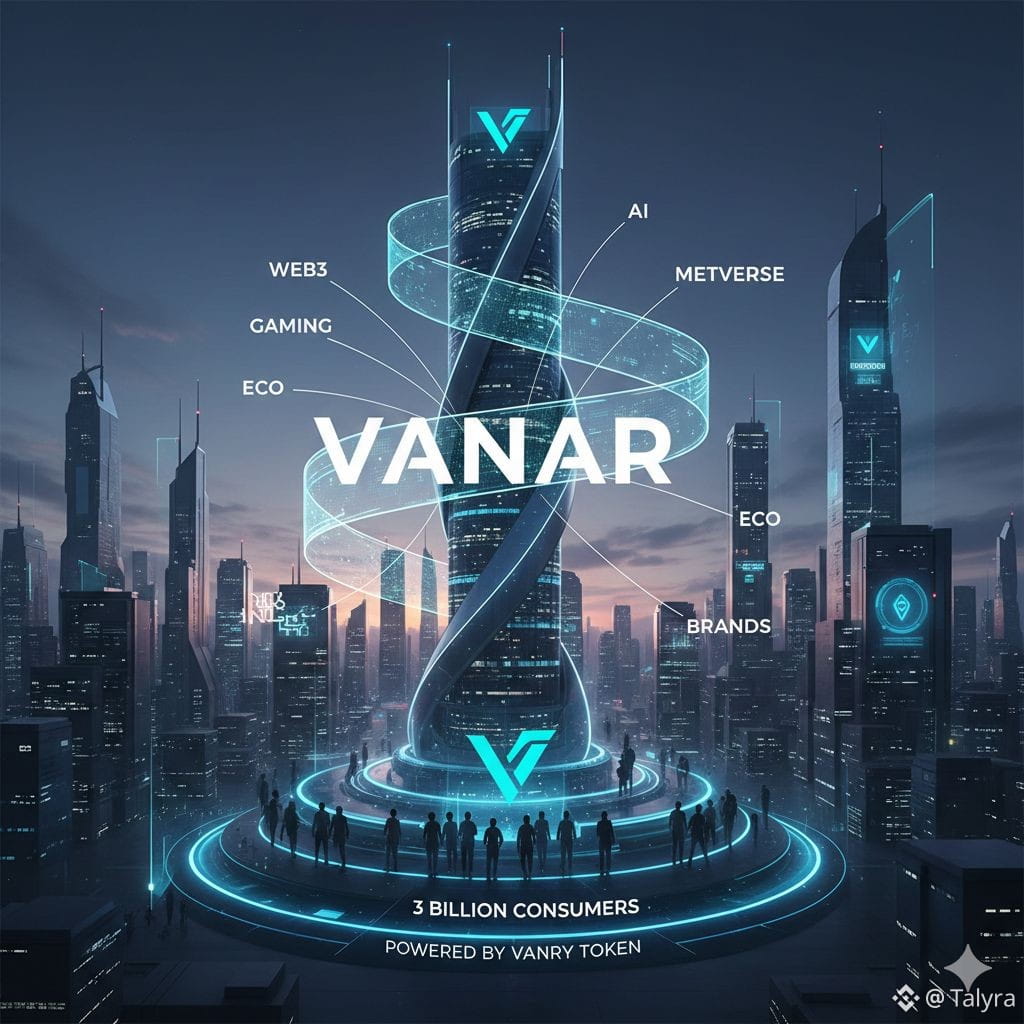
In an industry crowded with bold claims about performance and innovation, Vanar’s advantage is its discipline. It builds steadily, prioritizing usability and durability over spectacle. If Web3 is to become a natural part of everyday digital experiences, it will likely be through platforms like Vanar—networks designed not to dazzle on first impression, but to remain relevant through consistent, real-world
