

Bitcoin’s latest price surge has raised speculation about a possible bottom or trend reversal. However, the key question is not the size of the move, but whether it reflects a structural shift in demand.
In Bitcoin markets, a “bounce” typically refers to a temporary rebound within a broader downtrend. Such moves are often driven by short-covering, position adjustments, and sentiment reversals, rather than fresh spot demand. They tend to occur after periods of heightened fear, when selling pressure briefly eases.
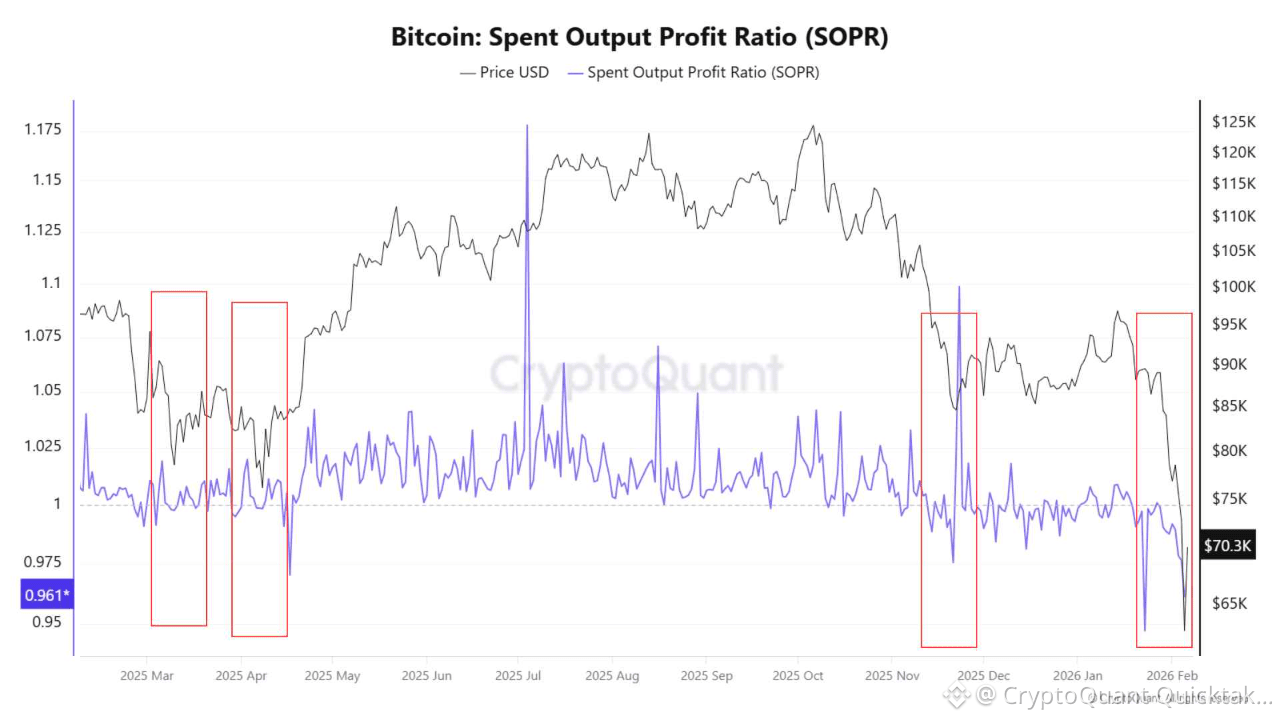
The on-chain indicator SOPR (Spent Output Profit Ratio) provides important context. SOPR shows whether coins moved on-chain are being sold at a profit or a loss. When SOPR falls below 1, it indicates that market participants are selling at a loss, prioritizing risk reduction over profitability.
Historically, SOPR remaining below 1 has not marked market bottoms. Instead, it has appeared during early to mid bear-market phases, often alongside rebounds that fail to sustain. True bottoms have formed only after prolonged SOPR weakness, repeated failed recoveries above 1, and broad loss realization.
Current data fits this pattern. While price has rebounded, SOPR has yet to recover and hold above 1, and evidence of sustained spot-driven inflows remains limited. As such, today’s move is better viewed as a reflexive bounce within an adjustment phase, not confirmation of a durable uptrend.
Written by XWIN Research Japan