
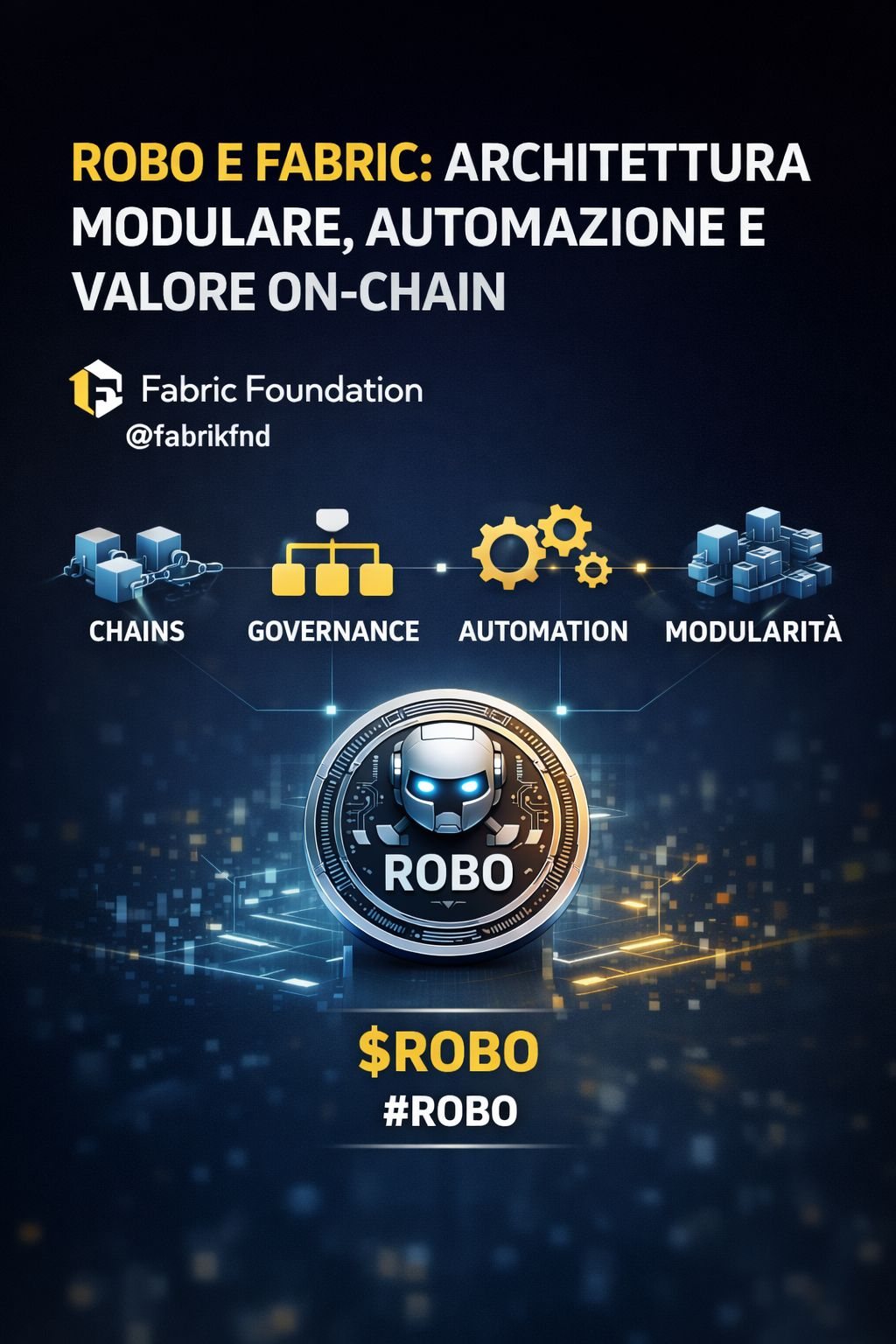
In the Web3 landscape, true innovation is not just about creating a chain, but building an infrastructure capable of orchestrating complex processes in a modular way.
This is where @Fabric Foundation comes into play with the token, #ROBO a central element to power and coordinate the functions of the Fabric Foundation ecosystem.
Fabric stands out for its integration-oriented approach between automated logics, interoperability, and efficient management of on-chain resources.
$ROBO assumes a strategic role: it can be used to activate services, support decentralized governance mechanisms, and incentivize the participation of network actors.
From a technical standpoint, a modular model allows for faster updates, adaptability to enterprise needs, and a possible reduction in operational costs compared to traditional monolithic structures. This opens the door to use cases in supply chain, digital identity, and financial automation.
If adoption grows and the ecosystem develops concrete integrations, $ROBO it could benefit from increased functional demand related to the real utility of the network. The key will be @fabrikfnd's ability to transform architectural vision into large-scale operational applications.
In a market that rewards utility more than narrative, Fabric Foundation and $ROBO could carve out an interesting space in the medium term.