

SIGN is one of those names I didn’t expect to sit with this long. I’m usually quick to move on when something sounds too clean on paper, especially in a market that’s messy by default. But this one keeps pulling me back, not in an exciting way, more like something unresolved. I’m looking at it the same way I look at anything that claims to fix structure in crypto — slowly, with a bit of doubt already built in.
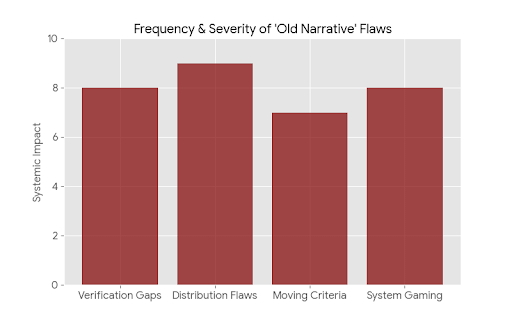
I’ve seen how this space handles verification. It doesn’t, really. It just patches things together and hopes nobody looks too closely. Wallet snapshots, Discord roles, random eligibility rules that change halfway through. Everyone pretends it’s fine until it breaks, and then it’s just noise — complaints, missed rewards, people accusing each other of gaming the system. Then we reset and do it again on the next project.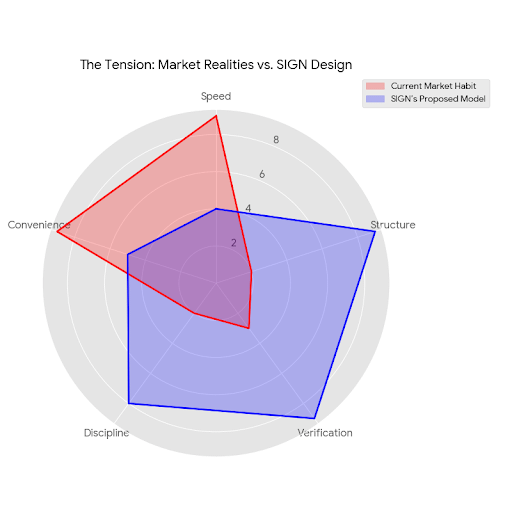
Token distribution isn’t much better. It sounds simple until you actually watch it happen. The idea of “fair” gets stretched pretty quickly when money is involved. Early access leaks. Bots move faster than people. Criteria gets adjusted after the fact. And somehow all of this is treated like part of the process instead of a flaw in it.
That’s the environment SIGN is stepping into. Not a clean slate. A habit.
And that’s where I get stuck thinking about it. Because solving this isn’t just about building something functional. It’s about getting people to stop relying on broken shortcuts they’re already comfortable with. That’s a harder problem than most teams admit.
On the surface, what SIGN is doing makes sense. A system for credentials. A way to verify things without everything turning into guesswork. A structure for distributing tokens that isn’t completely chaotic. None of that feels revolutionary. If anything, it feels overdue. Like something that should already exist in a space that moves this much value around.
But I’ve been here long enough to know that “should exist” doesn’t mean it will stick.
The real question isn’t whether SIGN works. It’s whether anyone actually leans on it when things get inconvenient. Because that’s where most of these ideas fall apart — not in design, but in usage. People avoid friction, even when that friction leads to better outcomes. Projects cut corners when timelines get tight. Users look for the fastest path, not the cleanest one.
So even if SIGN does exactly what it claims, it still has to fight behavior. And behavior in crypto doesn’t shift easily.
At the same time, I can’t ignore the pattern. The more time passes, the more obvious these gaps become. Verification is still fragmented. Distribution is still inconsistent. Every cycle brings the same complaints, just louder. That usually means something underneath isn’t being solved, just worked around.
And that’s probably the only reason I haven’t dismissed this.
It doesn’t feel like it’s trying to create a new narrative. It feels like it’s trying to clean up an old one that never really worked in the first place. That’s a different kind of ambition. Less visible. Less exciting. But maybe more necessary.
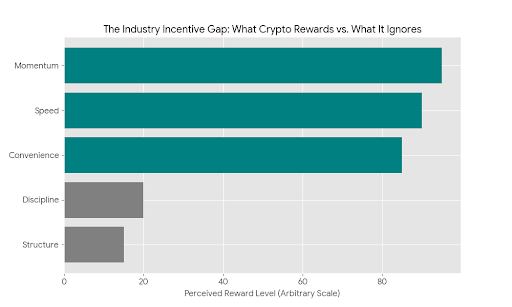
Still, necessity doesn’t guarantee adoption. I’ve watched useful tools get ignored simply because they didn’t fit the pace or mindset of the market. Crypto rewards momentum, not discipline. It rewards speed, not structure. Anything that asks people to slow down and verify before acting is already pushing against the current.
So I sit with that tension. Part of me sees the logic. The other part has seen too many logical things fail quietly.
I’m not convinced this becomes essential. I’m not convinced it gets widely used. But I’m also not comfortable writing it off.
It’s just there now, in the background, something I keep checking without really meaning to. Not because I’m expecting a breakout moment, but because I want to see if it holds up when nobody is paying attention.
If it does, that’s when it becomes interesting.