

In the crypto market, “altcoins” refer to all assets other than Bitcoin. While major assets like Ethereum, Solana, and XRP are included, they are fundamentally treated as higher-risk assets relative to BTC. In practice, analysis often focuses on top altcoins with sufficient liquidity and reliable data.
As of 2026, the market is in a validation phase with no clear trend. Bitcoin has held within a range without entering a strong uptrend, while altcoins remain under deeper pressure.
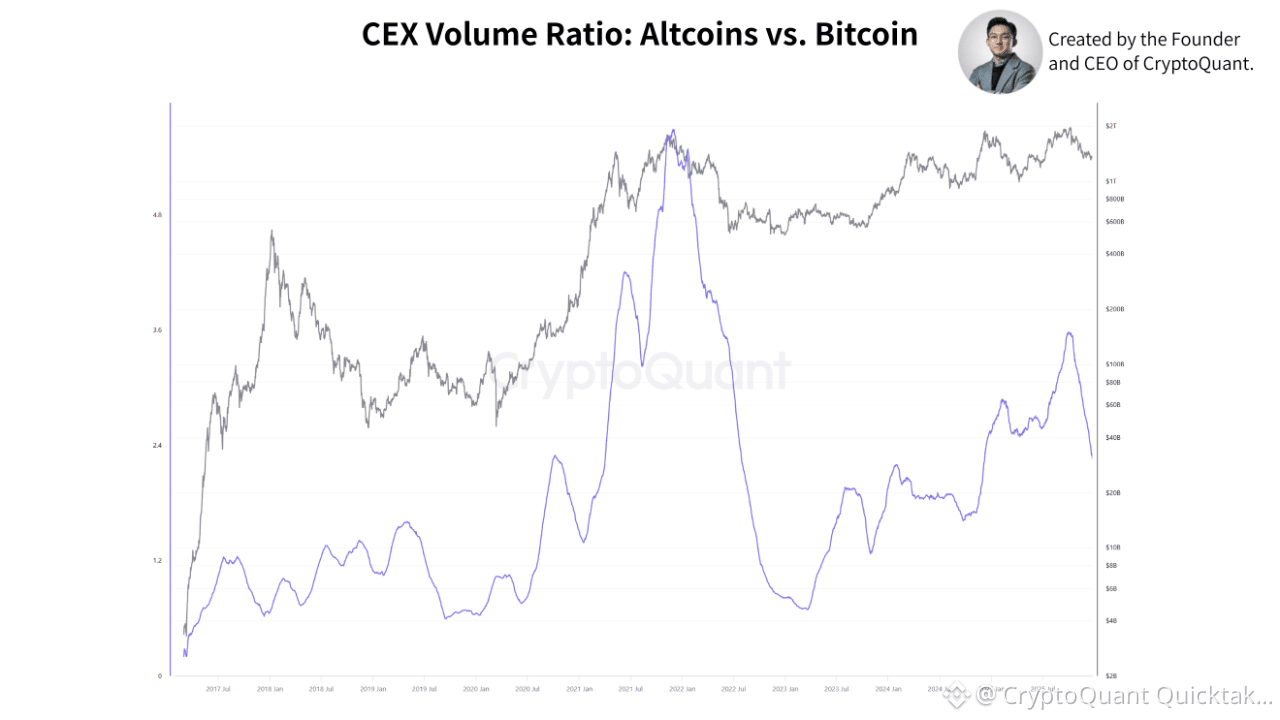
This divergence is evident in the CEX Volume Ratio (Altcoins vs BTC), developed by CryptoQuant CEO Ki Young Ju. The ratio has declined significantly since the 2021 peak, indicating a structural shift in capital preference from altcoins to Bitcoin. This reflects not just outflows, but a broader risk-off positioning across the market.
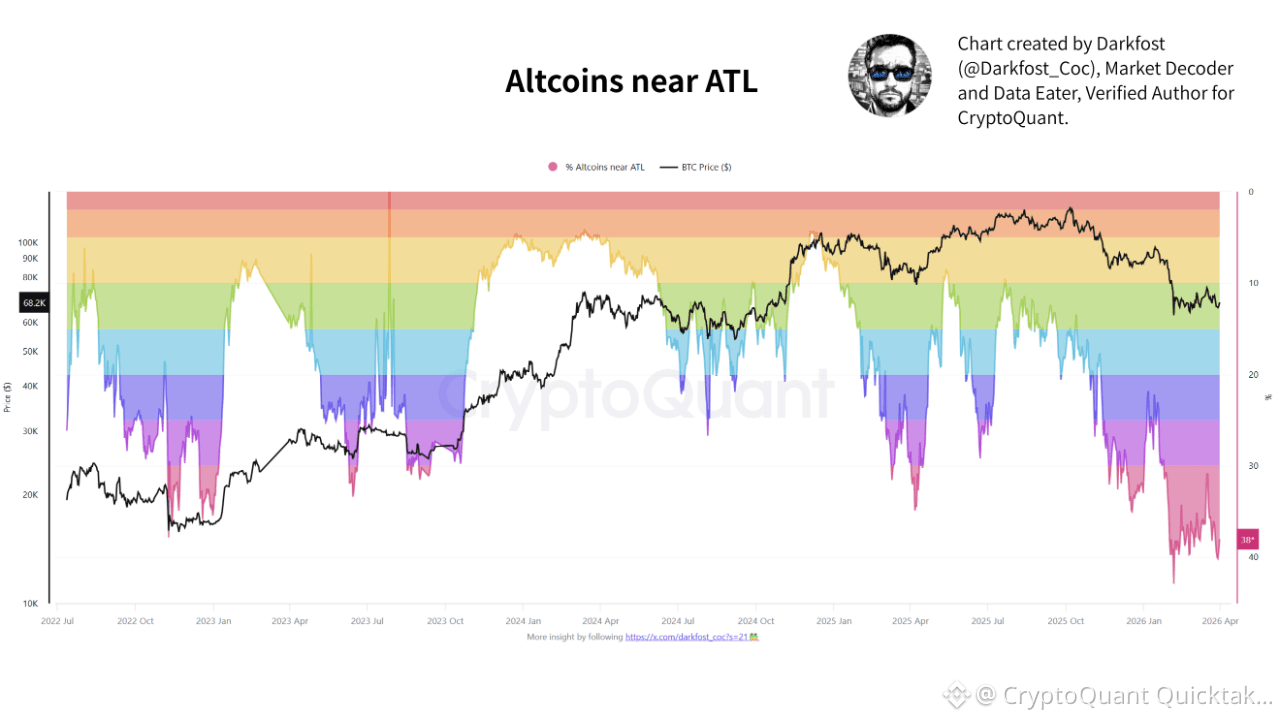
Further confirmation comes from the “Altcoins near ATL” metric by CryptoQuant analyst Darkfost. Currently, about 38% of major altcoins are trading near their historical lows. Importantly, this reflects widespread unrealized losses rather than simply low prices.
Historically, such levels appear during late bear phases, suggesting that altcoins may be in an advanced stage of sell-side exhaustion. However, the persistently low volume ratio indicates that broad demand recovery has not yet occurred.
The base scenario remains a BTC-led range environment. While altcoins may be nearing a structural bottom, sustained recovery is unlikely without renewed capital inflows and rising trading activity.
If BTC weakens structurally, altcoins could face further downside due to their relative fragility.
At present, the market reflects an asymmetric structure: BTC holding, altcoins already adjusted.
The base case is continued BTC-led consolidation. However, if altcoin volume expands and the ATL ratio declines simultaneously, this view should be reassessed.
Written by XWIN Research Japan