Good afternoon, ladies.
Today, the WLFI project is getting spammed with the same question.
Some folks are calling the lock-up too harsh, others are questioning the vote's integrity, and there are those worried this might be a well-packaged power play.
I dove deep into the on-chain data again, dissecting the voting structure, time frames, and mechanism design multiple times.
Honestly, if you only look at the surface of this, it's easy to get it wrong.
Layer one: what you see is the vote, but what's really in play is the power structure.
In just a few hours, the yes votes are nearing 99%, but the voting scale is way beyond the actual spread.
Many people's first reaction is: "Is this cheating?"
But a cooler answer is: "This is more like a power crush within the rules, rather than a violation."
If voting is weighted by token holdings, then the outcome was never democratic from the start; it’s an expression of capital structure.
The problem isn't whether the results are true or false, but how power is distributed.
When users think they are participating in DAO governance, but in reality, they are engaging in equity voting, this cognitive dissonance is the real trigger for emotional outbursts.
This isn't just a simple matter of right or wrong; it's a structural issue.
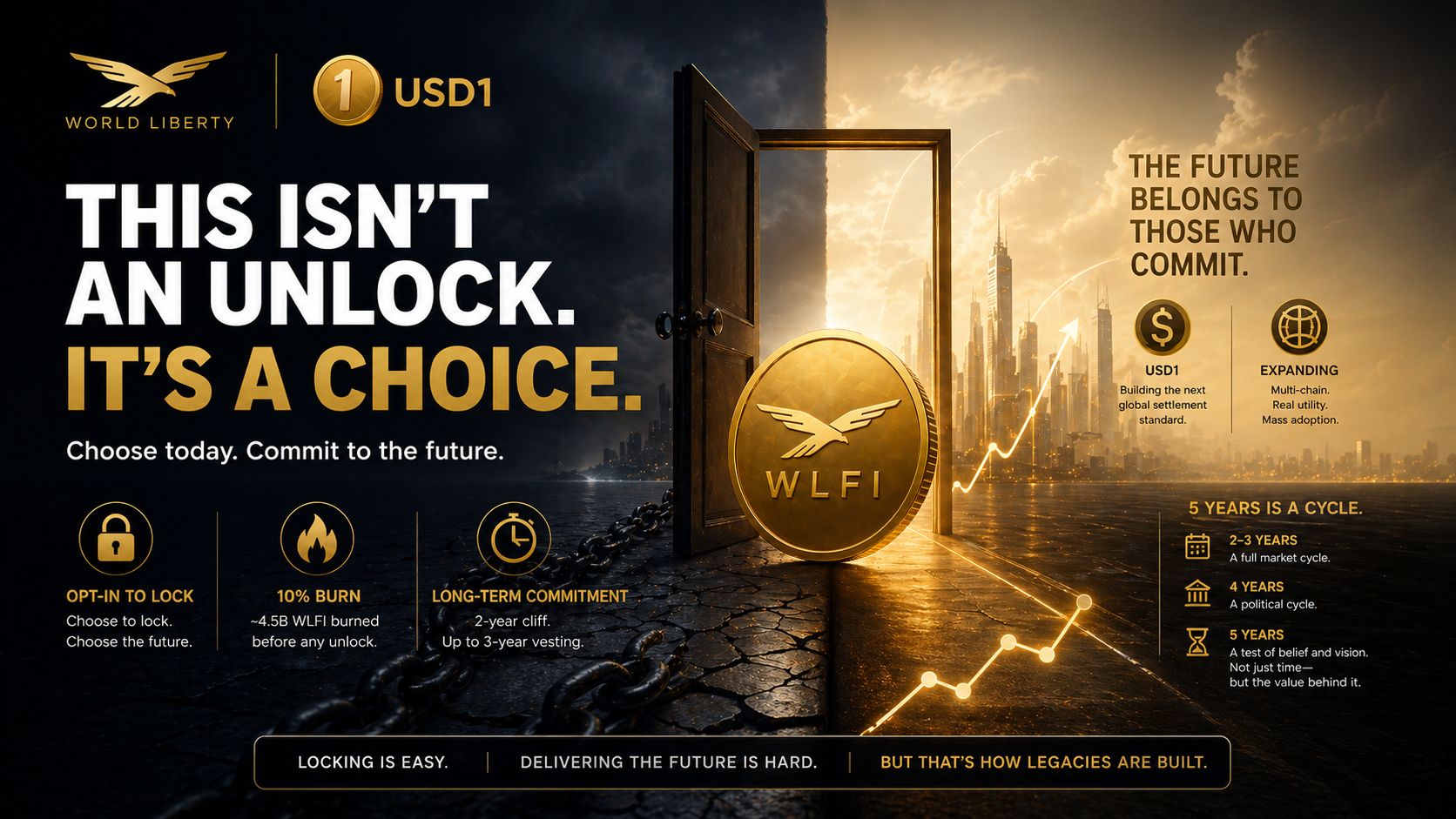
Second layer: This isn't unlocking; it's like a voluntary binding screening mechanism.
What is traditional unlocking?
When the time comes, the chips are released, and the market catches them.
But this time is different.
You must choose to enter the lock-up cycle yourself.
If you don't choose, the chips are locked permanently.
This step is actually quite ruthless.
▪️ It strips away the possibility of 'lying flat and waiting'.
▪️ Forcing all major holders to express their future stance now.
What's more critical is that the team first burns 10% (about 4.5 billion tokens) before discussing the release.
This isn't a verbal commitment; it's directly taking a knife to the supply curve.
To put it bluntly:
▪️ It’s not about whether you believe in the project.
▪️ The project first uses losses to gain trust.
This design is essentially screening people, not locking coins.
Third layer: The real danger isn't the lock-up, but time.
But there's a more critical issue here that’s easily overlooked.
In the crypto market, a complete product cycle lasts only 2–3 years.
And this time, the lock-up is for 5 years.
In other words:
▪️ A round of bullish and bearish cycles.
▪️ A semi-industry product cycle.
Even in the real world, a president has changed terms.
So the question arises:
▪️ Who can guarantee that the narrative won’t be rewritten in these 5 years?
▪️ Who can guarantee that demand growth can outpace the unlocking?
Many people think locking up tokens is to prevent a dump, but essentially, it's just:
Delaying the selling pressure from now to the future.
If future support is insufficient, it won't disappear but accumulate.
Like a reservoir:
Not releasing liquidity doesn't mean the liquidity is gone.
It's just that the water level keeps rising.
Once consensus wavers, the release won't be gentle.
Fourth layer: Frontline expansion × back-end locked chips, this is the complete logic.
If you only look at #WLFI , you would think this suppresses liquidity.
But looking at #USD1 together, the logic changes.
During this time:
▪️#Binance is working on cross-account liquidity binding.
▪️#bybit is seizing trading paths.
▪️ Multi-chain is paving the way for payment and settlement scenarios.
The frontline is seizing the right to use,
The back end is cleaning up the chips.
▪️ A responsible expansion.
▪️ A responsible stabilizer.
This is the complete structure.
Because for a stablecoin to become a settlement base, its governance layer shouldn't be a group of people ready to exit at any time.
Lastly, let's talk about the most real judgment.
This isn't just a simple good news; it's not merely a risk.
It feels more like an extreme experiment:
▪️ Using mechanisms to counter human nature.
▪️ Using time to screen beliefs.
▪️ Rewriting power with structure.
Whether the experiment can succeed depends on future demand matching today's lock-up.
"What’s locked is never the chips, but the choices; what needs to be validated is not time, but whether the future is worth waiting for."
In this chess game, no one can provide an answer right now.
But what’s certain is that this is no longer the rhythm of an ordinary project; it's attempting to rewrite the rules.
What do you think?
This is the beginning of long-termism.
Or is it the risk of delayed release?
Share your judgment in the comments.