AI is totally flipping the script on how we do software development. Back in the day, getting a product off the ground could take a team weeks or even months. But now, with the rapid rise of AI Agents, auto-generating code, auto-testing, and auto-deploying has become the norm. Efficiency is through the roof, and software production is speeding up like crazy. But a lot of folks are missing the point: once code starts getting massively 'auto-generated,' what really matters isn't just 'who can write code,' but rather 'are these codes trustworthy.'
In fact, nearly all software, websites, and AI applications today are built on a huge open-source dependency system. From Packages to Dependencies, and then to Maintainers and Governance, these invisible foundational infrastructures determine whether software is genuinely secure, stable, and sustainable. But the average user, and even many developers, often have no clue what their software is actually relying on. If there’s a vulnerability, a malicious update, or a maintenance break in those foundational open-source components, it could ripple through the whole ecosystem.
What Tea Protocol aims to do is establish a 'software trust layer'. It's not just about creating a new public chain or merely an AI concept; it's trying to build a verifiable, traceable, and incentivized economic system for the entire open-source world. Through Tea Network and the TEA DApp, developers can trace software dependencies, verify code origins, and discover high-quality open-source projects, all while ensuring that those who genuinely maintain the open-source ecosystem long-term receive reasonable incentives. In a way, Tea is like setting up a 'credit system' for the software world of the future AI era.
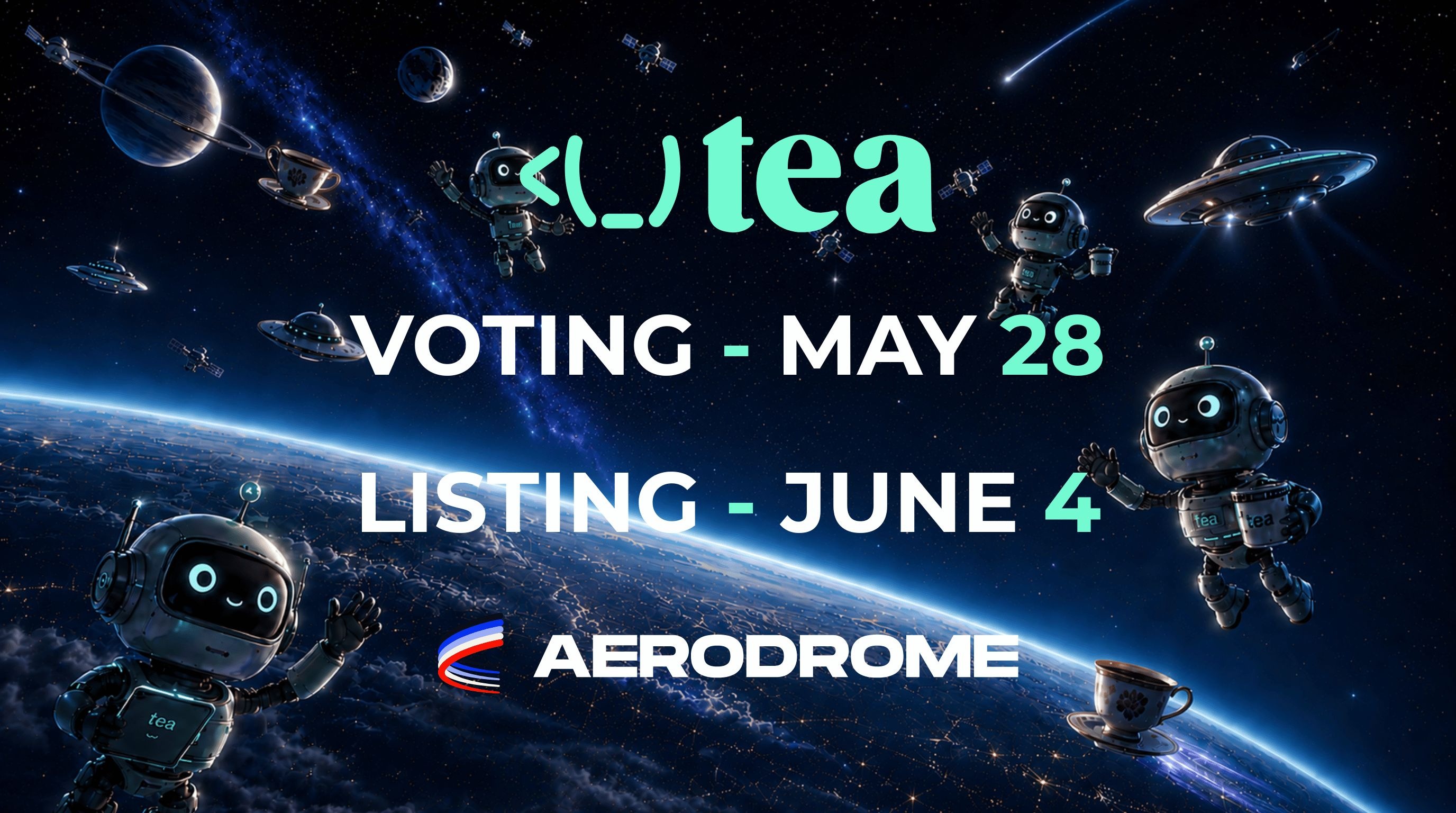
Recently, the timeline for Tea has become clearer. On May 28, the Aerodrome voting will officially kick off and last for a week; on June 4, $TEA will have its official TGE. The officials also mentioned that more listings on CEX will be announced in the coming weeks. This means that Tea is gradually moving from the 'concept phase' into the actual ecosystem launch phase. For many following the Base ecosystem, AI infrastructure, open-source economy, and software supply chain security, Tea has started to become one of the more talked-about projects recently.
Why are more and more people starting to discuss Tea lately? The reason is pretty simple. AI will make 'code production' easier, but as code generation becomes easier, the risks will concurrently increase. The future software world is likely to be flooded with a large amount of unverifiable, origin-unknown auto-generated code. What will become truly scarce is not the code itself but who can establish the trust mechanism behind that code. Essentially, what Tea aims to create is the 'trust infrastructure' for the AI software era.
In the past, the internet was built on open-source foundations, and it's highly likely that the future AI world will continue to do the same. As everyone is able to rapidly generate code, factors like trustworthiness, security, maintainer reputation, and dependency transparency will become even more crucial. Whether Tea Protocol can genuinely establish this system will take time to confirm, but at least it's attempting to tackle a problem that will undoubtedly grow in importance.
Of course, this is just my personal opinion and shouldn't be taken as investment advice. Everyone should DYOR!
Official announcement tweet: https://reurl.cc/L2g64x
Tea party entrance: https://reurl.cc/A9a0XY