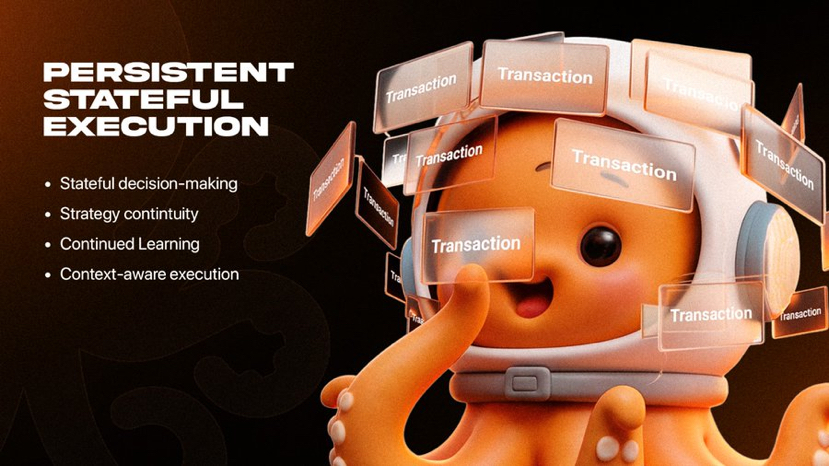
A couple of days ago, I was organizing a wallet interaction record, and the more I organized, the weirder it felt.
Some of these addresses are for my own testing, some were from tasks I did earlier, and others I just checked out once on a whim. Ideally, these things shouldn't be mixed together, but the reality is, my notes, on-chain screenshots, project info, and address tags are all scattered in different places. When I want AI to help analyze, my first thought isn't 'Awesome!' but rather a bit of worry: will it mix things that shouldn't be mixed?
This is a key point I wanted to test when I looked at @OpenLedger this time: can it distinguish between 'personal work area' and 'public data contributions'?
Many AI tools' biggest issue isn’t the lack of memory, but rather unclear memory boundaries. If today you have it look at a wallet, tomorrow analyze a project, and the next day organize content, with all that context mixed up, it might seem smarter in the short term, but it’s pretty dangerous in the long run.
For instance, just because I want OctoClaw to remember a temporary observation address doesn't mean I want to contribute this address to Datanets; if I have it use RAG Attribution to cite materials, it doesn't mean my private notes should become public data; if I have it help me write content, it doesn't mean my research path should be learnable by other models.
To put it simply, AI needs to know not just how to remember, but also what can be remembered, where to store it, and whether it can be used by others.
The direction of OpenLedger is quite critical. It has modules like Datanets, Proof of Attribution, RAG Attribution, and ModelFactory. If the boundaries aren’t set correctly, users will worry that their research materials will be swallowed up by the system; with clear boundaries, the experience changes completely.
Here's how I ideally want to use it:
I'm setting up a 'private project workspace' in OctoClaw, where I'll keep track of addresses I’m watching, my notes, temporary evaluations, and information that needs verification. This is strictly for my Agent and won't default to public Datanets. Once I feel certain pieces of info are valuable, I’ll decide whether to contribute them to the relevant data pool and log the contribution through Proof of Attribution.
This experience is crucial. Because truly valuable research often starts as private drafts; it can't just be public from the get-go. Researchers need to experiment, traders need to keep their observations private, and content creators must digest before they publish. If the AI system doesn’t respect this process, users will hesitate to use it deeply.
Of course, the boundaries can't be too complex either. Regular users don’t want to select a dozen permissions every time. The best experience should default to private, with proactive contributions and clear prompts: this data is only used in this workspace; this one can be submitted to Datanets; this one might participate in attribution records if called by the model.
For $OPEN this sense of boundaries is also very important. Only when users feel secure putting high-quality materials into OpenLedger can the subsequent model calls, data contributions, inference fees, and contribution rewards have a more genuine source. Otherwise, everyone will just feed it public data, and the model will struggle to deepen.
I'm quite restrained in my judgment on this point: it might not generate immediate hype, but it determines whether OpenLedger can attract serious researchers.
AI doesn’t necessarily need to remember more; it's about knowing what to remember.
A truly reliable AI knows what to remember, what to protect, and what to wait for user approval on.