
It's like walking down the street and seeing tons of high-quality fake Rolexes; they keep time just as accurately, even look shinier, but you just know they ain't worth squat.
That's exactly why @OpenLedger has recently caught my huge interest. While everyone else is chasing billions in parameters and trading scores, they've taken an extremely counterintuitive path.
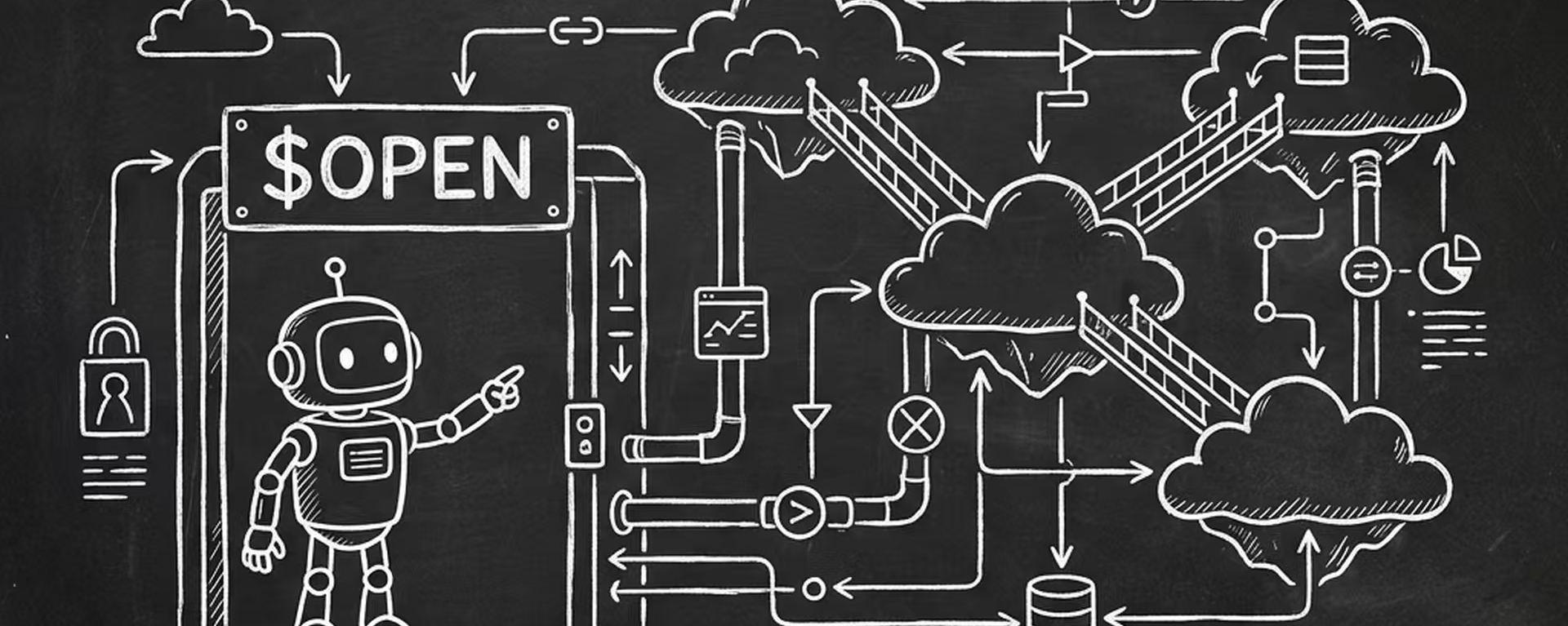
They're not trying to create a smarter 'black box', but rather aiming to establish a 'proof of authenticity' digital rights network.
To put it plainly, OpenLedger wants to attach an unalterable 'certificate of origin' to every output from AI.
You can think of it like the provenance system for luxury watches. The AI model outputs a result, and then OpenLedger’s Proof of Attribution (PoA, attribution proof) mechanism traces on-chain: what dataset did this result come from? Who contributed the data?
That kind of pirate logic—tech giants free-riding on humanity’s data, then locking it in a black box to make money—has been completely overturned here.
I looked into recent industry developments: with tighter regulation such as the EU AI Act, data provenance has become a matter of life and death. In the future, in this massive AI market, if we don’t solve the black-box trust crisis, all intelligent outputs will be severely discounted.
It feels to me like they’re building an extremely sexy cross-domain flywheel.
OpenLedger’s Datanets are responsible for decentralized data collection, while the blockchain is responsible for recording, in an immutable way, the path of every model inference.
Once the provenance of high-quality data is confirmed, AI outputs become trustworthy and traceable. At the same time, the “Payable AI” mechanism ensures that data providers receive direct economic rewards—leading it to attract even more high-quality proprietary data into the ecosystem.
Imagine a real trading scenario. If you’re using an AI quant trading agent, and it suddenly decides to go all-in short on a certain asset—would you follow it directly?
But if you can instantly trace it through OpenLedger, its decision basis is a certain high-quality on-chain emotion dataset that has been verified via multisig—not fake news generated by some junk bot accounts. The value of this kind of “determinism” is immeasurable.
But that also raises some engineering questions.$ETH
Does requiring every AI inference to preserve the on-chain verification path, given today’s infrastructure, bring higher latency and friction costs?
If the time cost of tracing exceeds the efficiency gains brought by AI, then it will only become a toy for a small number of high-net-worth, compliance-friendly verticals (e.g., healthcare and financial institutions), unable to serve as the underlying infrastructure for the next generation of the internet.$LAB
The next direction to watch is:
If OpenLedger can run through the economics of this “Payable AI,” and achieve scale without sacrificing too much performance, then what it builds will be the next-generation internet’s trust system.
Conversely, if you can’t handle the real onslaught of massive high-frequency data, then it’s just a standard decentralized database.
The next step is on-chain throughput—it will be the benchmark for validating this mechanism.