OpenLedger is not only building an AI blockchain; it is slowly shaping a practical execution layer for AI agents, DeFi workflows, and on-chain automation.
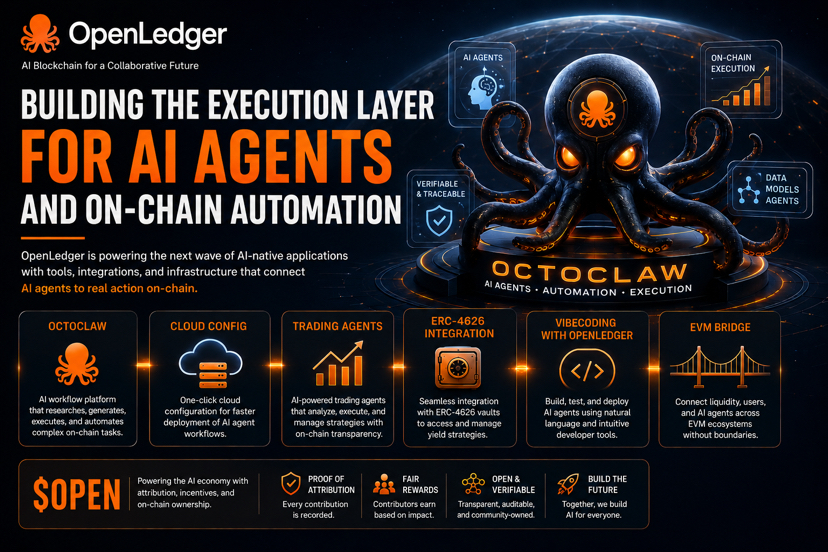
What makes @undefined stand out to me is how its recent ecosystem pieces connect together. Octoclaw is important because it turns AI from a passive chatbot into something closer to an active digital worker: research, generate, execute, and automate. When cloud configuration is added, builders do not need to fight with complex setup every time. They can deploy agent workflows faster and focus more on real use cases.
The trading agent angle is even more interesting. In crypto, speed, logic, risk control, and transparency matter. An AI trading agent connected with OpenLedger can potentially analyze market conditions, interact with on-chain systems, and create a more verifiable automation layer instead of relying only on hidden centralized tools.
The ERC-4626 integration adds another strong DeFi connection because vault standards can help agents interact with yield strategies in a cleaner and more structured way. The EVM Bridge also matters because liquidity and users are not limited to one chain. If AI agents are going to become useful in Web3, they need movement across ecosystems.
For me, the bigger picture is clear: Octoclaw, cloud config, trading agents, ERC-4626, vibecoding, and the EVM bridge are not random updates. They are building blocks for an AI-native blockchain economy where data, models, agents, and liquidity can work together.
That is why I see $OPEN as more than just another AI token. It represents an attempt to make AI agents usable, monetizable, and traceable on-chain.