
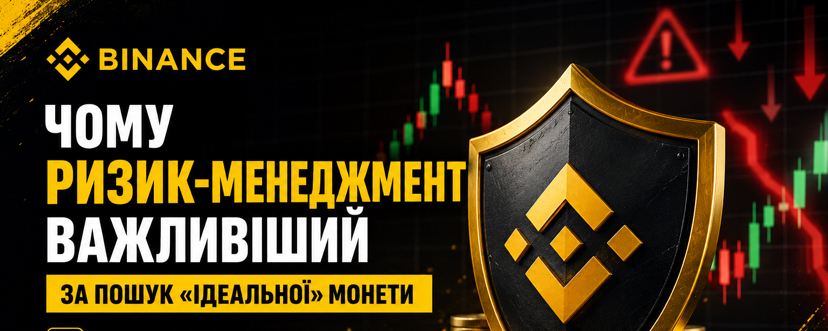
Many newbies enter the crypto market hunting for that coin that will do a 10x or even 100x. Social media is flooded with stories of quick profits, but hardly anyone talks about the flip side — risk management.
The truth is, even the best traders can't predict market movements perfectly in every trade. The difference between successful and losing market participants often isn't in the accuracy of their forecasts, but in how they manage their capital.
Fundamental principles of risk management
1. Don't invest more than you're willing to lose
The crypto market remains one of the most volatile financial markets. Even strong projects can lose dozens of percent in value in a short period.
2. Diversification matters
Keeping all your capital in one asset is a risky strategy. Spreading funds across several assets helps reduce the impact of a bad decision on the overall portfolio performance.
3. Use stop-losses
A stop-loss doesn’t guarantee profit, but it helps limit potential losses. It's better to set your exit level before opening a position, rather than after emotions start to influence your decisions.
4. Control your emotions
Fear and greed remain the main enemies of a trader. Often, it’s the impulsive decisions that lead to the biggest losses. Having a clear trading strategy helps avoid chaotic actions.
Why do most people lose money?
Many investors buy assets after a sharp rise due to the fear of missing out on profits (FOMO). When the market begins to correct, they panic sell at a loss. As a result, the cycle repeats over and over.
Successful market participants do the opposite: they plan their actions in advance, determine acceptable risk levels, and don't make decisions under emotional influence.
Conclusion
In the long run, it's not those who accidentally find the 'next Bitcoin' that win, but those who learn to preserve capital and manage risks effectively. Profits come and go, but discipline and risk control remain the foundation of successful trading in the crypto market.
What do you consider more important: finding promising coins or smart risk management? Share your thoughts in the comments.