

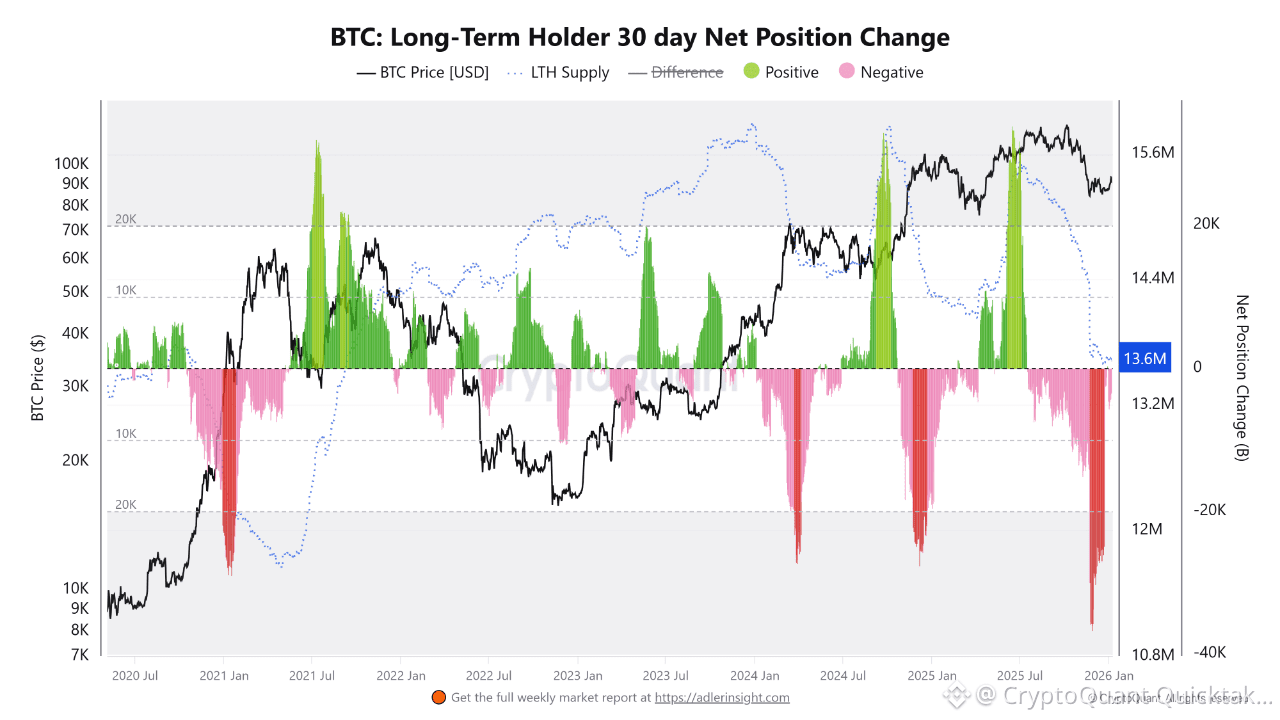
Recent on-chain data points to a clear change in Bitcoin supply dynamics as long-term holders (LTH) have moved into sustained distribution. The 30-day net position change has turned deeply negative, a pattern historically associated with late-stage trends where older coins re-enter circulation amid elevated prices. This suggests that selling pressure is no longer limited to short-term traders, but is increasingly coming from conviction holders, altering the structural balance of supply.
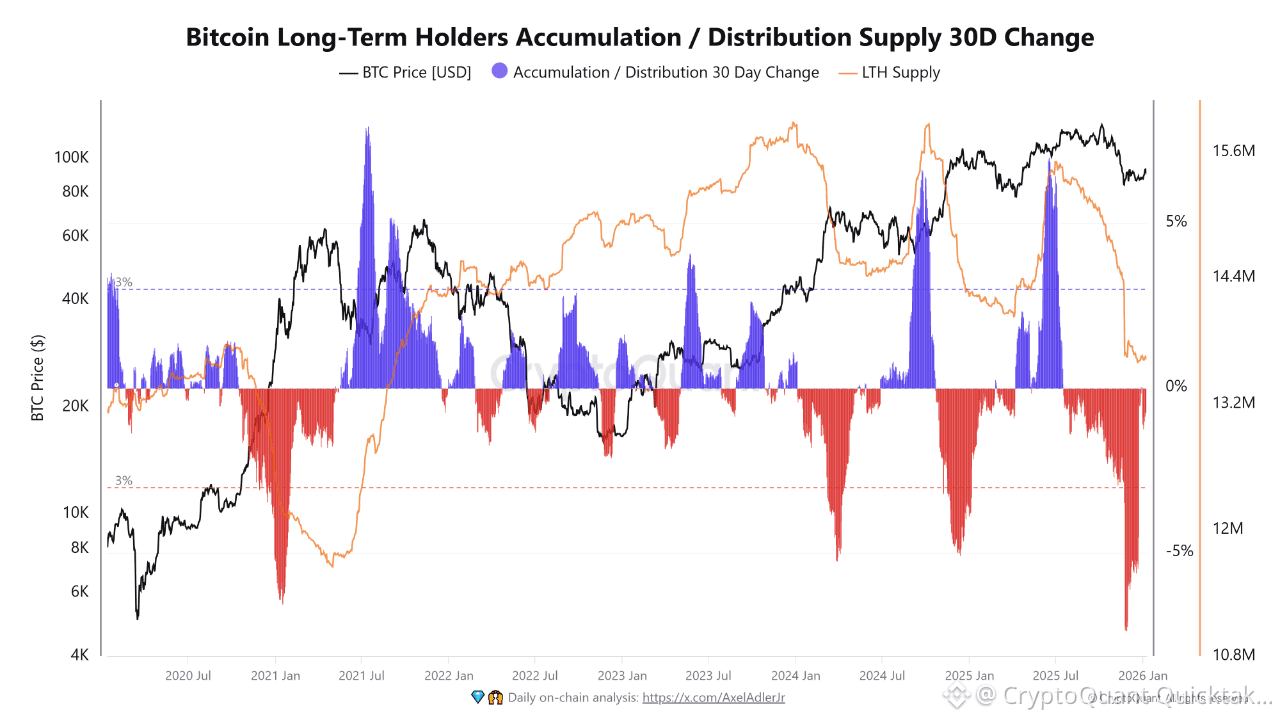
The accumulation and distribution metrics reinforce this view. The persistent negative 30-day change in LTH supply indicates that the market is transitioning away from a scarcity-driven expansion phase toward a more two-sided regime. While price has remained relatively resilient, the divergence between market strength and LTH behavior implies that upside continuation now depends more on fresh demand than on organic supply constraints.
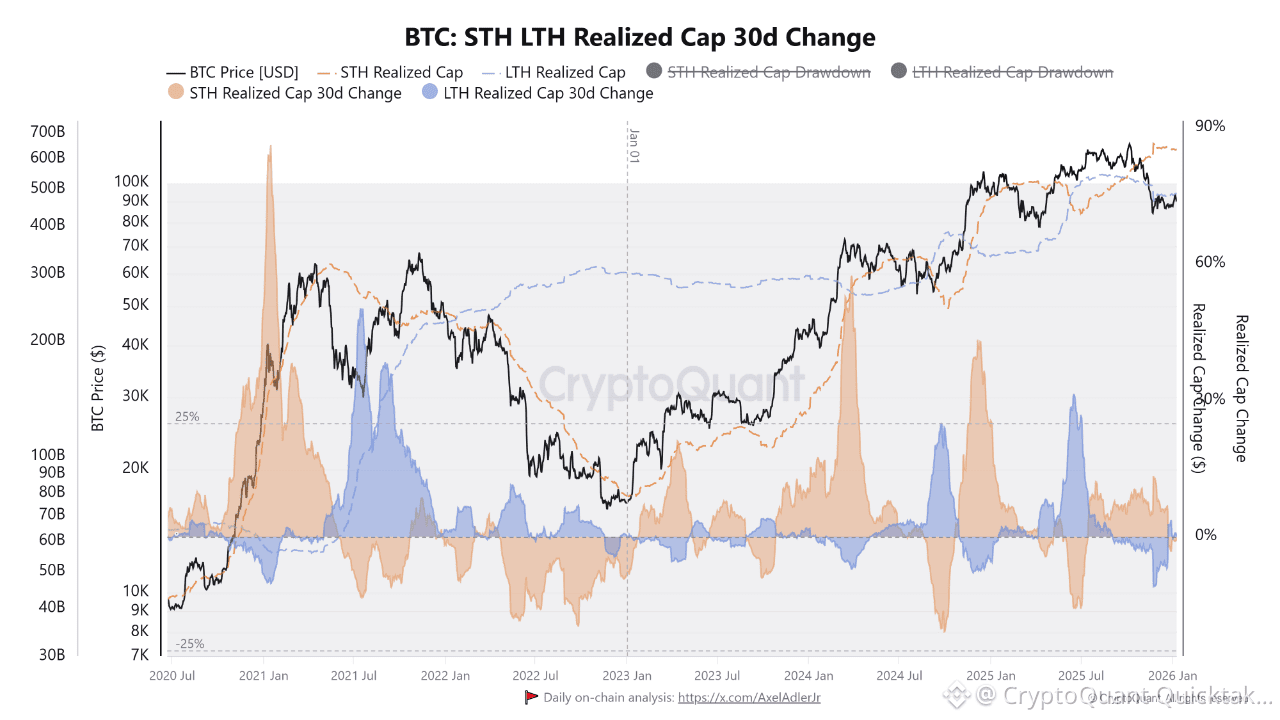
This shift is further reflected in realized cap dynamics. Slowing growth in LTH realized cap, combined with intermittent spikes from short-term holders, signals a gradual rotation of capital from long-term positioning toward more reactive participation. Such transitions typically mark a maturing trend phase, where price becomes increasingly sensitive to liquidity conditions and macro catalysts.
From a macro-on-chain perspective, this configuration does not necessarily imply an immediate trend reversal, but it does point to a structural regime change. As long-term holders distribute and supply pressure rises, Bitcoin is likely to experience wider trading ranges and elevated volatility, with price stability hinging more on sustained inflows than on tight supply held by strong hands.
Written by CryptoZeno