
Seeing the market in recent days, I estimate that many friends' feelings are similar to the prices of gold and silver, experiencing a sense of weightlessness from the 'cloud' plummeting directly to the 'core of the earth.' January 30, 2026, is a date destined to be recorded in the annals of commodities, not because of a new high, but because of that 'epic' washout that could make one's heart stop.
Gold prices fell below the $5000 mark from above $5600, while silver prices plummeted by 30% from a high of $120, directly returning to around $80. This drop, for those dealing with contracts, is no longer a 'correction,' but a blatant 'liquidation.'
Today, I want to set aside those rigid financial terms and, as a veteran who has fought in the trading room for many years, take everyone through the underlying logic behind this storm. Why did this wave fall so hard? Who exactly pushed the first domino?
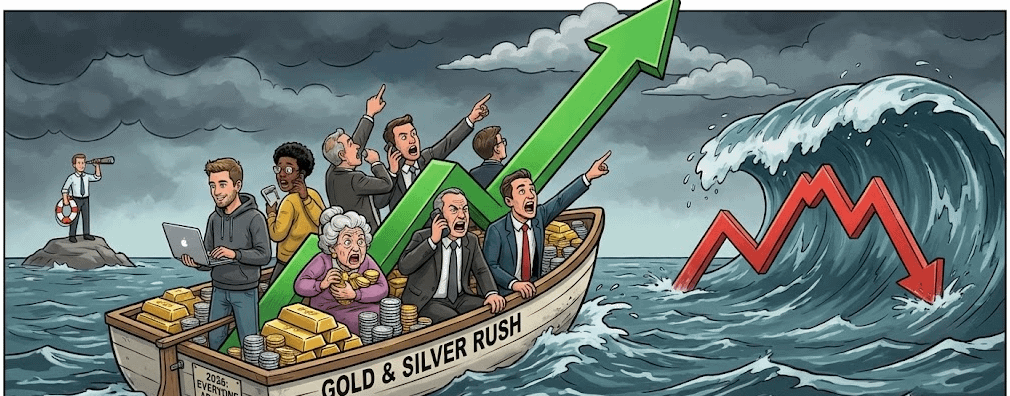
1. Extremely crowded 'lifeboat': When everyone is bullish, the risk comes 📈
Everyone must remember one thing: when trading becomes too 'taken for granted,' it is the most dangerous time.
Since entering 2026, the trends of gold and silver can only be described as 'crazy.' Gold prices skyrocketed by 25% in just one month, and silver was even more exaggerated, rising over 60%. At that time, whether it was the elites of Silicon Valley or the aunties on the street, everyone was discussing gold and silver. This sentiment is technically called a 'parabolic rise,' but in the eyes of traders, it is called a 'suicidal charge.'
2. Kevin Warsh: That sudden 'hawkish' depth charge 💣
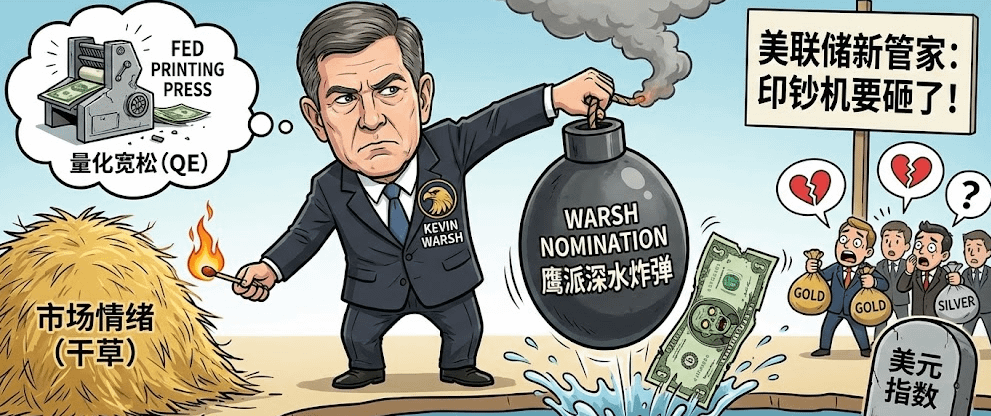
If market sentiment is hay, then the next Fed chair nominated by Trump—Kevin Warsh—is that match that ignites it.
For a long time, the market has been immersed in the illusion that 'the dollar will collapse, and the Fed will pump money.' But Warsh is different; this guy is a famous 'tough guy' and has always been critical of quantitative easing (QE). His nomination signal is very clear: the Fed's independence needs to be strengthened, and future monetary policy may be much 'tougher' than everyone expects.
Why is this news so damaging?
The dollar's desperate counterattack: Warsh's nomination instantly resurrected the previously flat dollar index. Gold and silver are priced in dollars; when the dollar strengthens, gold and silver must weaken.
The shaking of anti-inflation logic: Many buy gold because they believe the Fed can't control inflation. With Warsh in office, people feel 'this cop might really shoot,' and the demand for safe havens naturally cools down.
Imagine, you originally thought the Fed would continue printing money to support you, but the new steward says they will smash the printing press. Does your gold still look good?
3. Silver's 'epic' fragility: Rumors of delivery defaults and the demise of leverage 🌪️
To be honest, this time silver has fallen much more severely than gold for special reasons. The New York Stock Exchange (COMEX) warning about potential delivery defaults in silver became the last straw that broke the camel's back.
The market capacity for silver is much smaller than that of gold, which means its volatility inherently carries a 'manic-depressive' nature. During a surge, it is the brightest star; but in a crash, it becomes the most ruthless harvester.
4. Outlook for the future: Is it a 'gold pit' or a 'bottomless pit'? 🔮
Current market sentiment is extremely fragile, and banks are continuously raising margin requirements for risk control (for example, China Construction Bank has raised the minimum gold accumulation amount to 1500 yuan). This indicates that the short-term pain has not completely passed.
But my personal view is: logic is not dead, it has just changed its rhythm.
The fragmentation of geopolitics, concerns from central banks about the safety of dollar assets, and the long-term debt crisis—all the underlying logic supporting a long-term bull market for gold and silver has not disappeared. This crash was an extremely brutal washout, clearing out the impatient speculators and the greedy ones with excessive leverage.
Next, you will see:
Wide fluctuations: Prices will repeatedly rub between $5000 and $5300 (gold), seeking a new balance point.
Technical repair: The rebound after a crash is usually quick, but it is difficult to return to new highs in one go.
Value return: Silver's industrial properties (AI servers, green energy) are still there, and once the liquidity crisis is resolved, it will still be the most elastic one.