

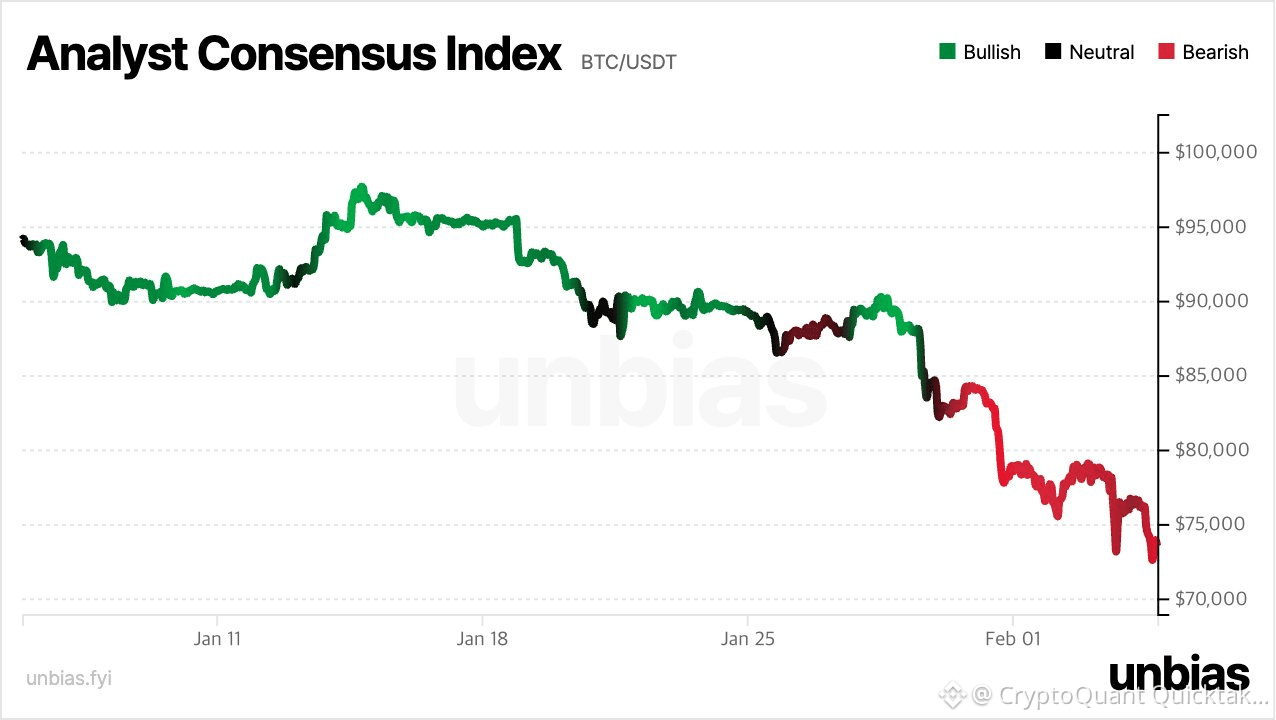
Across the crypto market, prominent analysts have turned almost unanimously bearish. The Analyst Consensus Index shows that bullish calls have largely vanished, and pessimism now dominates. Bitcoin’s move into the $60,000s is not a “reasonless crash,” but a repricing driven by a slowing U.S. economy.
Cracks are forming in the labor market. January layoffs exceeded 100,000—among the highest since 2009—while JOLTS job openings fell to their lowest since 2023. This combination typically signals weakening consumption.
Stress is also building in tech credit markets. Distress ratios for tech loans (~14.5%) and bonds (~9.5%) have reached multi-year highs under prolonged high interest rates. Housing demand is deteriorating as well, with sellers outnumbering buyers by roughly 530,000—the widest gap on record.
Despite the slowdown, the Fed has not clearly eased. Liquidity remains tight, while the bond market is warning: the U.S. 2y–10y spread has bear-steepened to four-year highs, a move often seen ahead of recessions.
For Bitcoin, selling pressure has largely flowed through Coinbase, pointing to weak U.S. spot demand. This decline reflects both leverage unwinds and deteriorating U.S.-led spot flows. Crypto Fear & Greed has fallen to 11, showing sentiment and positioning broke before price.
XWIN Research highlighted this risk on January 1, outlining a macro-shock scenario that markets are now leaning toward. A short-term relief rally is possible from extreme oversold conditions, but it would not confirm a bottom. True bottoms form when sellers are exhausted, not when prices stabilize.
(https://cryptoquant.com/insights/quicktake/69557ca86f89e81772a35078-Reframing-Bitcoin-in-2026-Scenarios-Structure-and-On-Chain-Signals)
What matters now is not the rebound size, but whether spot flows recover, ETF selling slows, and sell-side volume contracts. Until those structural shifts appear, patience remains essential.
Written by XWIN Research Japan