
The four main elements of K-line
First, let's look at the four main elements of K-line. K-line has the opening price, closing price, lowest price, and highest price, four elements. To observe the strength of bulls and bears, we need to focus on these four elements, not just the positive and negative of the K-line.
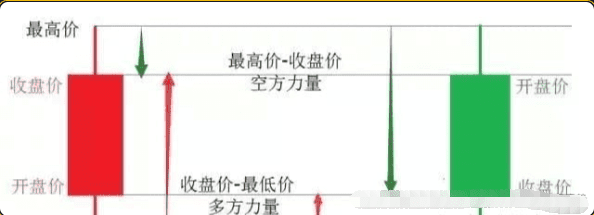
For example: After the market opens, the price is pushed up to the highest price of the day by the bull's strength, and by the time of closing, it is pressed down to the closing price by the bear's strength. The strength comparison of both sides within a day is shown below.
Seller: Highest point - closing price. At any moment, the seller's strength is the difference between the daily highest price and the closing price.
Buyers: Closing price - Lowest price. The strength of the buying power is represented by the difference between the closing price and the lowest price.
I think this perspective makes it easier to understand: Highest point - Closing price = Selling power. Buying power: Closing price - Lowest price = Buying power. The following diagram should make this even clearer.
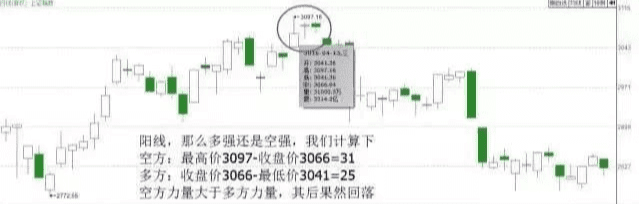
Let's look at an example: the candlestick chart shows a bullish candle, but the strength of the bulls is not necessarily stronger than that of the bears.
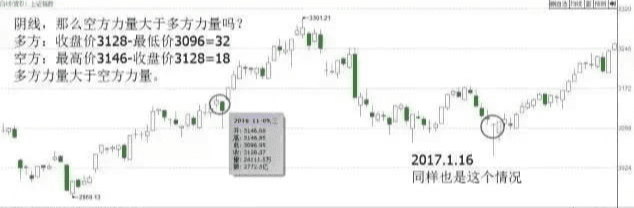
Similarly, even if the candlestick chart shows a bearish candle, the selling pressure may not necessarily be stronger than the buying pressure.
Basic classic diagrams:
1. The Three Red Soldiers
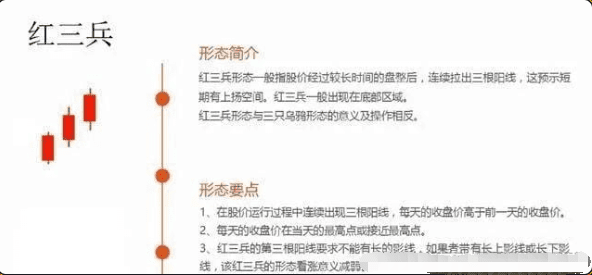
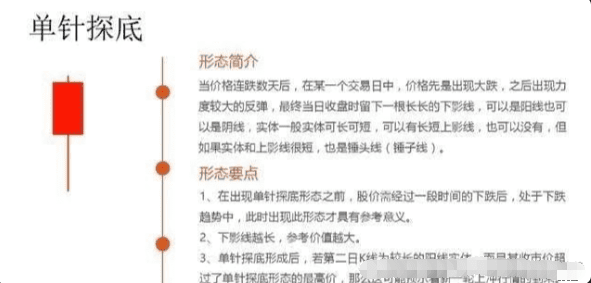
2. Single needle bottom probing
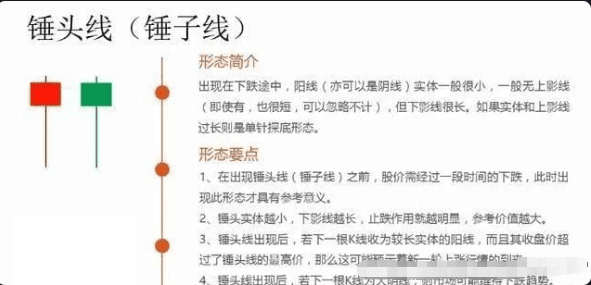
3. Hammer line (hammer line)
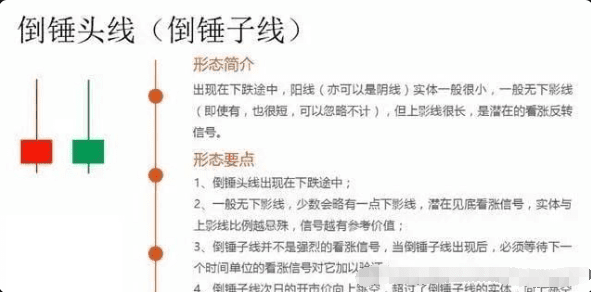
4. Inverted hammer line (inverted hammer pattern)
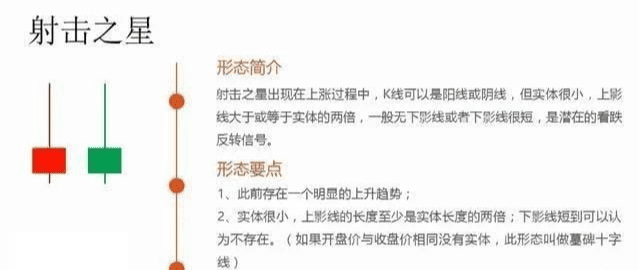
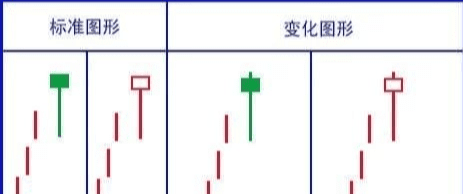
5. Shooting Star
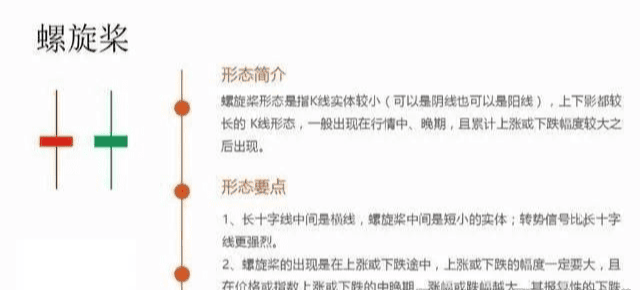
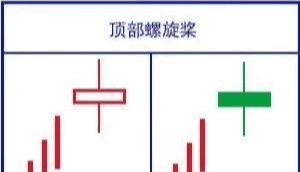
6. Propeller
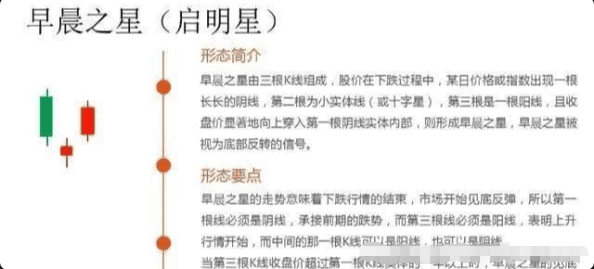
7. Morning Star (Morning Star)
8. Evening Star

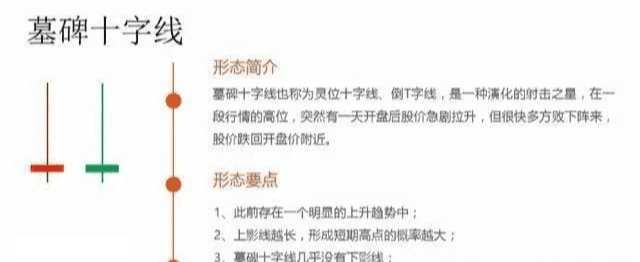
9. Crosshairs on the tombstone
The most classic candlestick chart formula in history
If it pierces your head and feet, run! Run! Run! If you ignore it, it will trap you endlessly.
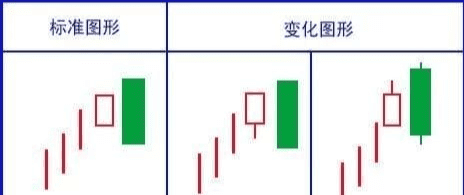
The hanging line at the top is rarely seen. When it does appear, it's usually the gallows line.
Dark clouds gather overhead, a fierce wind howls, the clouds press down on the city, threatening to crush it. Torrential rain pours down, and the candlestick chart shows only black bars.
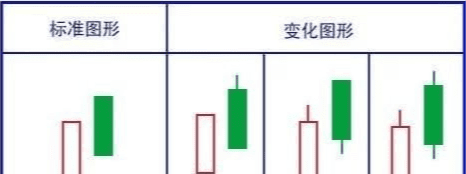
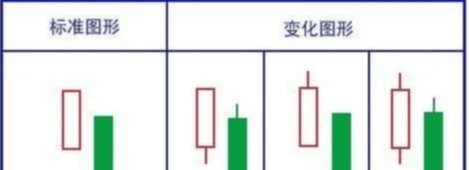
The torrential rain is too merciless; the downward trend terrifies everyone. Holding your ground is futile; exiting the market is the best course of action.
The propeller at the top roars high in the sky. Drifting down with the wind, it will bind you upon landing.
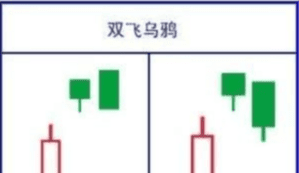
Two crows cawing in the sky are an ominous sign of a top reversal. High trading volume confirms this, a reliable signal of a decline.
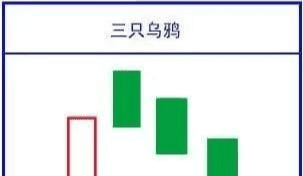
Three crows fly in the sky, opening high and closing low, each one black. Run your chips quickly, don't boast about your growing capital.
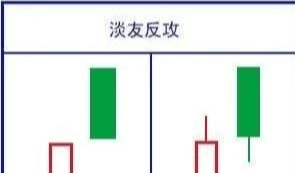
A counterattack by bears presents an opportunity to short. Increased trading volume indicates a likely downward move.
A shooting star at the top means your chips will be quickly wiped out. A precipitous drop, terrifying to behold.
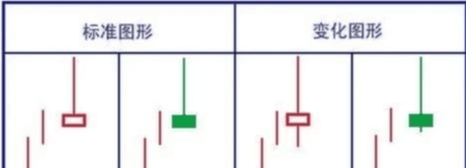
The flat-top pattern indicates the end of the downtrend is imminent. A combination of bullish and bearish signals suggests a swift and confident exit from the market.
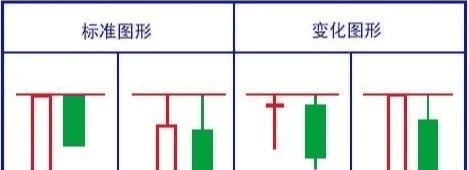
A top resembling a pregnant woman indicates a potential top; carefully discern the true nature of any rise or fall. If a complex top pattern appears, run quickly; don't be foolish.

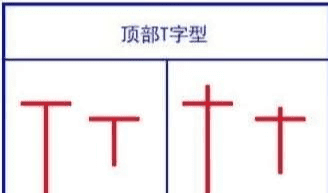
Remember the T-shaped line: a rocket soaring to the top. A large bearish candlestick completely covers it, indicating a massive sell-off.
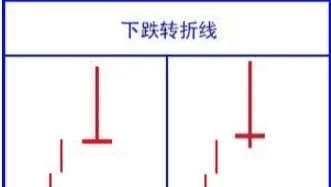
A downtrend reversal line, its chart pattern resembles a sword. When it appears at the top, a downtrend is imminent.
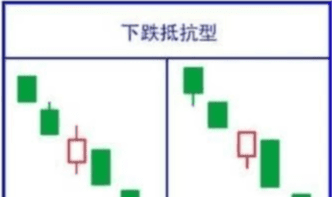
A descending resistance pattern, with bearish candlesticks indicating no clearing trend. Even occasional bullish candlesticks suggest an ongoing downward trend.
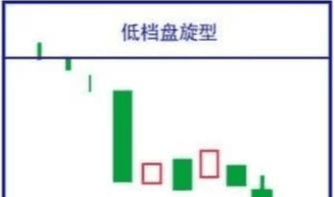
A low-level circling path hides a deadly trap; carelessness leads to a slippery slide. A waterfall plunges three thousand feet, leaving one clutching their money bag and weeping.
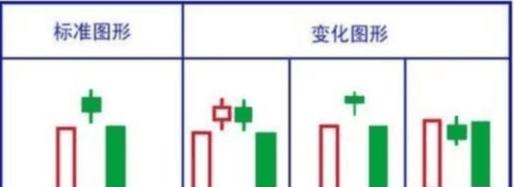
The evening star has reached its end; don't be a die-hard bull. If you accidentally stumble into the trap, you'll be left to fend for yourself.
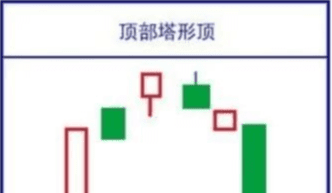
A tower-shaped top indicates a trap set by the bears. A large bearish candlestick signals a clear-headed exit from the market.
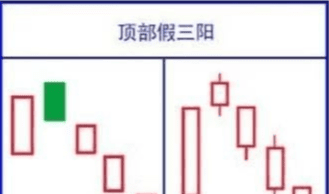
A false three-day pattern at the top, the dealer is stubbornly holding on. They're releasing a smokescreen. Exit the market to avoid this.
A doji candlestick pattern at the top indicates volatile price movements. Long upper and lower shadows suggest profit-taking.
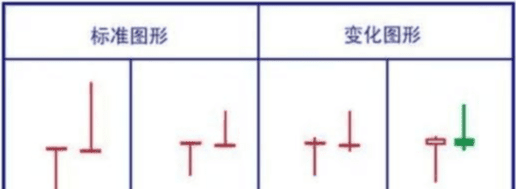
The principle of judging the balance of power between buyers and sellers in a single candlestick.
1. A bullish candlestick indicates that buyers have the upper hand; the longer the body of the bullish candlestick, the stronger the buying power.
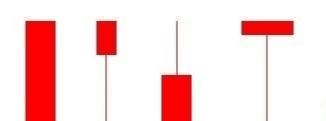
2. A bearish candlestick indicates that sellers have the upper hand; the longer the body of the bearish candlestick, the stronger the selling pressure.
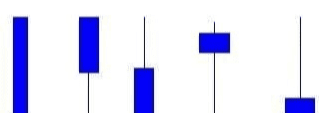
3. There are also false positive and false negative candlesticks; please pay attention to this.
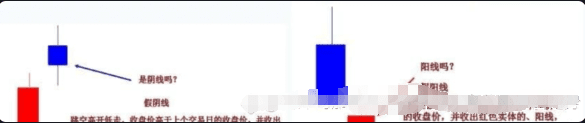
Support and resistance levels, buy and sell points on candlestick charts
Resistance and support levels:
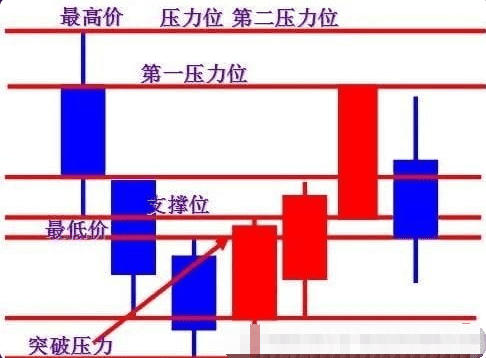
No amount of explanation can convey as much information as a single image. Here's another image to help you better understand how to identify buying and selling points based on support and resistance levels.
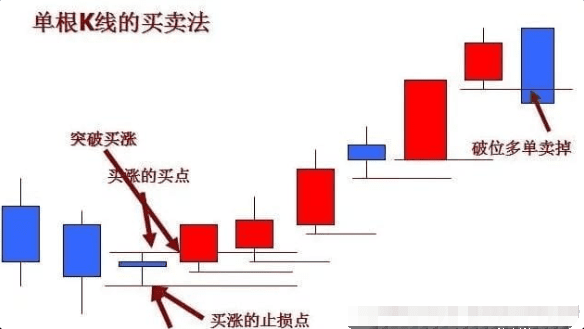
Buying points and selling points
Retail investors must first understand these 5 points
First, the most difficult part of stock trading is not stock selection, nor buying and selling, but waiting; the most difficult part of life is not effort, nor struggle, but making choices.
Second, market downturns cleanse the mind of impetuosity, while upturns test one's composure. Stock trading can help us grow continuously, but growth is painful. This pain does not come from growth itself, but from the many changes and unforgettable experiences we face in the process.
Third, for self-disciplined people in the stock market, pain is also joy; where there is hope, hell is also heaven.
Fourth, in the stock market, retail investors always abandon stocks that haven't risen yet and chase after stocks that have already risen; in life, people always cherish what they haven't obtained and forget what they already have.
Fifth, the reason why people lose money in the stock market is not because they think too simply, but because they want too much; the reason why people are happy is not because they get more, but because they worry less.
From Intuitive Trading to Systematic Trading
Novice traders often rely on their intuition, but this intuition is often a misconception, a rudimentary form of inspiration, and cannot lead to sustained profits. A trader who has experienced prolonged failures can transform into a systematic trader by using a trading system to regulate their behavior. This is progress and a crucial step for a failing trader towards success.
Undeniably, intuition (inspiration) exists; it's a higher form of trading, belonging to the realm of art. Investment masters see trading as a perfect combination of technique and intuition, a crystallization of science and art. However, for traders still exploring the path to successful trading, it's difficult to acquire the intuition (inspiration) of investment masters without sufficient practical experience. Furthermore, investment masters didn't become masters solely through intuition; intuition is a flash of insight that arises after a certain level of skill.
We can categorize traders into "feeling traders" and "system traders." The former operate using unsystematic, subjective methods, while the latter operate according to a trading system. Because the judgment criteria of a feeling trader are not relatively fixed, their buy and sell points are also not relatively fixed. A system trader's judgment criteria are relatively fixed, allowing them to "replicate" trades, while feeling traders find it difficult to consistently execute trades based on subjective criteria.
Novice traders often discuss market trends with others, but rarely reach a consensus. Typically, there will always be opposing sides in the market; for every rise and fall in prices, there will be those who are bearish. Why do technical traders have such vastly different views on market trends? The reason lies in their different philosophies and methods. Some are trend traders, concerned with price changes over a period of time; others are short-term traders, concerned with price changes on the same day or the next. Differences in timeframes between long-term and short-term trading, the concepts of trend versus range-bound trading, and the choice between left-side and right-side trading, among other factors, lead to varying perspectives on the market at any given time.
Different trading philosophies represent different worldviews in trading. If one cannot understand another's philosophy, it's difficult for people with different stock-picking philosophies to persuade each other. However, time and results will speak for themselves. Future market trends will eventually become static charts, which are "objective" for everyone. The corresponding "strategies" are what every trader should focus on! Different types of mature traders, despite their different trading philosophies and methods, can all achieve profitability. Traders with well-developed systems have already moved beyond guessing market trends; they let the market dictate everything and let probability play its role. "Regardless of the winds from all directions, never relax your system!"
For traders, the biggest regret is missing out on opportunities due to subjective speculation. In the 2007 bull market, many people ultimately didn't make much money. Why was it that "the index rose but individual stocks didn't"? The reason is that many people naturally develop a fear of heights, subjectively believing that buying low is safe and fearing to buy high. People usually tend to realize profits, and when prices rise, they think the price has risen too fast and too sharply and is about to correct, so they choose to sell first, hoping to buy back when prices fall. Unexpectedly, once the market rises, it doesn't look back, rising from 3000 points all the way to over 6000 points.
Intuition often leads to biases, causing traders to be misled by the market. Traders are trained to think like bulls in a bull market, resulting in long-term traders refusing to exit when a bear market arrives, while short-term traders continue to chase highs and lows. The opposite occurs in a bear market. Market sentiment causes traders to lose their objective judgment of market trends. Some novices, and even some inexperienced veterans, will fight in the market year after year, regardless of market phases. They will create opportunities even when none exist, their intuition always pointing to a bullish trend.
The saying "Be greedy when most are fearful, and fearful when most are greedy" holds true, but defining the right balance is the challenge. In the euphoria of a rising market, novices often feel their stocks aren't strong enough, as if other people's stocks are always better. In the despair of a falling market, experienced traders always feel the bottom is near, when in reality the bottom is constantly decreasing. "Novices die chasing rallies, experienced traders die trying to buy the dip." But seasoned traders can assess the situation, not relying on intuition, but on a systematic trading approach to adapt and remain calm.
Preparation is key to success; lack of preparation leads to failure. Every successful trader has a trading plan. Even if some successful traders haven't heard of a trading system, they are still trading systematically. Some masters don't simply compare whether a set of conditions are met to determine entry points, because they have internalized the system to the core, truly achieving a state of "no sword in hand, but sword in mind."
The concept of trading systems has only gained widespread acceptance among traders in China in recent years. More and more people are beginning to value systematic trading. In other words, every trader is a systematic trader, although there are differences in the completeness and rationality of each person's trading system. A good trading system is one that has been proven in practice to be consistently profitable in the long run; it is complete, coherent, and consistent. A poor trading system is incomplete, discontinuous, and contradictory, and therefore cannot generate consistent profits.
The most realistic way to achieve stable profits is through independent, systematic trading. Mature traders should establish their own complete trading system. Trading systems vary from person to person, just as different people have different personalities. Personalities cannot be copied, and neither can systems; some people prefer candlestick charts, some prefer indicators, some prefer aggressive methods, and some prefer conservative methods.
The market always favors the prepared; those who make fewer mistakes are closer to success. A trading system not only helps us accumulate trading experience but also helps us control risk and achieve profits. A system is an objective summary of subjective experience, making it easier to form an objective understanding of market trends. Following the system consistently allows us to capture the same profits using the same profitable patterns.
After a sufficient number of consistent operations, the probabilistic effect of the system will become apparent. The system helps traders eliminate the interference of their own emotions and subjective desires, thus avoiding exiting the market too early or too late. The market exists in an asymmetrical cycle, but it is also relatively balanced. A trading system, after incurring the necessary costs, will inevitably reap the rewards. For intuition-based trading, this probabilistic effect will not be apparent because the cost incurred in one trade does not increase the win rate of the next.
The ultimate goal of trading should be "not to gamble," because gambling always leads to losses. Skilled traders try their best to capitalize on the inevitable rises and falls. Traders who achieve consistent profits are believers in probability.
The transition from intuitive trading to systematic trading is a significant step forward, and many traders achieve consistent profitability starting with systematic trading. Only systematic trading is controllable and predictable, minimizing uncertainty. Without a reasonable expectation of trading outcomes, the results rely entirely on luck, which is irresponsible with one's capital. The feelings one experiences in trading are not as pleasant as those in life; in trading, one should strive to achieve a state of no feelings, only discipline. We are merely executors of strategies; we "just wait until the money is lying in the corner, then go and pick it up."
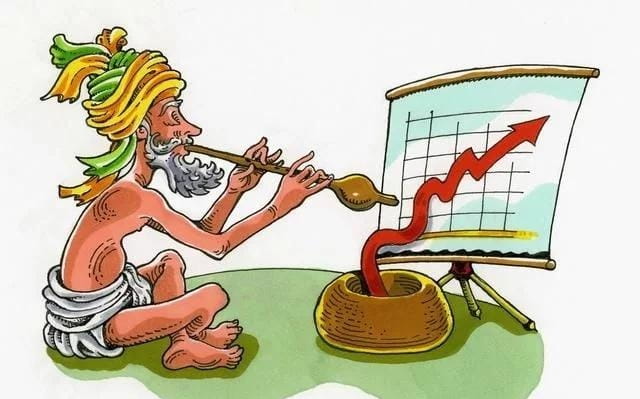
Analyzing the reasons behind the rise and fall of the cryptocurrency market
The fluctuations in the cryptocurrency market are sometimes unpredictable. In reality, stock price changes are like a group of ants searching for food. Given two food piles, each ant constantly chooses whether to return to the pile it last ate from, or be influenced by other ants to go to the other pile. This seemingly simple situation actually results in a highly complex and chaotic distribution of ants between the two food-eating locations. Therefore, stock price fluctuations are, on the one hand, purely accidental; on the other hand, this pure accidentality becomes an inevitability that every stock investor cannot resist. Looking at the trend of China's A-shares over the past two decades, a significant correction has occurred on average less than once every four years. Everyone knows that after a cryptocurrency price falls, it will inevitably rise, and after a rise, it will fall again. However, when a virtual currency will rise, when it will fall, by how much it will rise before falling, and by how much it will fall before rising again, all seem to be entirely driven by chance.
While the cryptocurrency market operates with highly complex and seemingly random characteristics, it also conceals numerous underlying inevitabilities. The seemingly random rises and falls in cryptocurrency prices are often determined by a multitude of inevitable factors. Every rise has its reason, and every fall has its cause. For example, the withdrawal of certain institutions, economic setbacks, or significant political events, while seemingly random, all possess some degree of inevitability. Once a cryptocurrency is listed on the stock exchange, its price can sometimes be controlled within a certain range by major funds, but in reality, it cannot be completely dominated by them. When the cryptocurrency market begins to fall, most major funds will not force a price increase against the trend. The rise and fall of a virtual currency, and when it will rise or fall, cannot be determined solely by major funds; it requires consideration of the overall market condition, changes in the economic environment, national macroeconomic guidance, the fundamentals of listed companies, and the confidence index of retail investors, among other factors. Therefore, once a cryptocurrency is listed, it is no longer entirely free to act on its own.
The price fluctuations in the cryptocurrency market are not subject to your wishes. From the perspective of the entire operating cycle or range, if you enter the cryptocurrency market, you will often face many unavoidable situations. The only thing you can control is to leave the funds in your account untouched, as no one can take that away. Conversely, converting cryptocurrency into cash can sometimes be extremely difficult.
In reality, coincidental correlations can exist behind the price fluctuations in the cryptocurrency market. Unfortunately, the vast majority of participants are blinded by the randomness of the cryptocurrency market and fail to grasp its broader picture, ultimately unable to judge the inevitability of price movements through medium- to long-term trends.
If chance is simply a whim of God, then it becomes both alluring and frustrating in the cryptocurrency world. Inevitability, on the other hand, often coincides with trends. Therefore, as stock market participants or investors, we must learn to leverage the inevitability of stock price movements to counteract the randomness of price fluctuations.
Market institutions cannot change the inevitability of the cryptocurrency market, but they can exploit its randomness to build platforms (top formations) before declines, or excessively use randomness to create various bottoms before upward trends. This situation occurs when the cryptocurrency market is bottoming out, and the subsequent drop is also unexpected, making the market hesitant to guess the bottom. At this point, the cryptocurrency market appears bottomless to market participants; even if a bottom appears, it's still thought to be just a small rebound, with even lower levels expected later. The result is that amidst this hesitation, the cryptocurrency market quietly rises. The same applies when the cryptocurrency market is topping out. Strictly speaking, a top is not a single point, but a range. This is because institutions deliberately manipulate charts using the randomness of short-term corrections, not just on daily charts, but sometimes on weekly charts. When an upward trend is about to end, the top formation often takes several weeks or more to complete.
The rise and fall of the cryptocurrency market is not merely a combination of chance and inevitability; sometimes it's more like the unpredictable nature of cards and chess. Just as each person is dealt a hand of cards at birth, due to differences in family and social environment, everyone's hand will naturally be different. However, in social activities, most people can only know the cards they hold, but rarely know the cards held by others. Those who truly win are often not those who play their cards openly, but rather those who have the opportunity to play their cards secretly.
If we liken the cryptocurrency market to a randomly drawn deck of cards, then its changes are like each move made in a game of chess. This results in a diverse and unpredictable market with varied and ever-changing patterns. Good coins in an upward-trending market will thrive, making it easy for investors to profit; conversely, good coins in a downward-trending market will struggle to generate profits. Similarly, bad coins in an upward-trending market can also be profitable; however, bad coins in a downward-trending market can lead to disastrous losses. While some cryptocurrency prices are artificially inflated, the price movements of the vast majority of cryptocurrencies are the result of the interplay between major players and retail investors, or between capital and the market.
Wenjing is focusing on spot trading of Ethereum futures contracts; the team still has spots available, so hurry and join! #美联储降息 $BTC

