
Large institutions are quietly controlling Bitcoin.
Recently, although the price of Bitcoin has fluctuated significantly, a major event is quietly happening behind the scenes: institutional investors are steadily grasping the market. Data shows that about 5,940,000 Bitcoins are held by large institutions, accounting for nearly 30% of the circulating supply.
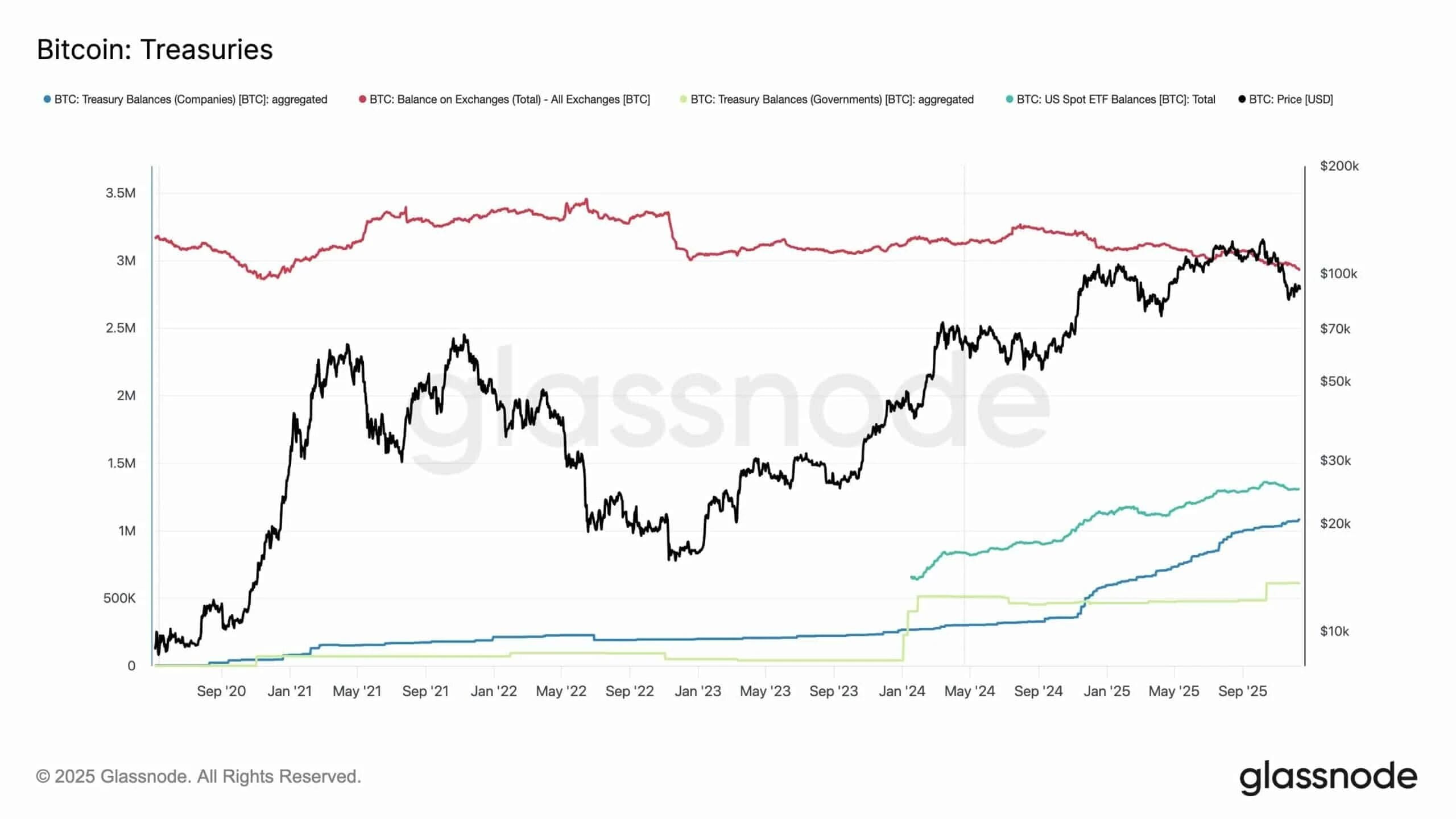
These Bitcoins are distributed across exchanges, #etf , listed companies, and government treasury accounts. Long-term holdings are continuously increasing, while the number of Bitcoins on exchanges has hardly changed, which means that over time, selling pressure may become smaller. #BTC
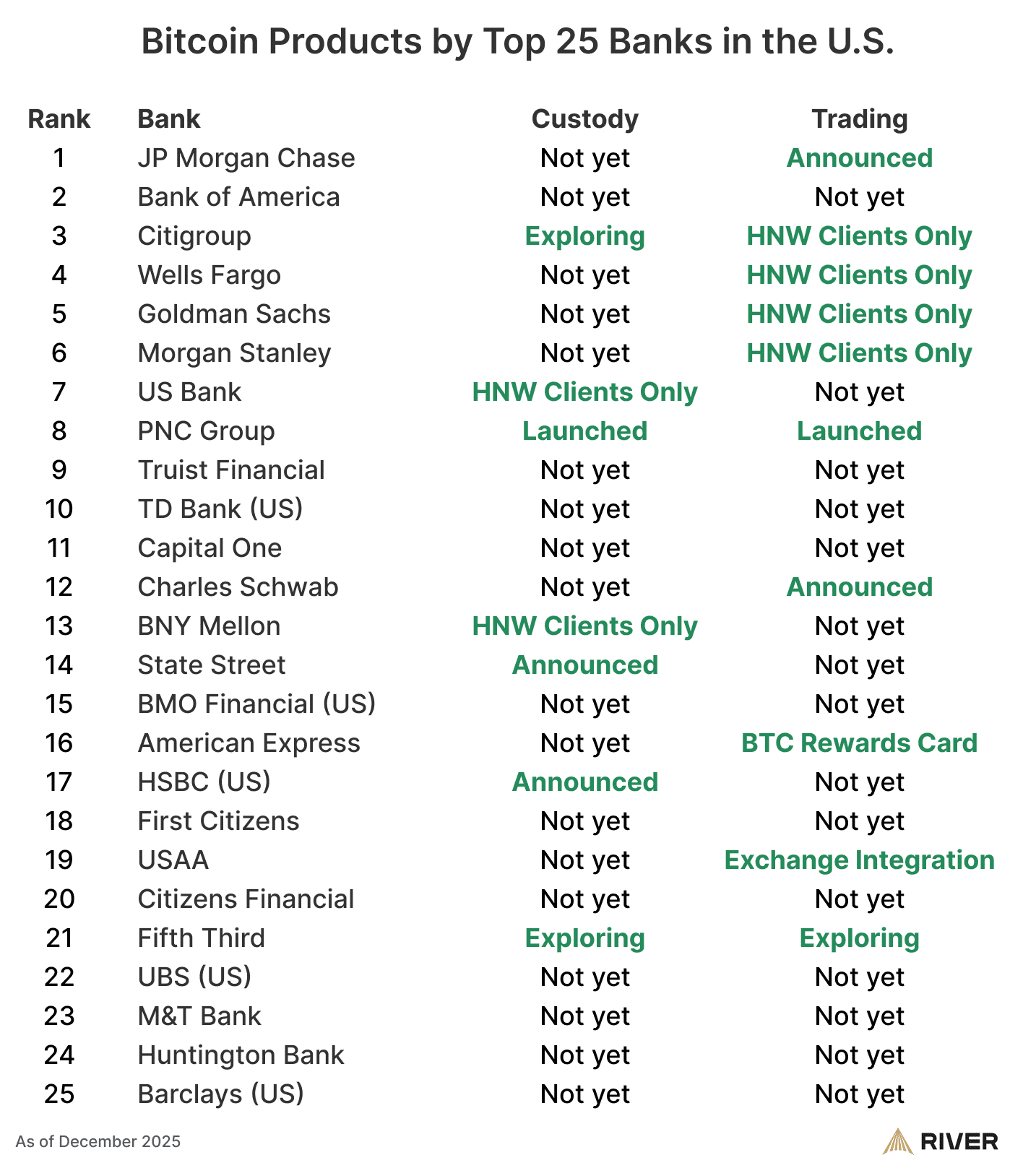
At the same time, Wall Street is not to be outdone. According to River, 14 of the top 25 banks in the U.S. are developing or exploring Bitcoin-related products, including trading platforms and custody services. These products mainly target high-net-worth clients, and the building of infrastructure is also preparing for the next wave of demand.
Why did the price drop? Leverage has been exhausted first.
Although institutions are quietly laying out their plans, the price of Bitcoin has not been rising steadily. The reason is simple: leverage has been exhausted first. The recent wave of selling in the market is mainly triggered by the automatic liquidation of high-leverage positions in the futures market. Traders bet on the price of Bitcoin rising, and once the price falls below key support, these high-leverage long positions will be forcibly liquidated.
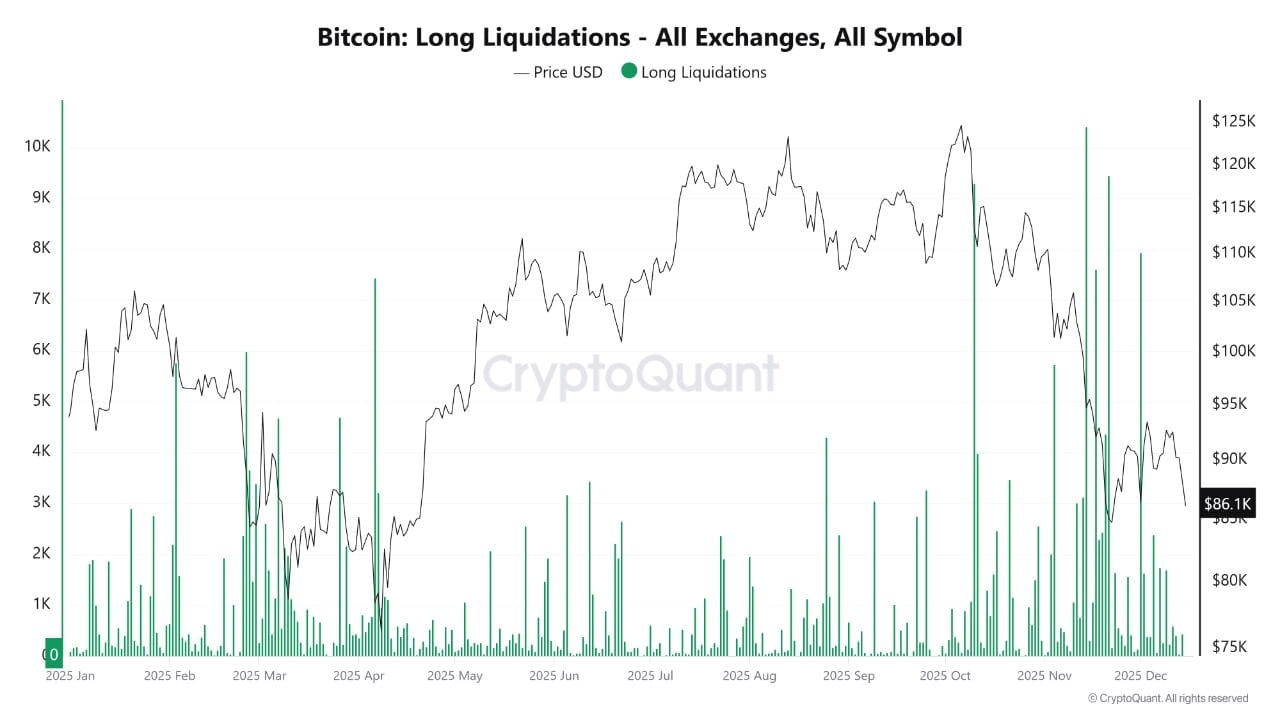
This liquidation not only suppresses prices but also triggers a chain reaction—one sell-off triggers the next, causing prices to decline rapidly. In other words, the recent price fluctuations resemble the 'shockwaves' of leverage being released, rather than a direct change in market demand.
Market structure: The importance of the two-year moving average
When observing the long-term trend of Bitcoin, there is one line that is particularly important—the two-year moving average. According to Alphractal's long-term chart, the price of Bitcoin is currently very close to the two-year moving average of $82,800.
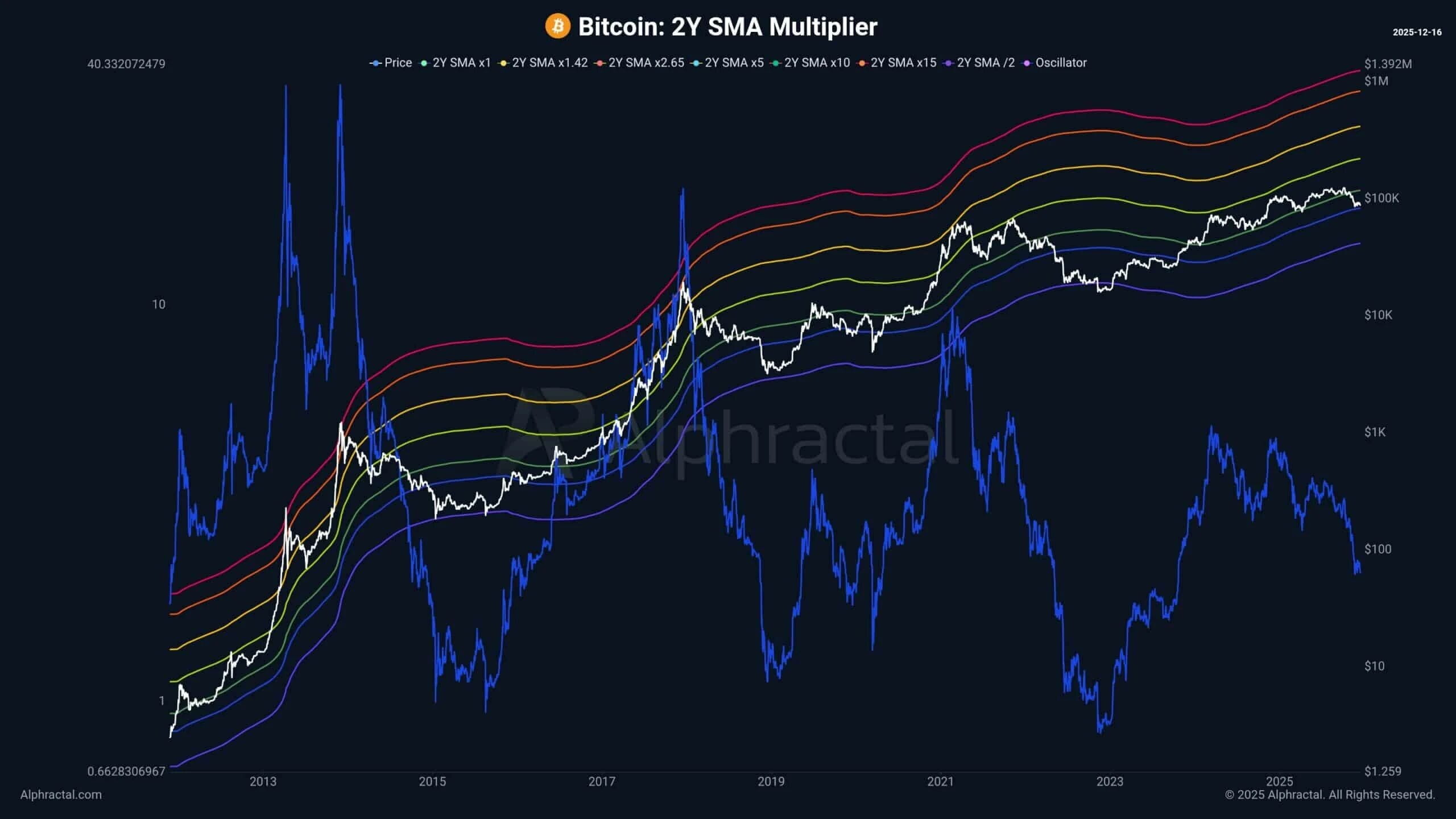
This line is not only a technical indicator but also resembles a 'status indicator' of market structure. In past cycles, a monthly close below the two-year moving average has typically been accompanied by a prolonged bear market; while holding or regaining the two-year moving average will help the market reset its structure after experiencing excessive volatility. For investors, this is a critical psychological and technical support line.
As the year-end approaches, whether the price can hold this line directly affects the market's pressure and direction in the coming months. If it breaks, it means that there may be larger adjustments ahead; if it holds, the long-term structure can be maintained, and the market regaining confidence will also have a stronger basis.

Recent market observations
In the short term, the weakness in prices is mainly caused by leverage liquidation, but this does not mean that demand has disappeared. Institutional investors are still continuously buying, and long-term positions are accumulating, which means selling pressure will gradually weaken.
Traders need to pay attention to two things:
High-leverage positions may trigger liquidations at any time, leading to increased short-term volatility.
The key position for long-term structure is near $82,800. Holding this line means that Bitcoin is expected to maintain a relatively stable market pattern before the year-end.

Summary
Overall, the Bitcoin market is quietly undergoing structural changes: nearly 30% of the supply is controlled by institutions, long-term holdings are increasing, while short-term price fluctuations are mainly caused by leverage release. The two-year moving average of $82,800 is a key focus; holding it means the long-term structure remains intact, otherwise pressure will increase.
For investors, this means: do not be frightened by short-term fluctuations, focus on long-term structure and key price levels, while paying attention to the short-term risks brought by leverage release. Institutions are positioning themselves, and the future trend of Bitcoin may be more stable than you think. #美联储降息
