


Today we continue from yesterday. Yesterday we mentioned that the US stock market might not have too many positive factors going forward, interest rates have been cut, and the Federal Reserve's monthly purchase of 40 billion in reserves is not to stimulate the economy but to stabilize the currency market. However, the Treasury's TGA account funds are indeed flowing into the market. In summary, there are pros and cons.
1. First, don't panic.
Next, let's talk about Japan's interest rate hike activity on the 19th. Many people are panicking, saying that arbitrage funds will withdraw, and a global financial crisis is coming, etc.
Then yesterday I saw a piece of news saying that the Bank of Japan is going to sell 82 trillion yen worth of ETFs, which will continue to be sold for 112 years, equivalent to selling 730 billion yen per year, which translates to 5.2 billion USD, but this is not a short-term concentrated sale.
In fact, Japan has recently felt that its economy is doing well. Since last year, Japan has begun to raise interest rates from -0.1% to the current 0.5%, and on the 19th, it will raise interest rates by 0.25% (the fourth rate hike), bringing the rate to 0.75%.
Since the 2008 financial crisis, Japan has kept interest rates at 0 until 2024. Japan's quantitative easing has lasted nearly 16 years. Why has the negative interest rate era lasted so long? Compared to what everyone often sees in the news, there is a message that the Japanese people are unwilling to consume and keep putting money in the bank. Coupled with Japan's severe aging population, elderly people inherently consume less, and the Japanese are also unwilling to have children, leading to a decline in the number of newborns. Prices in Japan are not rising but falling! The Japanese people are unwilling to take risks, unwilling to invest, and unwilling to start businesses, all adopting a 'Buddhist' state, resulting in Japan's economy entering a deflationary state.

So there's nothing to be done; the government says I'm implementing negative interest rates to see if you still save money, hurry up and spend it all.
Two. The three core logics of 'Why not be afraid'
When negative interest rates appear, a group of arbitrageurs will emerge. If you borrow money at a negative interest rate, you still get money back, even if it's only 0.1%. Currently, US interest rates are high; if I borrow money and deposit it in a US bank for 4% interest, isn't that good? Therefore, arbitrage funds will appear in the market. Of course, these arbitrage funds won't all go into US banks; other places like the stock market and crypto are also possible. After all, borrowing money incurs no interest, and given that US stocks and crypto have been performing well in recent years, quite a bit of money has flowed into these areas.
So initially, it was said that some people were panicking, claiming that this batch of arbitrage funds would flee. But you have to think, although this wave of Japan's interest rate has risen to 0.75%, it seems to have increased quite a bit, but currently, US interest rates are still at 3.75%, creating a price differential of 3%, which still allows for arbitrage opportunities. Even after including some other costs, there is conservatively still more than 2.8% of space. In fact, if it's large amounts of capital, it can be fully acceptable, including in crypto, where many stablecoins benefit from rates exceeding 5%-6%. If you have $100 million, would you choose to arbitrage?

Second, this is Japan's fourth interest rate hike, not the first. When the interest rate rises from 0 to 0.25% (July 2024), those funds unwilling to take a bit of risk would have left long ago; they wouldn't have waited until now.
Third, experts estimate that the scale of arbitrage funds in this market is only about $2 trillion, which is actually not large for the global financial market, considering that a single US stock is already valued over $2 trillion.
In summary, I believe that this interest rate hike in Japan will not have a significant impact on the market, after all, the scale of small Japan’s economy is 'limited'. The gap compared to the largest economy is very large, and even compared to the second-largest economy, the gap is also significant!
Three. Historical data 'definitive conclusion'
Having discussed the overall understanding, let's continue to look at whether Japan's interest rate cuts have affected US stocks or Bitcoin from a data perspective.
The previous three interest rate hikes in Japan were as follows:
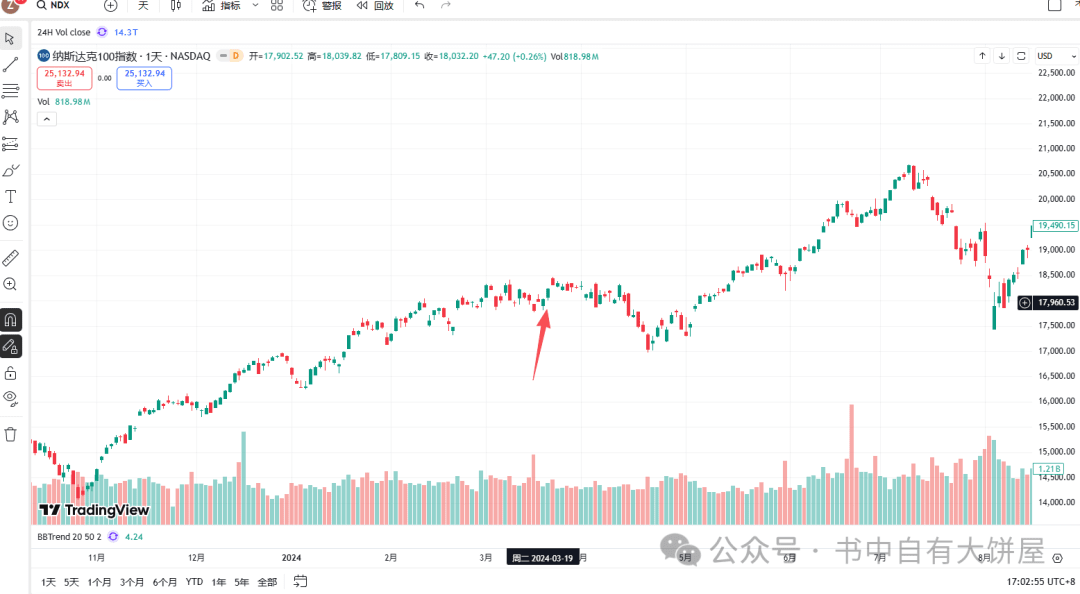
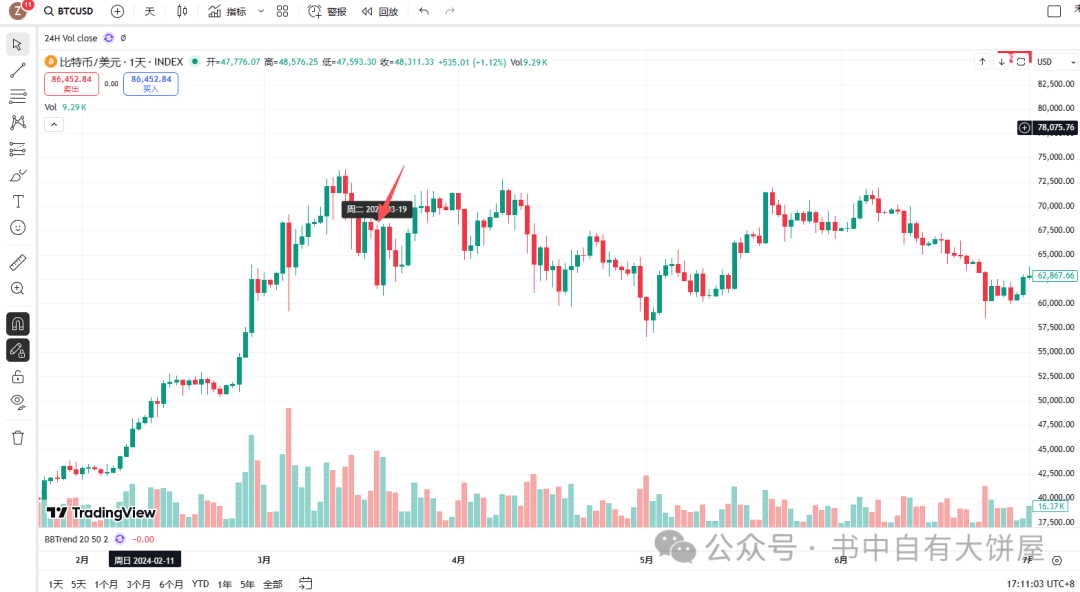
March 19, 2024 — Interest rate changed from negative to 0–0.1%
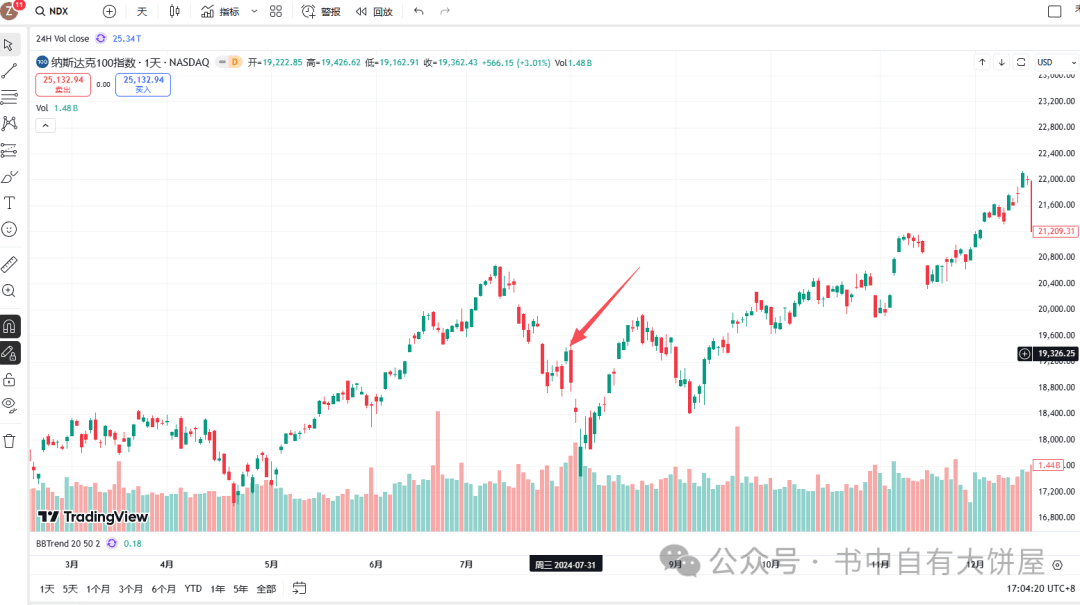
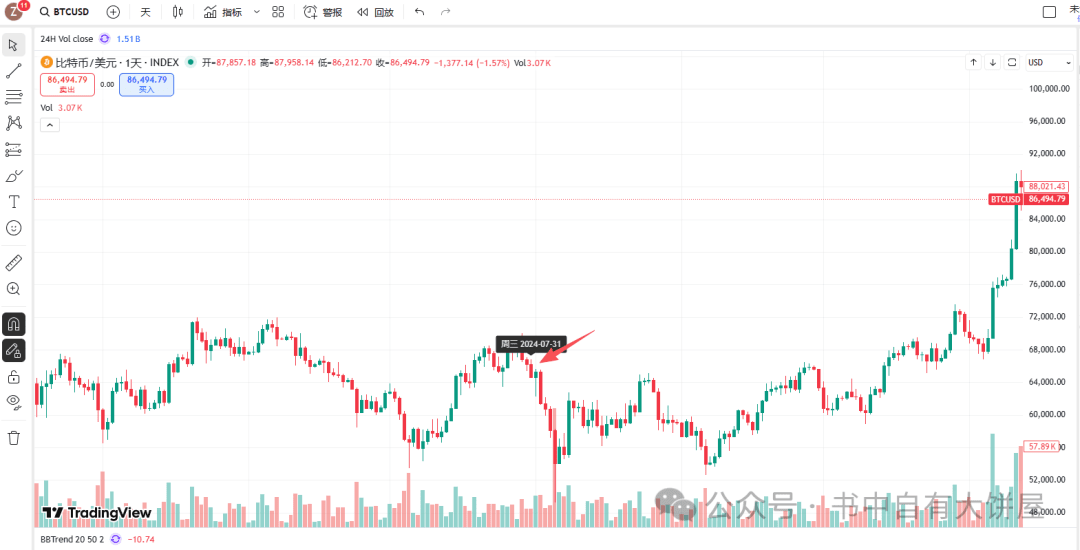
July 31, 2024 — Interest rate raised to ~0.25%
January 24, 2025 — Raised to ~0.50%
First look at the first interest rate hike
The Nasdaq rose on March 19 and 20, 2024, and it had been rising before that, with a correction starting only on April 15.
BTC performance
A major drop occurred that day, the second one bounced back, then it consolidated until April, beginning to follow the US stock market's correction.
Second interest rate hike
You can see that the Nasdaq rose on July 31, a major drop occurred on August 1, but started a recovery and rise three days later. We know that the US stock market then began to cut interest rates, which led to a bull market.
BTC performance
On that day, it fell, then started a continuous three-day drop, followed by an increase, which actually closely followed the performance of US stocks!
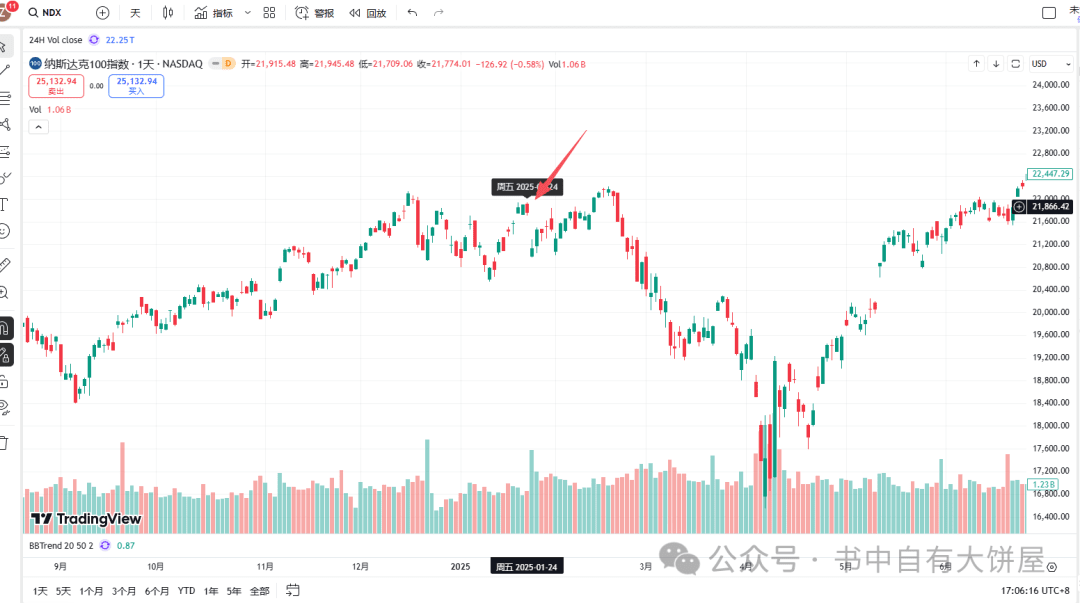
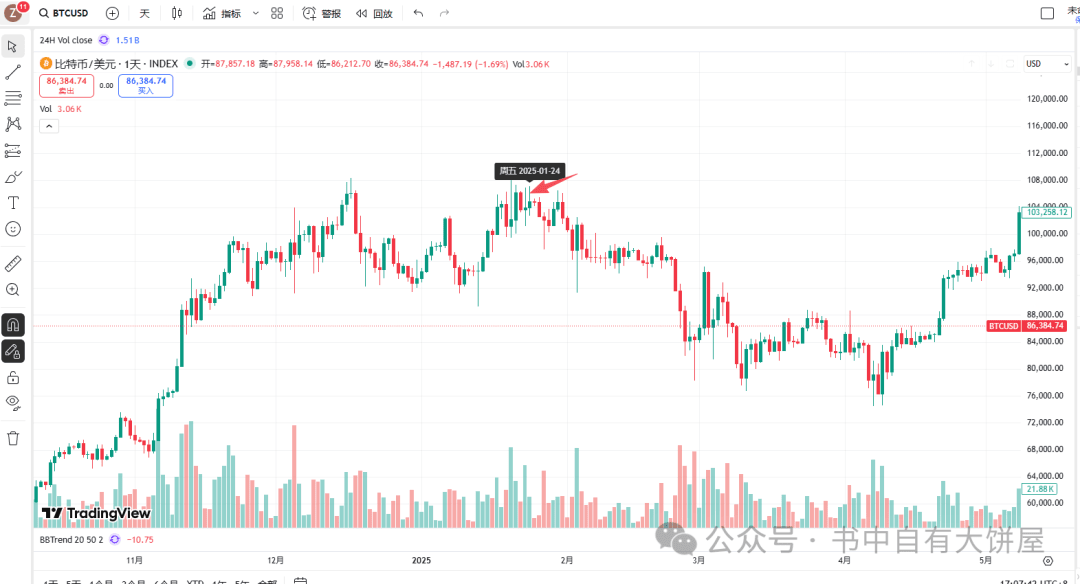
Third interest rate hike
January 24, 2025, fell, but it rose on January 24, and there were fluctuations in the dozens of days before and after.
BTC performance
On that day, there was an increase; the real drop actually happened in early February, but we know that the main reason for the drop in February was Trump's trade war!
Summary
Therefore, whether from a macro perspective or through the actual performance of US stocks and cryptocurrency prices, Japan's interest rate hikes have not caused a substantial and intense impact. Since 2008, Japan has only had three interest rate hikes; if the data volume were sufficient, I believe it would be a 55-45 split, because looking at just these three data points, US stocks showed 2 rises and 1 drop, which doesn't really illustrate the issue, but observing the subsequent performance of US stocks, there were both rises and drops.
When the market starts to use the actions of the fifth-largest economy to explain the fluctuations of the largest market, it itself indicates that emotions have already outpaced facts.
Then don't just listen to the wind; do your own research, look at actual data, even verify more, and compare more to form your own cognitive system!$ETH

