
The signals given by the market today are very clear - there's a struggle above, and a turnover below, with the real chips completing their handover in the dark.
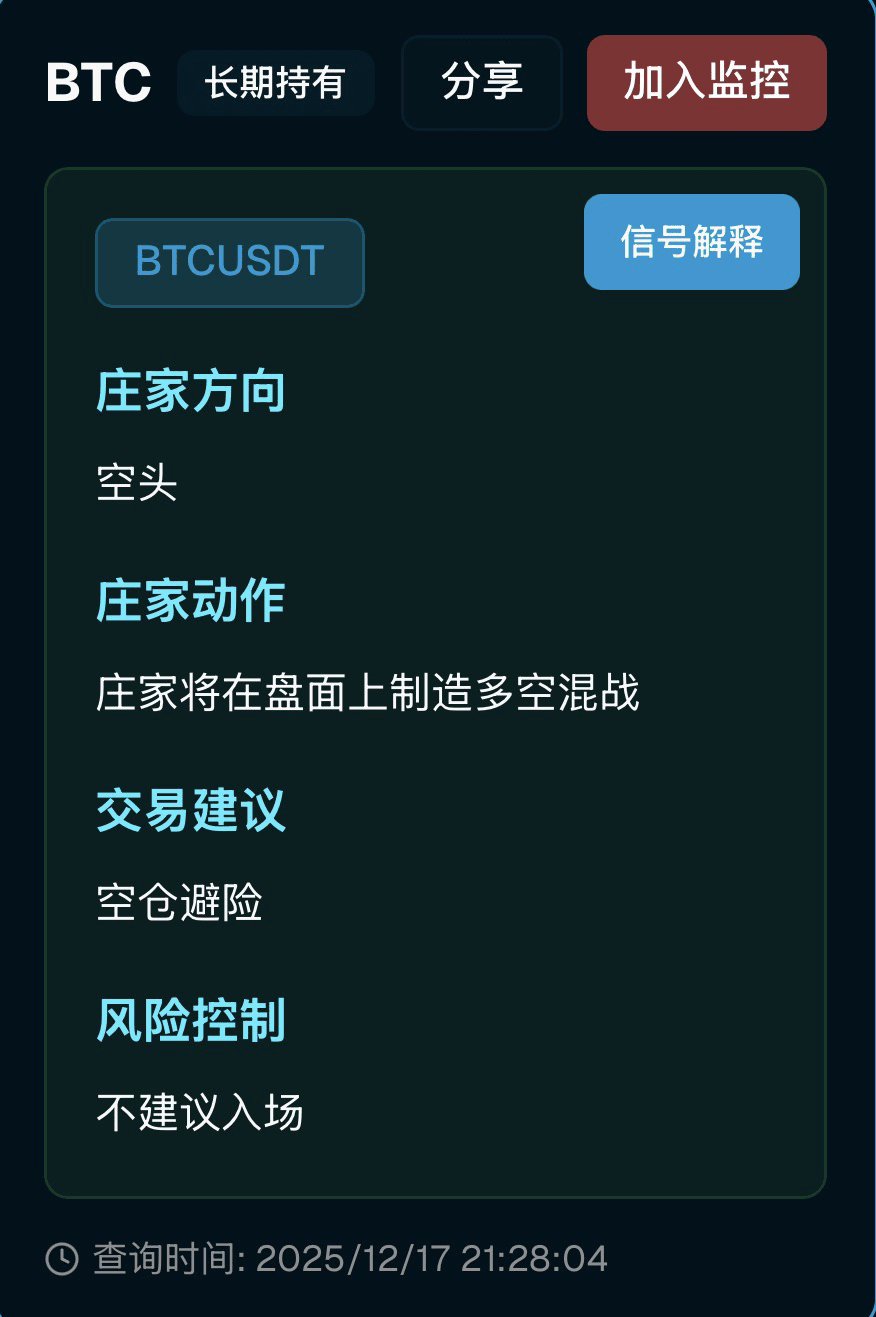
First, let's put the core contradiction on the table: $BTC the direction is bearish, but it's not the kind of 'one-sided short' that plummets all the way down; rather, it's a more insidious strategy - creating a mixed battle between bulls and bears. This means: when the price goes up, it gets pressed down; when it goes down, it gets supported up, pulling back and forth repeatedly, turning those chasing the upward or downward trends into fuel. The feeling of 'nothing goes smoothly' you experience in the market is essentially the opponents using volatility for harvesting and oscillation for turnover.
The key point has arrived: the whale's long position line has recently been significantly elevated, and the method of elevation is not 'a quick spike and then over', but a sustained step up. The whales are increasing their positions, which indicates what? It indicates they are not afraid of short-term fluctuations, but are afraid of not being able to obtain chips. In other words, the more chaotic the market, the more suitable it is to peel off chips from emotional trading—this is the true purpose of 'chaos': to hand over chips to those with more patience.

Looking at M2 liquidity: after previously spiking to a high, it has entered a plateau, showing signs of decline today. When marginal liquidity weakens, the most common trend is not an immediate collapse, but rather 'difficult to rise at high levels, difficult to fall at low levels', using sideways trading + sharp drops and spikes to complete structural transitions. You will see: on one side, the whales are accumulating, while on the other side, the market deliberately shows 'discomfort'. This is a typical 'controlled rhythm market'—not giving you a tailwind, only giving you patience.

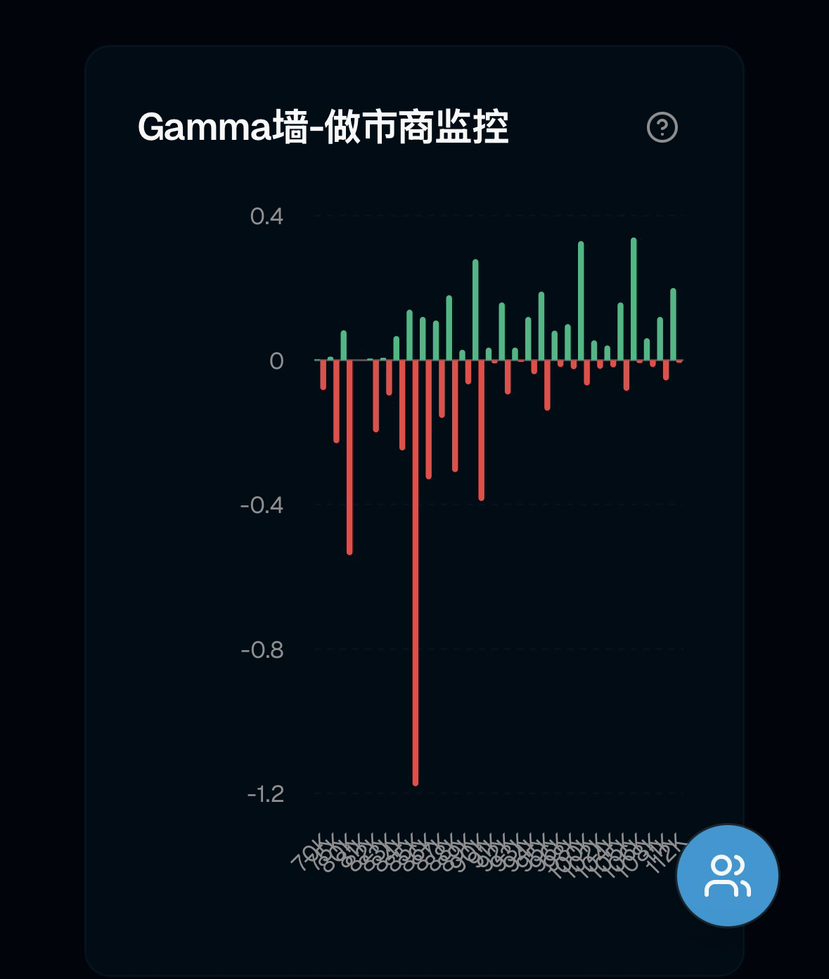
The Gamma wall is also cooperating: the column structure shows that both sides are building walls, and market makers are more inclined to keep prices locked in a range for repeated friction, forcing out leverage and emotions. For whales, this is not a bad thing: the thicker the wall, the more it indicates that the price has been 'planned'; what you need to do is not chase emotions, but watch the intentions of the funds behind the wall—when the suppression is released and when the support is withdrawn.
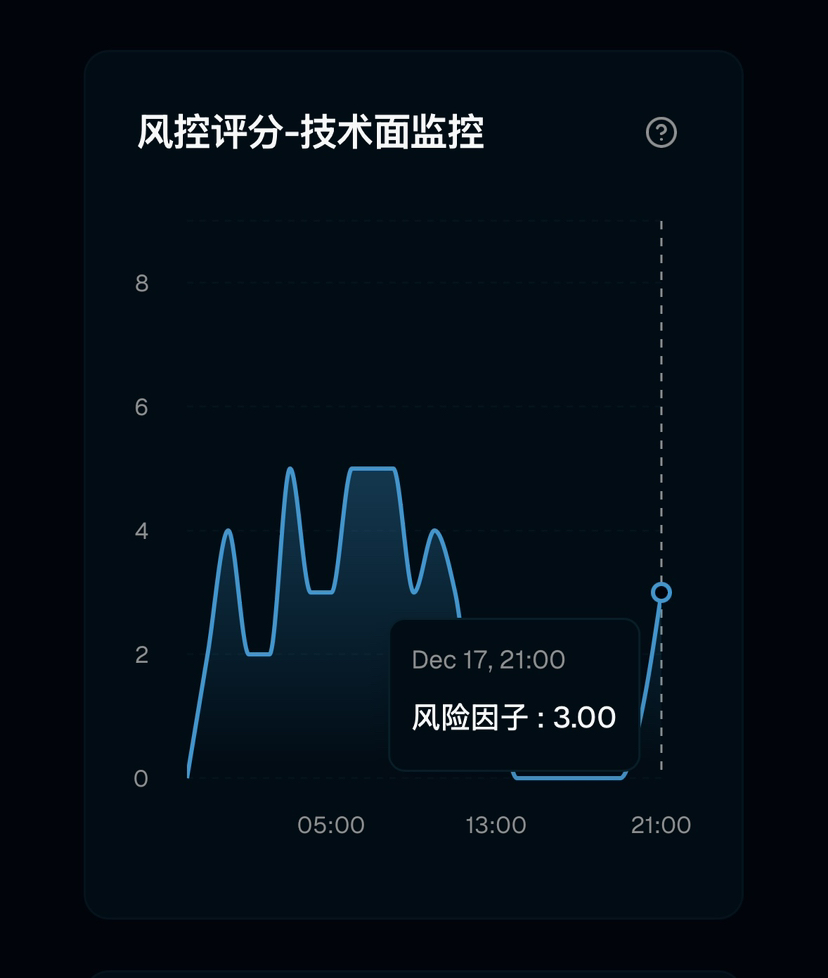
Ultimately, it comes down to the risk factor: the risk score returned to around 3, indicating it has shifted from 'extremely untouchable' back to a state of 'tradable but uncomfortable'. Note the key point of this statement: tradable ≠ suitable for heavy positions. The market now resembles a 'hunting ground', not a 'highway'. The main players are in a chaotic battle, marginal liquidity is declining, and the market-making wall is controlling volatility—any heavy leverage chasing direction is like exposing a fatal weakness.
What should the whale do? In one sentence: only increase positions when 'certainty appears'; manage risks with structure at other times.
There are generally only three types of whale operations:
1) Keep the spot/low-leverage base unchanged, treating the fluctuations as a process of repositioning;
2) Only hedge and time with contracts, do not go all-in on direction—hedge when necessary;
3) Accelerate only when the market shows the moment of 'suppression failure': prices are no longer immediately pushed back, there is active support on pullbacks, and volatility shifts from 'chaotic' to 'smooth'.
The conclusion is more straightforward: the main players are fighting in a bearish framework, and short-term trading is for harvesting; the elevation of whale positions indicates that chips are being redistributed; M2 decline means don’t expect a mindless upward surge; Gamma wall controlling volatility indicates a high probability of further grinding. In this stage, those who can win are not 'direction prophets', but 'position managers'.
For research and communication purposes only, not constituting any investment advice.

