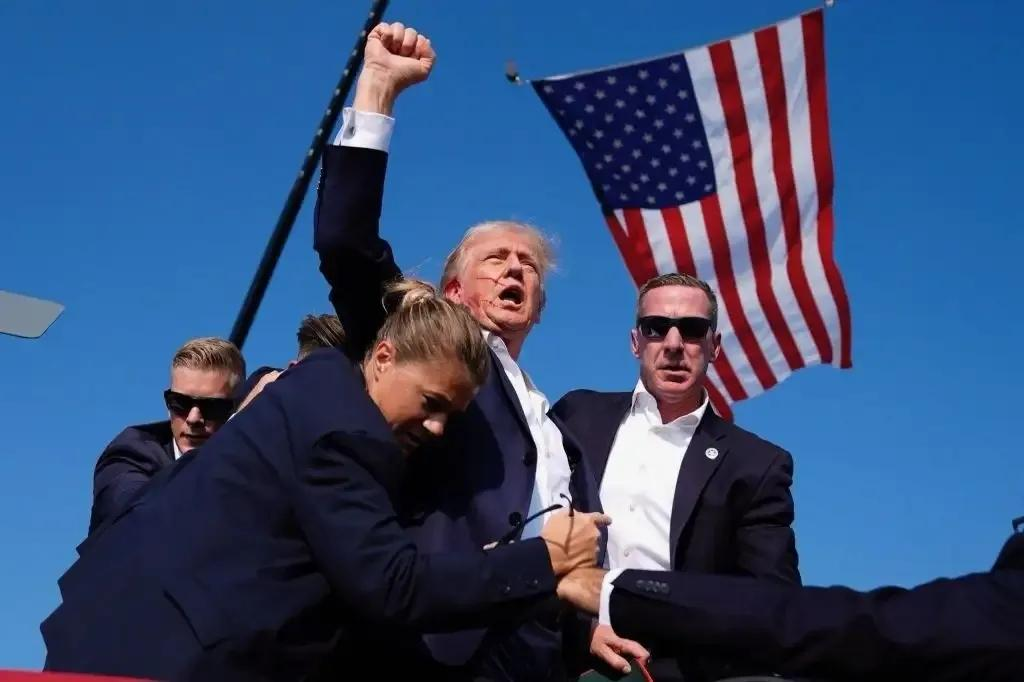
Against the backdrop of the lingering effects of the 2024 U.S. election and the intensifying economic policy battle, former President Trump has recently made two major commitments: announcing that he will distribute a special subsidy of 1776 dollars to 1.45 million military personnel across the U.S. before Christmas, while also clearly stating that the next chairman of the Federal Reserve will be someone who supports "significant interest rate cuts." Both policies target key voter groups and core economic issues, sparking widespread attention and controversy.
The subsidy amount of 1776 dollars carries special symbolic significance, echoing the historical moment of the signing of the Declaration of Independence in 1776, and is interpreted as an important measure by Trump to reinforce the "America First" narrative. This subsidy covers all active-duty military personnel, and the Trump team attempts to gain the support of military members and their families through direct economic benefits, a group that has traditionally wielded significant influence in elections. However, there are doubts about the source of the subsidy funds, recalling Trump's previous promises to distribute tariff bonuses to the public that went unfulfilled. Many analysts point out that if the tariff policies he relies on become invalid due to a Supreme Court ruling, the feasibility of implementing the subsidy will face severe challenges—currently, the Supreme Court is reviewing the legality of federal tariffs, and if the ruling is unfavorable, the government may need to refund over 100 billion dollars in tariff revenue, directly impacting the funding basis for related welfare policies.
In the field of economic policy, Trump's pressure on the Federal Reserve has escalated into specific personnel commitments. He explicitly made the 'willingness to aggressively lower interest rates' a core criterion for appointing the Federal Reserve Chair, stating that 'interest rates should be 1% or even lower,' and hinted at three popular candidates: Kevin Hassett, Kevin Walsh, and Christopher Waller. Among them, Hassett has become the frontrunner due to his greater inclination to support significant rate cuts, raising strong concerns on Wall Street about the independence of the Federal Reserve. Executives from institutions like JPMorgan have warned that political interference in monetary policy could shake market confidence, while serious divisions have already emerged within the Federal Reserve — in the latest rate cut decision in December, 12 members cast 3 dissenting votes, the highest record since 2019, with Trump's appointee, Governor Stephen Moore, clearly advocating for a 50 basis points cut instead of 25 basis points.
Trump's push for significant rate cuts is driven by multiple considerations: by December 2025, the U.S. national debt has surpassed $37.7 trillion, and each 1% rate cut could reduce interest payments by nearly $400 billion; at the same time, lowering rates can alleviate the cost pressures on manufacturing brought about by his tariff policies and can also provide liquidity support for U.S. stocks dominated by AI concept stocks. However, this policy hides risks: economists point out that aggressive rate cuts while inflation is not yet fully controlled could lead to a rebound in prices, and the weakening of the Federal Reserve's independence would undermine its global central bank authority. Currently, the Federal Reserve has cumulatively cut rates by 175 basis points, with the latest rate range at 3.5%-3.75%, but Trump remains dissatisfied with the current rate cuts and demands further easing.
The intensive rollout of two policies clearly demonstrates a typical characteristic of Trump's 'campaign economics' — seeking voter support through direct benefits and aggressive economic commitments, yet lacking sufficient consideration for the details of policy implementation and long-term impacts. Military subsidies seem beneficial to the public but are constrained by the legitimacy of tariff policies; while significant rate cuts can stimulate the economy in the short term and please the markets, they may exacerbate debt risks and inflation pressures, and could lead to deeper divisions within the Federal Reserve.
As the transition to a new Federal Reserve Chair approaches and the election process advances, Trump's policy commitments are profoundly influencing the trajectory of the U.S. economy. The market is closely watching his final personnel appointments: if Hassett is elected, aggressive rate cuts may become a foregone conclusion, potentially boosting the stock market in the short term but planting long-term pitfalls; if the more moderate Waller or Walsh takes office, the policy game between the Federal Reserve and the White House may continue. Regardless of the outcome, Trump's attempt to bind monetary policy with welfare policy to the election has made the politicization of U.S. economic policy increasingly evident, adding new variables to an already uncertain global economy.$BTC