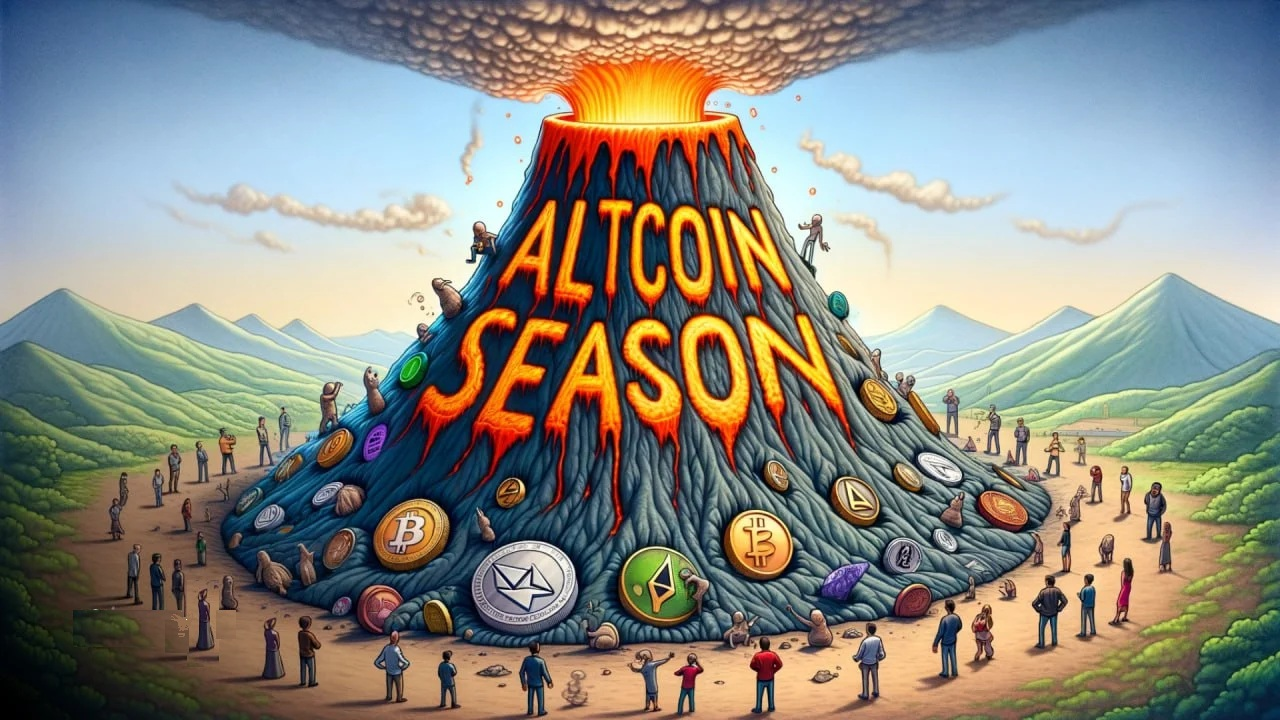
#NonfarmDataBeats The global economy is approaching a critical threshold as it nears the year 2026. The Federal Reserve has completed the final curve in its monetary tightening process; the pace of balance sheet reduction is slowing, and the rigidity of its policy tone is beginning to ease. While traditional markets price this shift with a delay, the cryptocurrency ecosystem reacts with a high level of sensitivity even to the slightest tremor in the liquidity system.
The main question in this new era is: In what order will digital assets breathe when liquidity begins to ease?
I. Return of the liquidity system: Transition from broad to warm
The end of the Federal Reserve's monetary tightening is not just a directional change regarding the interest rate path; it is a macro break point affecting the rhythm of global dollar flows. Three indicators stand out at this stage:
USDT.D curve: The real-time liquidity pulse. A sharp decline indicates an early recovery of alternative currency sectors.
US Treasury bond yield: A retreat from peak levels indicates a transition of liquidity to high-risk assets.
ETF flows: The institutional gateway to liquidity. A new acceleration in flows enhances the internal market momentum.
When reading all this data together, it seems that the season of "transition from broad to warm" looms for cryptocurrencies.
II. Timing Matrix in Alternative Currency Sectors
Cryptocurrency cycles have historically worked sequentially across four sectors:
1. L1/L0 Stage
Market confidence is first gathered by major infrastructures. Assets like ETH, SOL, and AVAX are the first stop for liquidity flow.
2. AI and DePIN Phase
Technological narratives move liquidity into the ‘high growth – high risk’ space. The overall correlation between Nvidia and AI provides this.
3. Real assets and institutional digitization
During periods of easing by the Federal Reserve, the narrative of 'real assets' always leads. This sector pulls liquidity to a sustainable level.
4. Meme coin madness
The most volatile and recent phase of the cycle. It is the final warning confirming that liquidity has reached its peak.
The key factor that determines whether this sequence will change is the Federal Reserve's balance sheet policy + ETF flow + USDT.D behavior.
III. New narratives on the institutional side: Tokens of the finance architecture for 2025
The world of finance after 2025 does not merely mean "a softer Federal Reserve". It also means:
• ISO 2022 transition,
• Drafts of stablecoin regulation,
• Liquidity participation in Asia-Pacific,
• Institutional tokenization projects,
• Interest in non-US ETF structures,
• Digital currency (CBDC) testing in experimental environments,
• SWIFT + Blockchain integration experiments
These themes bring the cryptocurrency ecosystem closer to a common language with the global payment architecture.
This is a period that could dramatically change resource allocation among asset sectors.
IV. Portfolio management perspective: Dominance threshold and risk adjustment
Optimal portfolio management must be determined during the reversals of the liquidity system through three mechanisms:
• Bitcoin dominance: A downward break of the 57-60% range indicates a period of collective pricing for alternative currencies.
• Sentiment indicators: Social media engagement and on-chain activity should be read with the acceleration of ETF flows.
• Sector weight:
Increase the weight of L1 at the beginning of the recovery.
Balance between AI and real assets in the mid-stage.
Mitigating risks in the late stage and reducing positions in the meme sector.
The only constant in the physics of cryptocurrency cycles is that liquidity and volatility dance together.
V. Bank of Japan's interest rate hike: Silent breakout, sequential reactions to global liquidity
While market interest is focused on the Federal Reserve's easing path as 2025 approaches, the real silent breakout in the global liquidity equation occurs with the Bank of Japan's decision to end the negative interest rate period and raise rates. This decision directly affects not only the Japanese local market but also yen-denominated liquidity, which has been the hidden fuel for global financing for decades.
1. Risk of unwinding the carrying yen trade
For many years, investors borrowed at low-yield yen and invested in high-yield assets. This includes the mechanism:
• US Treasury bonds
• Emerging market stocks
• Nasdaq and tech stocks
• Digital assets
With the Bank of Japan raising interest rates:
• The yen tends to strength
• Unwinding bearer trade positions
• Temporary volatility in high-risk assets occurs globally
This effect may initially pressure high-sensitivity sectors (alternative currencies, meme coins, small market cap tokens).
2. Divergence of Federal Reserve and Bank of Japan policies: Redrawing the liquidity map
The Federal Reserve's preparation for easing while the Bank of Japan moves towards tightening creates an unbalanced distribution of liquidity in global markets.
The consequences of this situation include:
• Dollar-denominated liquidity remains relatively attractive
• Asian money direction is being reshaped
• US assets maintain a perception of 'safe haven' in the short term
• Regional liquidity shifts in cryptocurrencies occur
The increasing volatility of cryptocurrencies, especially during Asia sessions, will be one of the early effects of this divergence in policies.
3. The impact on global markets: A chain of bonds, stocks, and cryptocurrencies
The impact of the Bank of Japan's interest rate hike on global markets is not a single-channel effect but a series of reactions in three phases:
1. Rising yields on Japanese bonds
→ Japanese capital begins to return home
2. Short-term volatility in US bonds occurs
→ US10Y shows temporary volatility
3. Selective selling in high-risk assets is observed
→ In cryptocurrencies, there is sector-based divergence, not a general collapse
The critical distinction here is:
The pressures from the Bank of Japan lead to a temporary rebalancing based on liquidity, not a structural bear market.
4. Cryptocurrency-specific analysis: Threat or opportunity?
The Bank of Japan's interest rate hike creates a contradictory effect on cryptocurrencies:
• In the short term:
Volatility and disruptions due to unwinding bearer trade
• In the medium term:
Dollar liquidity flow into cryptocurrencies continues along the Federal Reserve's easing path
• In the long term:
The incoming liquidity is not from "cheap money", but from structural demand and institutional integration.
This creates a pricing environment that favors:
• L1
• RWA
• Institutional-compliant tokens
Instead of speculative spikes.
5. Strategic outcome: New parameters in the 2025 cycle
The key to understanding the Bank of Japan's interest rate hike correctly is this sentence:
"This decision does not end cryptocurrencies, but it is a threshold that forces them into a more selective and mature cycle."
The 2025 cycle indicates:
• Less randomness
• More data-dependent
• More institutional
• More fragmented digital market.
Federal Reserve easing is not just a rate cut; the Bank of Japan's tightening and the new liquidity system shaped by ETFs are reshaping cryptocurrencies from a one-way risk game into an active component of the global financial architecture.