
1. Project Overview and Core Positioning
Solv Protocol is a core financial infrastructure focused on bridging the liquidity barriers between Bitcoin and the DeFi ecosystem. The project was initiated in 2020, initially centered around ERC-3525 semi-fungible tokens (SFTs), providing issuance tools for crypto company equity, bonds, and early tokens; in 2024, the strategy shifted to the BTCFi track, launching the Staking Abstraction Layer (SAL) and the SolvBTC ecosystem, with the core goal of opening efficient yield paths for Bitcoin holders through cross-chain staking, while injecting stable Bitcoin liquidity into DeFi protocols.
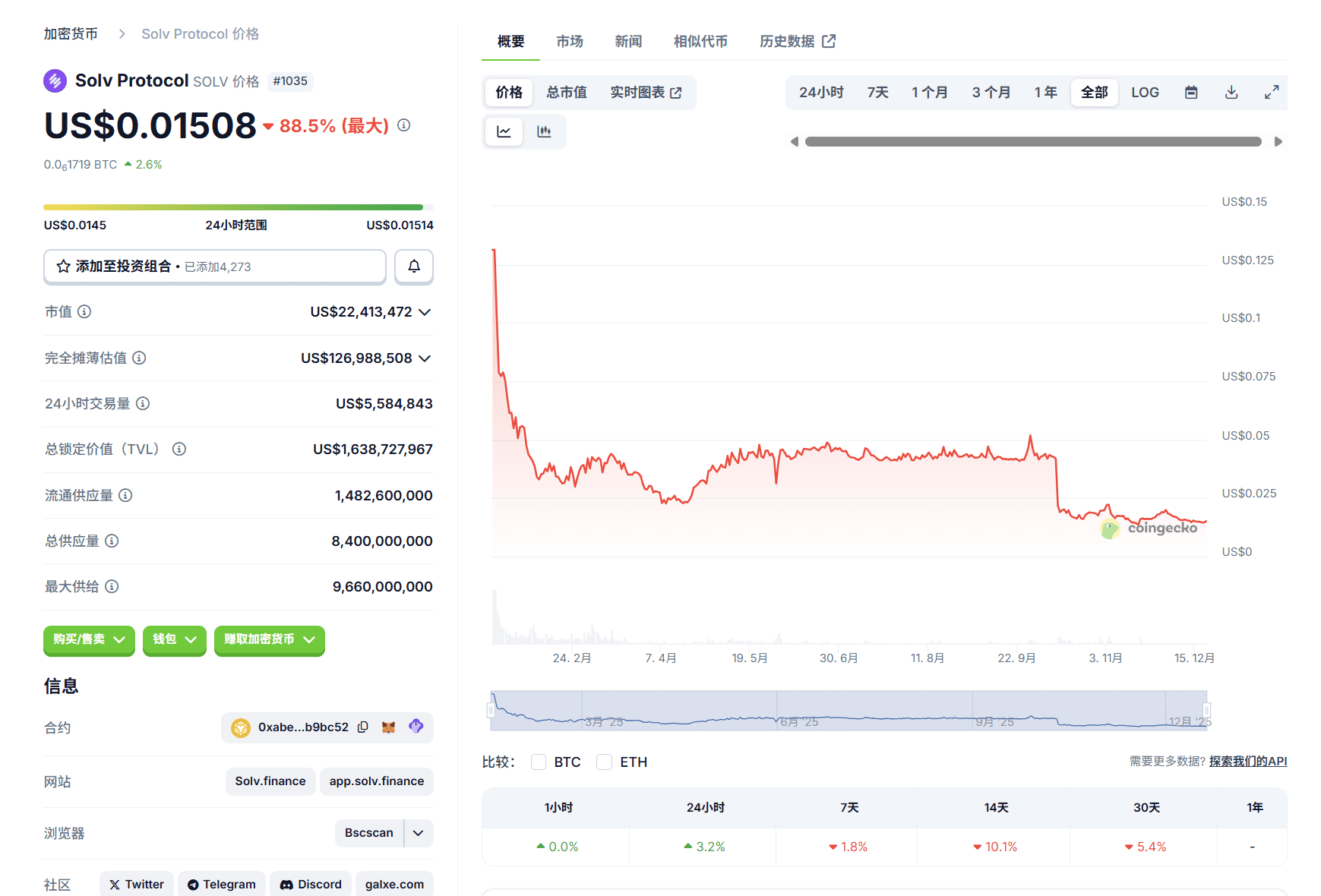
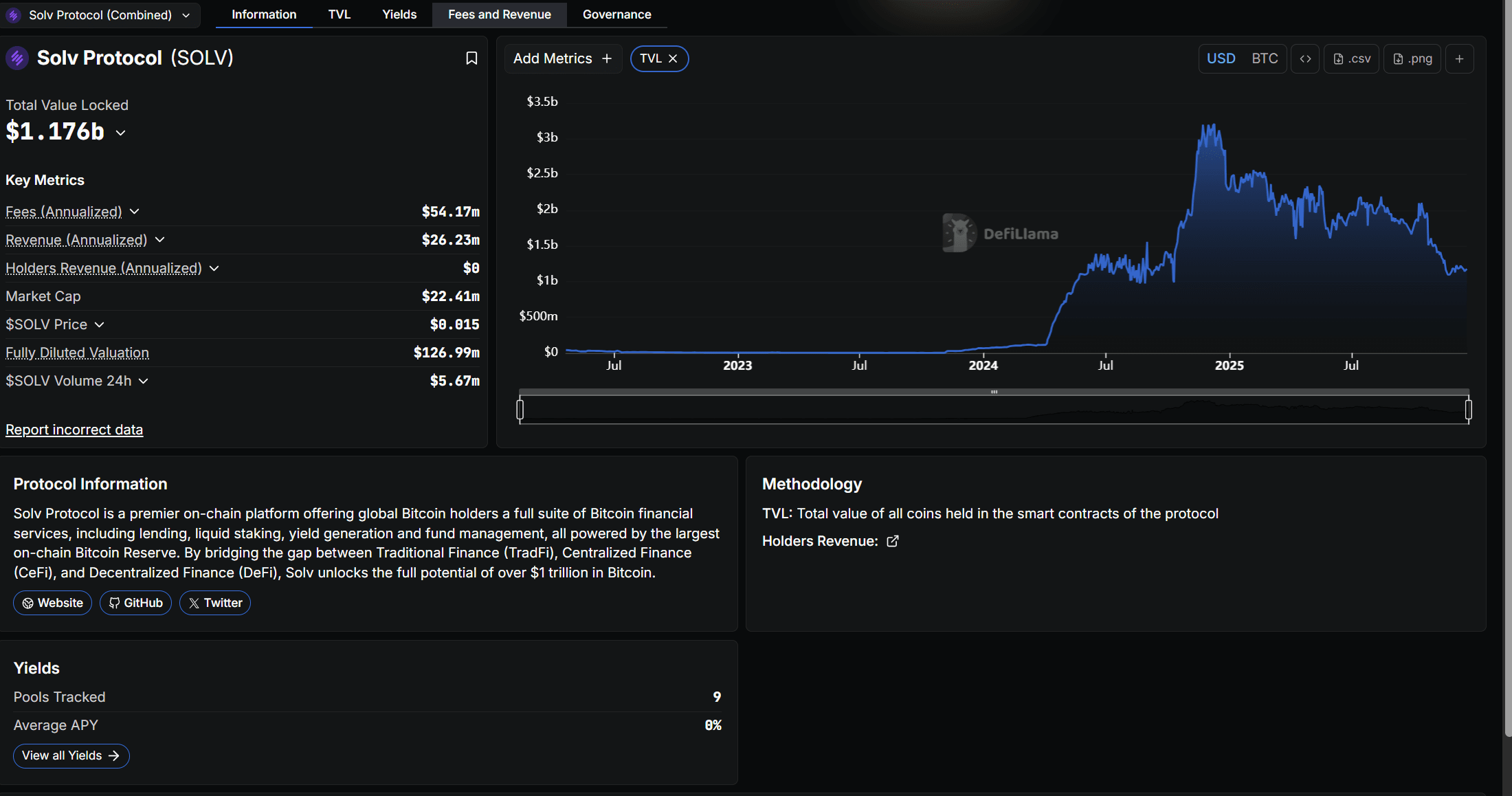
According to the official core data, as of the latest statistical node, Solv has managed a reserve of 19,456 BTC, with the total value locked (TVL) exceeding $2.15 billion, cross-chain services covering 11 mainstream public chains, over 300 cooperative projects, a cumulative user scale exceeding 1.2 million, and has formed a scaled ecological layout in the BTCFi track.
Project core concept analysis:
Staking Abstraction Layer (SAL): The core hub of cross-chain Bitcoin staking, achieving unified management entry by abstracting the staking logic across different chains. Users can migrate assets seamlessly across multiple chains and continuously earn staking rewards through SolvBTC liquidity staking tokens (LST), significantly reducing the operational threshold for cross-chain staking.
SolvBTC: An asset token pegged 1:1 to Bitcoin, secured by professional custodial institutions, and issued across chains through SAL. Based on SolvBTC, derivatives such as xSolvBTC or SolvBTC.LST can be upgraded, among which SolvBTC.LST corresponds to the Bitcoin assets that have been staked and generated yields, combining liquidity and profitability.
Bitcoin Reserve Offering (BRO): An innovative Bitcoin reserve fundraising mechanism that raises BTC to enrich asset reserves through the issuance of convertible bonds. BRO participants can later convert the convertible bonds into SOLV tokens, allowing the supply of SOLV to be dynamically adjusted according to ecological development needs.
Essentially, Solv has gone through multiple rounds of business iterations, ultimately focusing on the dual main lines of RWA and BTCFi. The team has strong execution capabilities in business development (BD) and product landing, but currently lacks differentiated advantages in the asset on-chain business within the mainstream financial circles in Europe and the United States, and has not received sufficient traditional funding support. In terms of user structure, the retail base is relatively weak, while the institutional side faces insufficient core asset buying pressure and a lack of competitiveness and differentiation in wealth management products.
II. Technical Architecture and Core Products
2.1 Core Architecture: Staking Abstraction Layer (SAL)
SAL is a modular and scalable cross-chain Bitcoin staking framework, with core functions covering the entire process management of Bitcoin staking—from asset minting and staking verification to cross-chain transfers and profit distribution, forming a closed-loop service system. Its core components include:
LST generation service: In the core asset minting stage, when users deposit BTC, the system mints SolvBTC at a 1:1 ratio; it also supports further generation of yield-bearing SolvBTC.LST based on SolvBTC. Currently, leading staking protocols such as Babylon, CoreDAO, and Ethena have accessed SAL as LST issuers, allowing the issuance of exclusive BTC LST products through this framework.
Staking verification service: The security core of cross-chain staking, responsible for coordinating and verifying the authenticity of staking transactions across multiple chains, ensuring that LST issuers strictly follow the rules to complete BTC staking and obtain compliance yields. At the technical level, by integrating mature cross-chain communication protocols such as Chainlink CCIP, it ensures the safe and efficient transmission of multi-chain data, safeguarding the reliability of the verification process.
Transaction generation and cross-chain transfer service: A key module for optimizing user experience, when users complete minting or redemption operations of SolvBTC/LST on any chain that supports SAL, this service will automatically generate corresponding staking/redemption transactions and complete cross-chain asset migration without the user needing to manually handle cross-chain details, achieving 'one-click cross-chain staking.'
Yield distribution service: The core of yield management, tracking the staking yield data of each LST product in real-time, automatically distributing yields to holders' accounts according to preset rules (such as user staking ratios, lock-up periods). Currently integrated with yield management protocols such as Pendle, supporting flexible yield distribution in the form of interest.
The modular design of SAL has strong scalability, allowing new BTC staking protocols or public chains to quickly access the ecosystem while greatly simplifying the user's cross-chain staking process, enhancing the liquidity and utilization of Bitcoin in the DeFi ecosystem.
2.2 Technical Foundation: Solv V3 and Semi-Fungible Tokens
The technical accumulation of Solv originates from early semi-fungible token layouts, having created products such as Vesting Voucher (locking certificate), Convertible Voucher (convertible certificate), and Bond Voucher (bond certificate) through the ERC-3525 standard, providing customized financing tools for early crypto projects and accumulating rich experience in asset tokenization.
The Solv V3 version launched in 2023 has been further upgraded to an on-chain fund platform for real-world assets (RWA), allowing fund managers to issue fund shares SFT through the platform, investors can directly subscribe to SFT to participate in fund investments, and the shares support free circulation to achieve efficient on-chain allocation of RWA assets. This technology system remains the core underlying support for Solv's BTCFi products, providing guarantees for the tokenization and compliance management of BTC assets.
III. Business Progress and Ecological Layout
Ecological scale and user growth
As of the end of 2025, Solv's core asset reserves will reach 19,456 BTC, with TVL exceeding $2.15 billion. Cross-chain services have covered 11 mainstream public chains such as Ethereum, BNB Chain, Arbitrum, Blast, Linea, and Base. The ecological cooperation network continues to expand, with over 300 cooperative projects, 35 wallet partners, and active users exceeding 1.2 million, forming a scaled ecological effect.
Cross-chain integration breakthrough
Completed deep integration with leading staking protocols such as NEAR, BIT public chains, Core, and Babylon through the SAL framework. Among them, the cooperation with NEAR has been significant, achieving over $500 million in value to flow freely between NEAR and other public chains through SolvBTC, further expanding the cross-chain application scenarios for Bitcoin.
Diversified Strategic Cooperation
In the DeFi field, cooperation has been reached with leading protocols such as Pendle (yield management), Morpho (lending protocol), and Gauntlet (risk modeling), improving the staking yield management system; in the trading platform sector, joint financial products have been launched with mainstream exchanges such as Binance, OKX, and Bybit, expanding user reach; in the asset security field, cooperation with top custodial institutions such as Ceffu, Fireblocks, and Cobo ensures the security of underlying BTC asset custody.
Core milestones for 2025
The official development plan for 2025 clearly states that in Q1, SOLV will complete its full launch on centralized exchanges (CEX) and decentralized exchanges (DEX), expand cross-chain integration, launch the second round of point plans, and the first BRO; in Q2, the second round of BRO will be initiated, SolvDAO will be established, and the tokenization of BTC ETF and RWA assets will be promoted. According to BingX, Solv plans to advance BRO three times within 2025, cumulatively issuing 126 million SOLV convertible bonds, with the core goal of raising more BTC to enrich asset reserves and strengthen the core competitiveness of the ecosystem.
IV. Investment and Financing Background
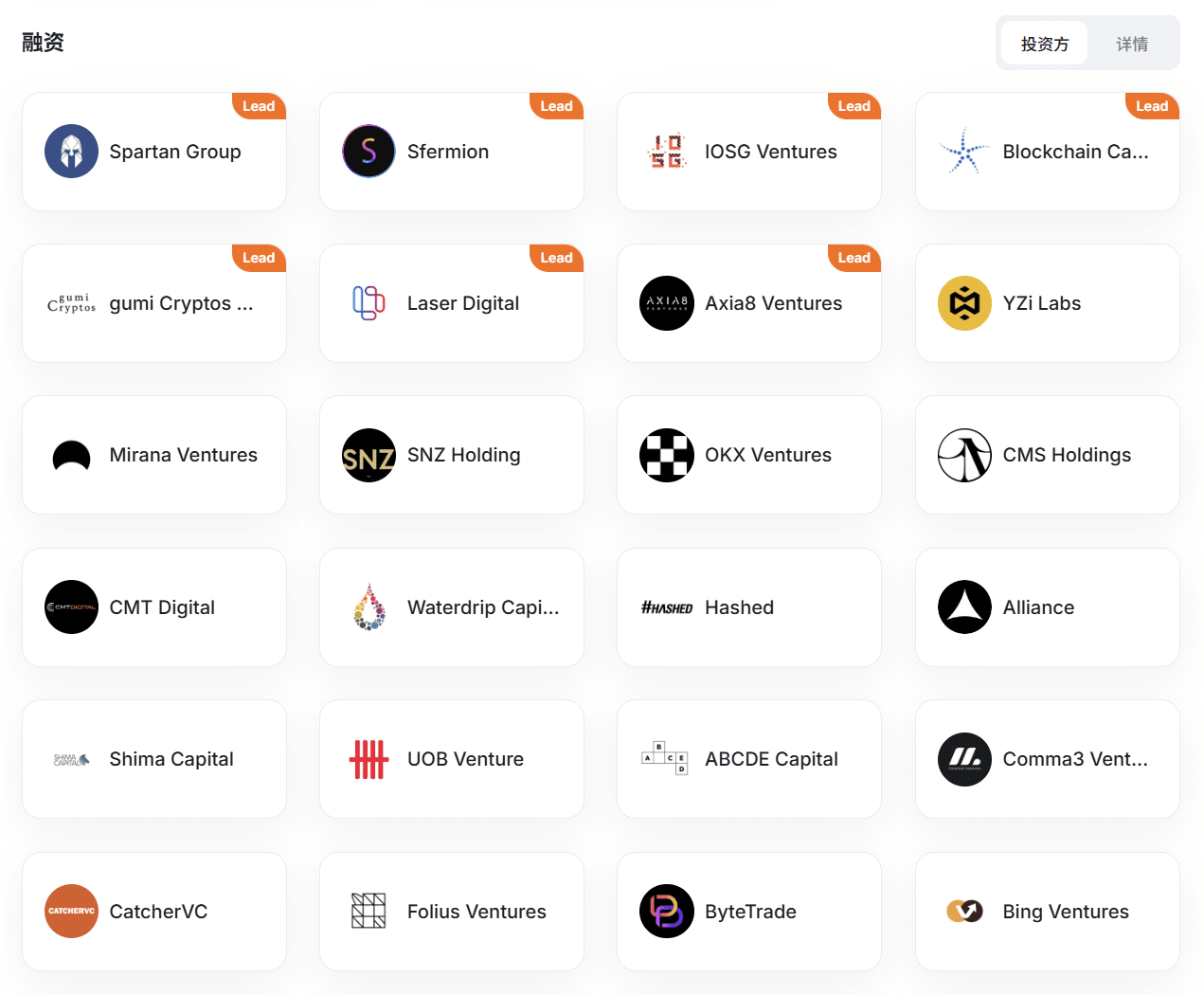
According to public reports from PANews and BingX, Solv has completed multiple rounds of financing since its launch in 2020, raising a cumulative amount of about $29 million, with an investment lineup covering top crypto funds and digital asset platforms of traditional financial institutions globally, showing significant funding strength and industry resource advantages. Specific financing round information is as follows:
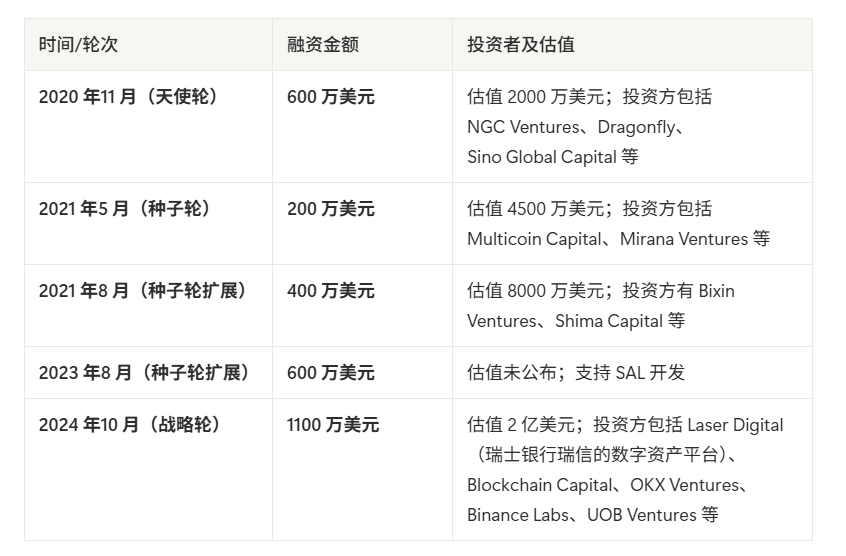
In addition, according to the research report by Binance, the project has raised about $24 million through four rounds of private placements, with corresponding valuations of $20 million, $45 million, $80 million, and $200 million, and valuations are continuously increasing with business iterations.
In terms of team composition, the core members have strong backgrounds: founder Meng Yan is the founder of ChinaDeFi and has been deeply involved in the crypto finance field for many years; Will Wang is the proposer of the ERC-3525 semi-fungible token standard and has solid technical research and development capabilities; and Ryan Chow and other senior practitioners are responsible for core business promotion. According to proposals disclosed by the Arbitrum ecosystem, the team has formed a professional team of more than ten people covering research, development, operations, marketing, and compliance to ensure stable project advancement.
V. Token Economic Model
5.1 Core Token Use
Governance and Voting: SOLV holders can participate in core proposal voting of the project through SolvDAO, including BRO issuance rules, ecological development plans, parameter adjustments, and other key decisions, thus gaining ecological governance rights.
Staking and Yield Acquisition: Users staking SOLV can earn emissions rewards and platform fee sharing; in the future, it will further expand application scenarios to be used for staking collateral verification or cooperative nodes to obtain more ecological benefits.
Fee Discounts: When performing operations such as asset minting, redemption, and cross-chain transfers on the Solv platform, using SOLV to pay fees can enjoy tiered discounts, while also receiving additional platform rewards, reducing user transaction costs.
5.2 Supply and Distribution Mechanism
Supply cap: The maximum total supply of SOLV is 966 million tokens, of which 840 million tokens are from the genesis issuance. It is worth noting that the total supply can be dynamically increased through the BRO mechanism according to ecological needs, but each newly issued SOLV must be locked for one year before entering the circulation market to alleviate short-term selling pressure.
Initial circulating supply: Approximately 148.26 million tokens, accounting for 17.65% of the genesis supply, mainly sourced from community airdrops, early private placement unlocks, etc., with a relatively small circulating market.
5.3 Unlocking and Inflation Characteristics
As of the latest statistics, the current circulating supply of SOLV is approximately 237 million tokens, accounting for 24.54% of the maximum total supply; about 603 million tokens remain locked or unreleased, leading to significant unlocking pressure in the future. In addition, the dynamic issuance mechanism brought by BRO leads to long-term inflation expectations for SOLV, and each unlocking of BRO convertible bonds will add to the circulating supply, which may exert ongoing pressure on the price.
VI. Exchange Listing and Liquidity Analysis
SOLV has been listed on multiple mainstream centralized exchanges at home and abroad, with liquidity highly concentrated on top platforms. According to the latest data from CoinLore:
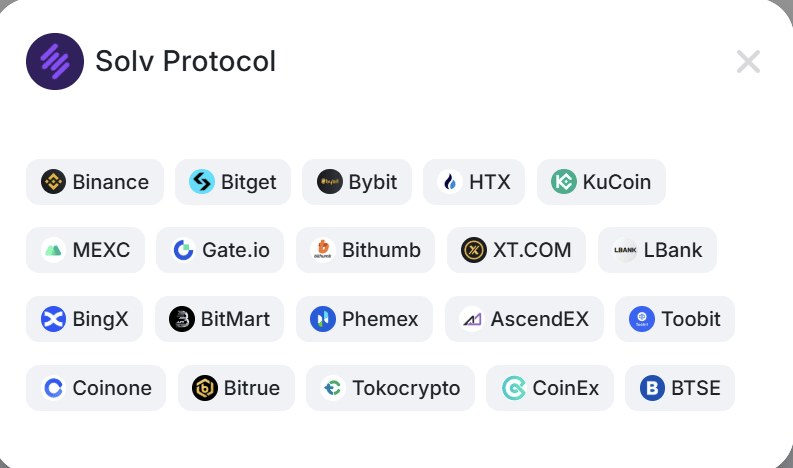
Binance is the core trading platform for SOLV, with a 24-hour trading volume of approximately $2.7 million for the SOLV/USDT trading pair and a depth of ±2% reaching $157,000, making it the current main liquidity pool;
Secondary exchanges such as MEXC, Gate, Phemex, and Coinex have already listed SOLV trading pairs, but liquidity is relatively weak, with daily trading volumes mostly in the range of $50,000 to $100,000;
Other exchanges such as KuCoin, Bitrue, Hibt, DigiFinex, and BTSE provide trading services but with low depth, large transactions are prone to significant slippage.
To enhance liquidity and user participation, Solv has cooperated with top exchanges such as Binance, OKX, and Bybit to launch Earn wealth management activities and Megadrop point plans, expanding the user base through airdrop rewards and staking rebates, while guiding capital inflows into the trading market to alleviate liquidity concentration risks.
VII. Market Performance and K-Line Trend Assessment
Combining public data from CoinMarketCap and Messari, the market performance of SOLV shows characteristics of 'high volatility, high elasticity.'
Price and Market Value: By the end of 2025, the latest price of SOLV is approximately $0.0145, corresponding to a circulating market value of about $21.5 million, and a fully diluted market value (FDV) of about $140 million. The current gap between the circulating market value and FDV is significant, combined with growth expectations in the BTCFi track, which presents some speculative opportunities.
Historical high and low points and drawdown extent: The price of SOLV reached a historical high of $0.2277 on January 17, 2025, and subsequently declined due to weakening macro conditions and unlocking pressures, falling to a historical low of $0.00226 on October 10, 2025, with a maximum drawdown exceeding 90%. The current price has rebounded several times compared to the low point but still shows a significant gap compared to the historical high, with prominent volatility risks.
Trading volume and trend characteristics: The 24-hour trading volume of SOLV remains stable in the range of $6 million to $10 million, with core transactions coming from the USDT/USDC trading pair on Binance. The price trend can be divided into three phases: early 2025 due to CEX listing, airdrop activities, and point plans, showing high volatility and upward movement; followed by a continuous downward channel due to macro crypto market adjustments and rising BRO unlocking expectations; since the fourth quarter of 2025, it has been oscillating in the $0.002–$0.02 range, with short-term arbitrage and rebound opportunities, but the long-term trend remains influenced by BTC market conditions and ecological progress.
VIII. Risk Analysis and Participation Recommendations
8.1 Core Advantages
First-mover advantage in the BTCFi track: Through the innovative models of SAL and SolvBTC, it has achieved the standardization and convenience of Bitcoin cross-chain staking, opening up new revenue channels for Bitcoin holders, aligning with the core development trend of the BTCFi track, and possessing first-mover competitive advantages.
Scaled ecology and asset reserves: 19,000+ BTC reserves, 11 public chains covered, and an ecosystem scale of over 300 cooperative projects provide users with a rich application scenario, while enhancing ecological network effects and risk resistance.
Top institutional endorsement and funding strength: A cumulative financing of nearly $30 million, with investments from top institutions such as Laser Digital, Blockchain Capital, and Binance Labs, not only provides sufficient financial support but also relies on the resources of investors to expand ecological cooperation and accelerate business landing.
Flexible and decentralized token distribution: Community rewards, DAO treasury, BRO financing, and other decentralized distribution methods account for over 50%, and dynamic supply adjustments are achieved through BRO, ensuring community interests while providing flexibility for long-term ecological development.
8.2 Core Risks and Challenges
Smart contract and cross-chain security risks: The SAL architecture involves complex operations such as multi-chain asset transfers and staking verifications, where any smart contract vulnerability or cross-chain communication failure may lead to user asset losses. It is recommended that users prioritize platforms audited by third parties and closely monitor official security announcements from the project.
Token supply and inflation uncertainty: The dynamic issuance mechanism of BRO leads to an unclear total supply cap, which may further expand in the future; coupled with the concentrated unlocking rhythm of existing tokens and large unlocking scale, it may create significant selling pressure in the short term, impacting price stability.
Risk of dependence on staking yields: The yield of SolvBTC.LST is primarily dependent on the staking yield performance of external LST issuers. If cooperative staking agreements experience yield decline or security incidents, it will directly reduce the attractiveness of SolvBTC.LST, thereby affecting the platform's TVL and ecological vitality.
Liquidity concentration risk: SOLV's liquidity is highly concentrated on Binance, with insufficient depth on other exchanges. If it encounters macro market shocks, policy regulatory changes, or platform risk events, it may lead to significant price fluctuations or even liquidity exhaustion.
Regulatory and compliance risks: As a BTCFi project involving Bitcoin custody and profit distribution, it needs to comply with the regulatory policies for crypto assets in different regions globally, especially during the large-scale fundraising of BTC through BRO. If local compliance requirements are not met, it may face regulatory penalties, affecting project advancement.
8.3 Participation Recommendations
Position control and diversification: SOLV has growth potential in the BTCFi track, but prices are highly volatile. It is recommended to adopt a small position allocation strategy to avoid excessive concentration on a single asset and ensure diversification and risk dispersion of the overall investment portfolio.
Focus on core dynamic indicators: Pay close attention to the official BRO issuance plan, token unlocking schedule, ecological cooperation progress, and security audit reports to avoid blindly building positions during unlocking concentration periods and policy-sensitive periods, thus reducing short-term risks.
Actively participate in ecological governance and staking: Users who are optimistic about the long-term development of the project can participate in SolvDAO governance by holding and staking SOLV, which can both earn staking rewards and transaction fee sharing, and influence the ecological development direction, sharing the dividends of ecological growth.
Strengthen risk awareness and channel selection: Fully recognize the technical complexity and potential risks of cross-chain staking, prioritize official recommended custodial channels and cooperative platforms, avoid putting all BTC assets into the Solv ecosystem, and prepare for risk hedging.
IX. Conclusion
As a core player in the BTCFi track, Solv Protocol has successfully built a liquidity bridge between Bitcoin and the DeFi ecosystem through the SAL staking abstraction layer and SolvBTC asset token, achieving the convenience and yield generation of cross-chain staking. The project has now formed a scaled ecological layout, possessing sufficient asset reserves, top institutional endorsements, and innovative technical models, showing strong growth potential in the BTCFi track.
However, it is necessary to be vigilant as the project faces multiple risks, including smart contract security, token inflation, yield dependence, liquidity concentration, and regulatory compliance. The current market performance is highly volatile, with high investment risks. Overall, SOLV is suitable for investors who have a deep understanding of the BTCFi track, recognize the project's technical model, and can accept medium to high risks for limited participation. The focus needs to be on the three core indicators of ecological progress, unlocking dynamics, and safety compliance, adjusting participation strategies flexibly.
The data in this report was edited and compiled by WolfDAO; if you have any questions, please contact us for updates;
Written by: WolfDAO

