
In the Glassnode research report, there is a statement that I strongly agree with—'Time has now become the main source of market pressure.' Currently, BTC in a state of loss has reached 6.7 million coins (7d sma), which is a record high for this cycle. As time goes on, when the frustration of these investors urgently needs to grow, a more pronounced bearish sentiment will emerge. I analyzed a viewpoint in three consecutive tweets on December 3rd: there are two key considerations for the trigger point of 'entering a deep bear'—price and time. Since the BTC that has changed hands after June 30 this year currently belongs to short-term loss chips, based on time, these costs of STH chips between $107,000 - $125,000 will passively become LTH chips in 3 months, specifically in Q1 2026. Therefore, there is a possibility of a significant change in LTH price sensitivity.
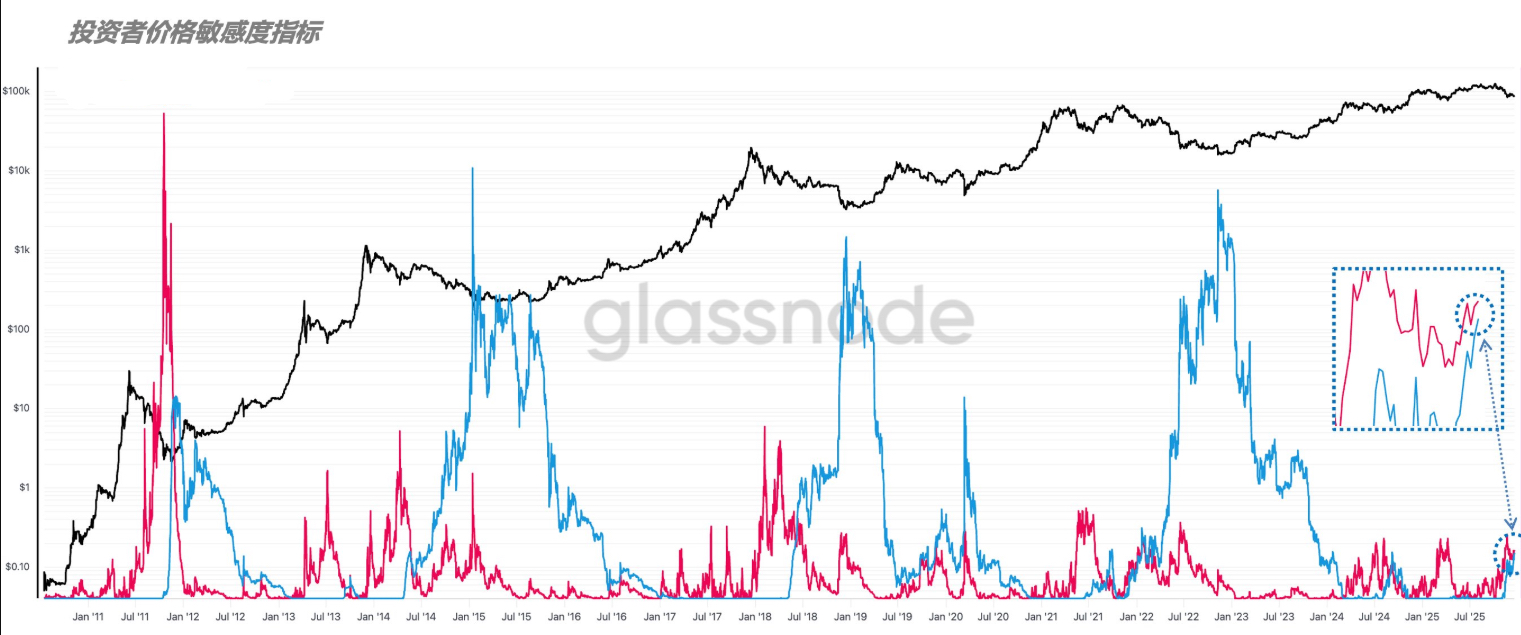
(Figure 1) And now, we see that the price sensitivity of LTH (blue line) is rapidly catching up with that of STH (red line). Since LTH holds more chips, when they are more sensitive to price fluctuations, it can more easily trigger larger-scale panic exits. This significantly increases the probability of the market further entering a deep bear phase (for a detailed explanation, please refer to the citation). A few days ago, we analyzed that on December 26, the massive probability theory options exercise benefited from the long gamma structure of previous market makers, which provided support protection for the price floor, therefore large fluctuations are unlikely to occur. After December 26, as related hedging positions are unwound and market structure is restructured, the original support level will temporarily become ineffective. The new support level will depend on the new capital structure thereafter. The formation of the structure is determined by all market participants together (not predicted by a big player or a certain institution). When the market believes that a certain position will be broken, funds will place the defense zone below that position, which likely means it will break down. For example, if the spot order wall is withdrawn and a large number of short orders are placed, it can allow market makers to short gamma.
This is essentially the power of emotions, generating actions that are recognized by more people, thereby completely changing trends and altering prices.
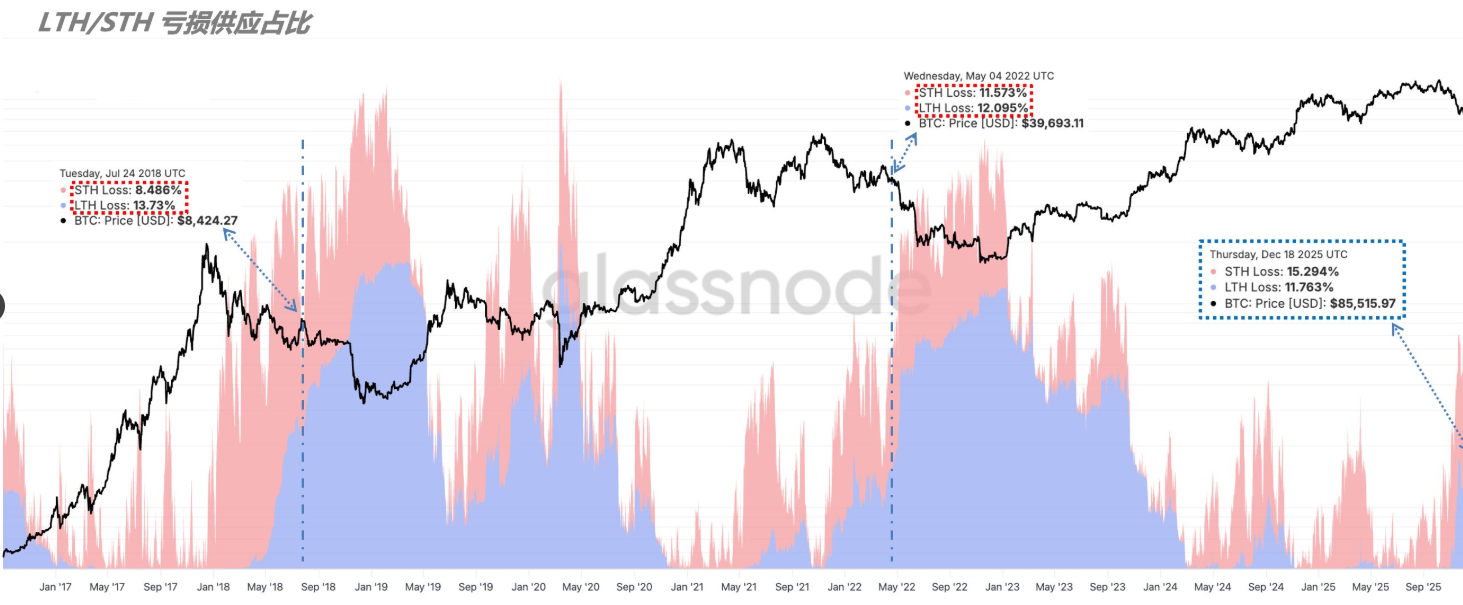
(Figure 2) From the current data, the circulating BTC supported is held by STH at 15.29% and LTH at 11.76%; although STH receives more attention, the meaning of LTH is increasingly approaching, and once it exceeds, it will test the market's ability to withstand pressure. I have also marked in Figure 2 the historical cases where LTH's supporting supply exceeded that of STH. Friends should be able to understand this.
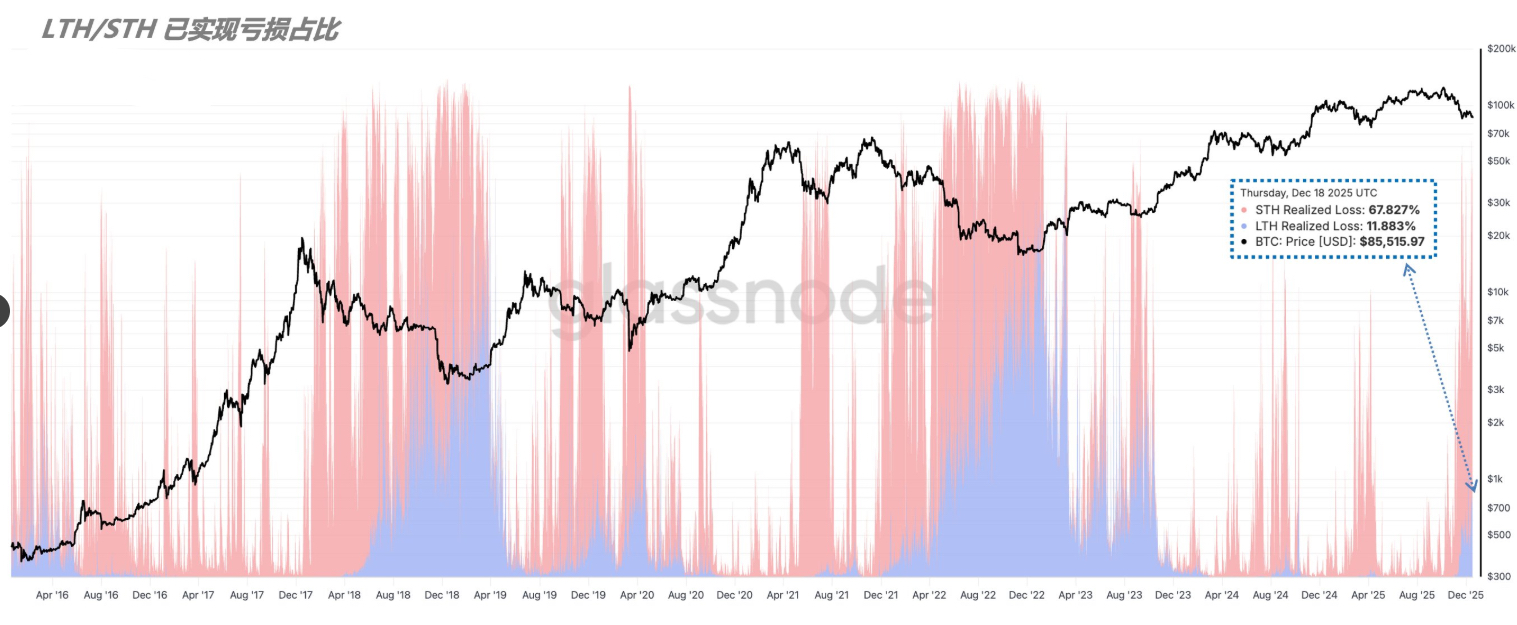
(Figure 3) However, fortunately, LTH should still be able to maintain calm and restraint. From the data in Figure 3, during several declines in December, STH that sold at a loss exhibited an absolute dominant position. For example, on December 18, STH achieved panic at 67.82%, while LTH was only at 11.88%. It is still unknown when more LTH chips will show panic, yet they still cannot maintain such determination and stability. Of course, one point we cannot ignore is that the identity of LTH in this cycle has undergone a fundamental transformation; the participation of a large number of traditional institutions itself represents BTC as a long-term (cross-cycle) reserve, rather than for short-term price speculation. Regardless, the first quarter of 2026 will be a season with incremental uncertainty. Emotions are racing against time! If macro policies and liquidity expansion expectations become clearer, market confidence will recover, and the chips that are trapped at high positions will instead turn into a trend of “locking in”. Conversely, it may usher in wave after wave of price exploration.
\u003cc-4/\u003e\u003ct-5/\u003e
