

As the Christmas holiday approaches, the months-long competition for the nominee of the U.S. Federal Reserve (Fed) Chair is entering its final sprint. Current Chair Powell's term will end in May 2026, and the suspense surrounding his successor's nomination is likely to be revealed before the holiday. This contest, which spans the financial and political arenas, is attracting global attention due to its potential to significantly impact U.S. monetary policy and market direction in the coming years.
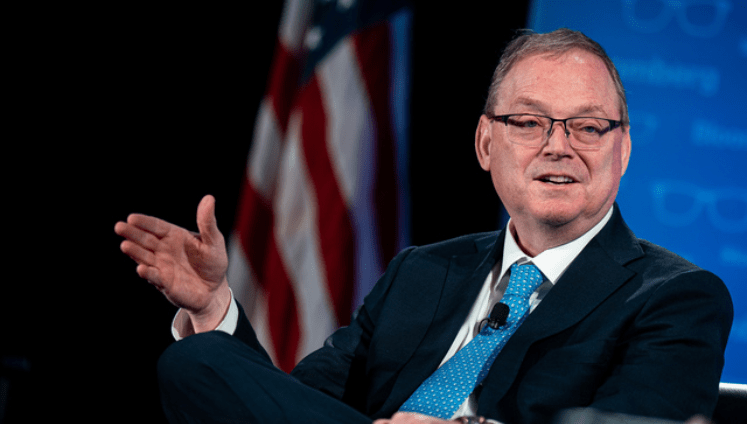 1. Christmas Eve: Nomination Countdown
● U.S. Treasury Secretary Mnuchin previously stated that President Trump is very likely to announce the nominee for Federal Reserve Chair before the Christmas holiday at the end of the year.
● Recently, this process has clearly accelerated. On December 17, Trump explicitly stated in a television address that he would soon announce his nominee and emphasized that this person would support a "significant" reduction in interest rates. The next day, Federal Reserve Governor Christopher Waller, as one of the candidates, met with Trump.
● The market generally expects that during the Christmas week, when U.S. stock markets close early on December 24 and remain closed all day on December 25, the Trump administration may seize this politically and market-focused moment to announce its final decision.
2. Candidate Landscape: From "One Dominant" to "Three Strong Contenders"
The candidate landscape has undergone a dramatic change recently, narrowing from over a dozen initial selections to three main competitors:
● Kevin Hassett: As a long-time close ally of Trump and the current Director of the White House Council of Economic Advisers, Hassett was once considered the "preordained" candidate. He has a background as a Federal Reserve economist and university professor, with economic views highly aligned with Trump. However, his excessively high "loyalty" label has raised market concerns about whether he can maintain central bank independence. Online betting platforms show that his chances of nomination have significantly dropped from over 80% in early December.
● Kevin Waller: A former Federal Reserve governor and Morgan Stanley banker, Waller has recently emerged strongly. He has experience dealing with the 2008 financial crisis and has received endorsements from key Wall Street figures such as Treasury Secretary Mnuchin and JPMorgan CEO Jamie Dimon. Trump himself publicly referred to Waller as the "number one candidate" in mid-December. Market predictions indicate that his chances of being nominated have soared to about 47%.
● Christopher Waller: As the current Federal Reserve governor, Waller is seen as a "dark horse" with a solid policy background. Appointed by Trump, he is one of the officials within the Federal Reserve who called for interest rate cuts early and is known for his precise economic judgment. More importantly, in a recent quick poll targeting executives at a New York conference, he garnered support from 81% of respondents, far exceeding other candidates, showing his market recognition across political lines.
3. Power Struggles: The Game between Wall Street and Washington
This personnel decision has evolved into an intense competition spanning both the financial and political arenas.
● Wall Street lobbying: Wall Street giants, represented by JPMorgan CEO Jamie Dimon, are deeply involved, frequently communicating with the government in an attempt to influence the final candidate selection. There are divisions within Wall Street regarding candidate preferences: some forces actively lobby for Waller, aiming to exclude Hassett, who is "too close to the White House"; while general concerns about Hassett's independence have led some market participants to view Waller as a more ideal choice.
● Trump's core demand: Analysis indicates that Trump values loyalty, ideological alignment, and execution ability most when selecting candidates. His core goal is to find someone who can help him quickly and significantly lower interest rates. This consideration is both to reduce financing costs for high national debt and to stimulate the economy to create a "visible achievement" for next year's midterm elections.
4. Core Controversy: Independence Faces Unprecedented Challenges
Regardless of who is ultimately elected, defending the independence of the Federal Reserve will become its primary challenge.
● Trump has repeatedly stated that he hopes the Federal Reserve Chair will consult him on interest rate decisions. This has raised deep market concerns about the possibility of U.S. monetary policy becoming "fiscal dominant"—that is, monetary policy overly serving government financing needs rather than economic fundamentals.
● A sharper criticism points out that as candidates closely associated with the White House rise, a "direct reporting line from the Federal Reserve through Mnuchin directly to the White House" may be forming, with Treasury Secretary Mnuchin potentially becoming the "shadow Fed chairman," severely constraining the Federal Reserve's independent decision-making space.
● The candidates' responses highlight the subtle art of balance. Hassett has recently emphasized that the independence of the Federal Reserve is "very important," stating that even if the president makes requests, decisions must be based on economic data and committee consensus. On the other hand, Waller has criticized the past "drift" of the Federal Reserve's functions while being largely aligned with Trump's stance on interest rate cuts.
5. Market Expectations and Future Impacts
● The market is digesting the impact of the uncertainty surrounding the candidates. On one hand, the unexpectedly slowing inflation data in November has increased market expectations for continued easing of monetary policy next year. On the other hand, the policy inclinations of the new chair will directly impact the interest rate path. Trump has publicly stated that he hopes to lower the federal funds rate to "1% or even lower" in a year.
● Predictions among major institutions regarding interest rate cuts next year differ: Barclays expects two rate cuts in 2026; Credit Suisse holds a similar view but notes that internal divisions within the Federal Reserve are deepening; ICBC International is more optimistic, predicting a possible cut of 50 to 75 basis points.
● Ultimately, this "leadership change" drama on the eve of Christmas week is significant beyond just a personnel appointment. It concerns whether the historical tradition of U.S. central bank independence can be maintained, the future direction of the monetary policy of the world's largest economy, and it will also stir new waves in global markets. All eyes are on the White House, waiting for the final answer to be revealed.
Join our community to discuss and become stronger together!
Official Telegram community: https://t.me/aicoincn
AiCoin Chinese Twitter: https://x.com/AiCoinzh
OKX Benefits Group: https://aicoin.com/link/chat?cid=l61eM4owQ
Binance Benefits Group: https://aicoin.com/link/chat?cid=ynr7d1P6Z