
Brothers, I am Azu. If we look at APRO in the big picture of BNBFi, my conclusion is very direct: it initially is indeed 'infrastructure', but once it runs into the ecological mainline, it will turn into a more hidden, yet more explosive 'growth engine'. Because in the BNB Chain environment, known for application density and capital efficiency, growth is not achieved by shouting slogans, but through product chains in high-frequency trading, clearing, staking, and stablecoin liquidity that experience no accidents, few accidents, or can quickly stop losses even if accidents occur. If the oracle is just a 'price feeding service provider', its value will be regarded as a cost; however, once it is incorporated into the ecological narrative and becomes a 'default component that operates stably', its value will be magnified as part of growth. Binance Research has clearly stated in project analysis that collaboration with BNB Chain includes integrating APRO Oracle into the BNB Chain ecosystem to provide secure and reliable price data feeding support for projects.
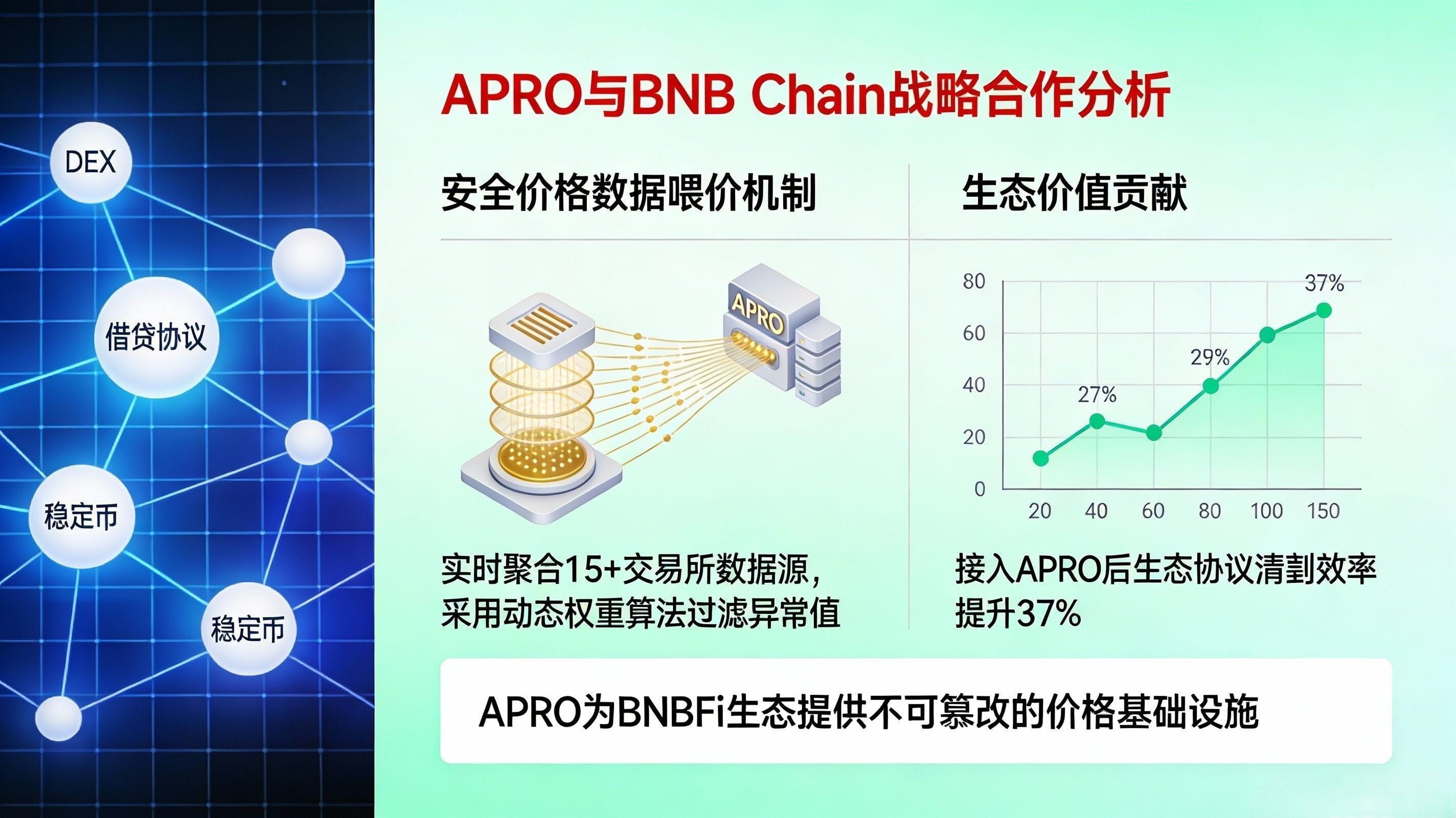
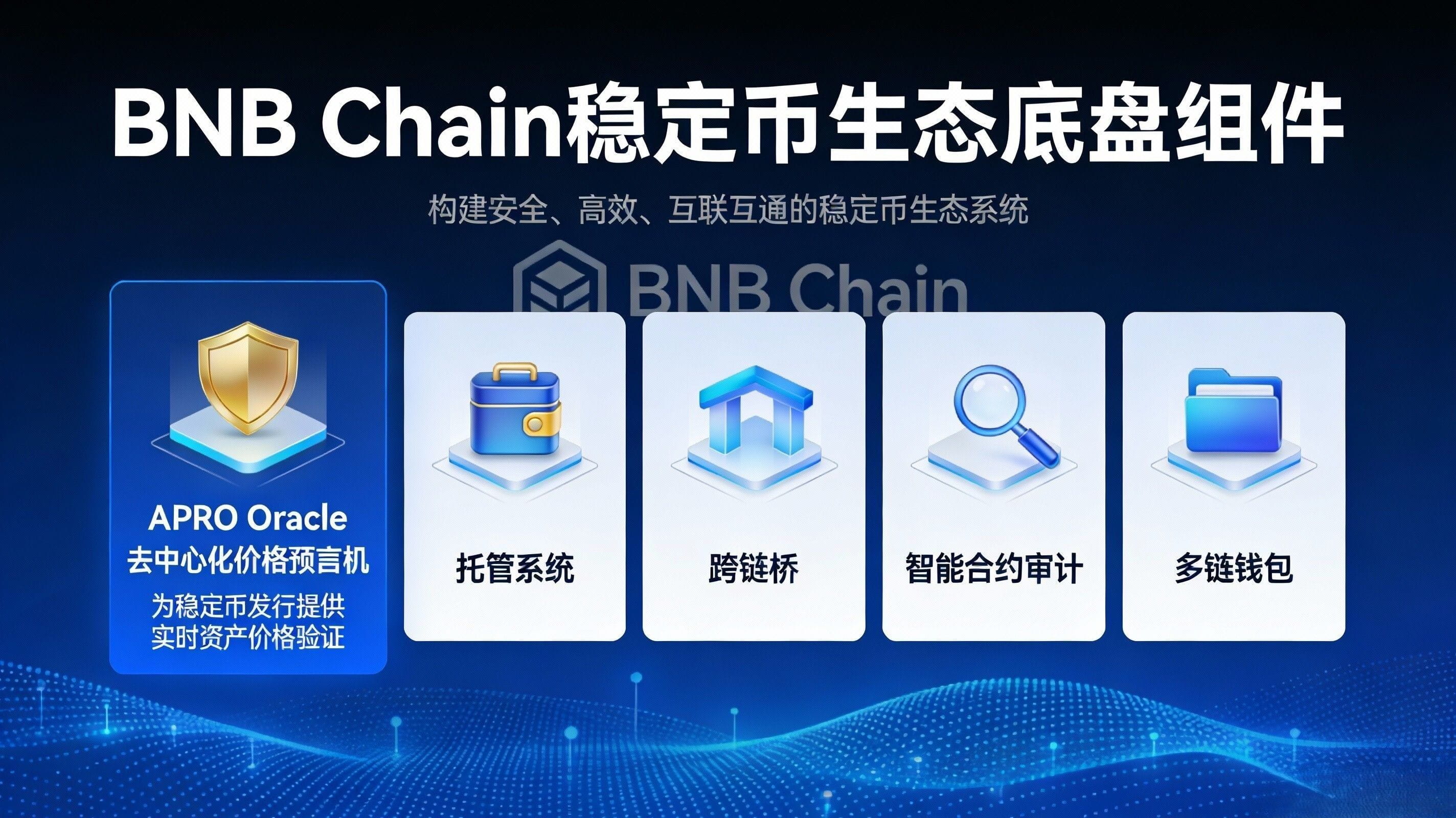
Why do I say that the ecological narrative will amplify oracles? If you look at the content from BNB Chain itself, you can sense its mode of expression: when discussing stablecoins and real use cases, it directly lists 'infrastructure providers', which includes APRO as an oracle role, along with other custodians, bridges, and wallets, grouped under 'the chassis that makes the ecosystem run'. This narrative is very realistic—when an ecosystem includes you in its 'default infrastructure list', you are no longer an option of 'whether to choose or not', but more like a standard configuration that 'would feel uncomfortable if missing'. Not to mention that BNB Chain has also publicly announced that it has 'integrated @apro_oracle', declaring it as part of its ecological capabilities. This is what I refer to as the amplification effect: in individual projects, you are a supplier; in the main chain narrative, you will be packaged as part of the capability boundary.
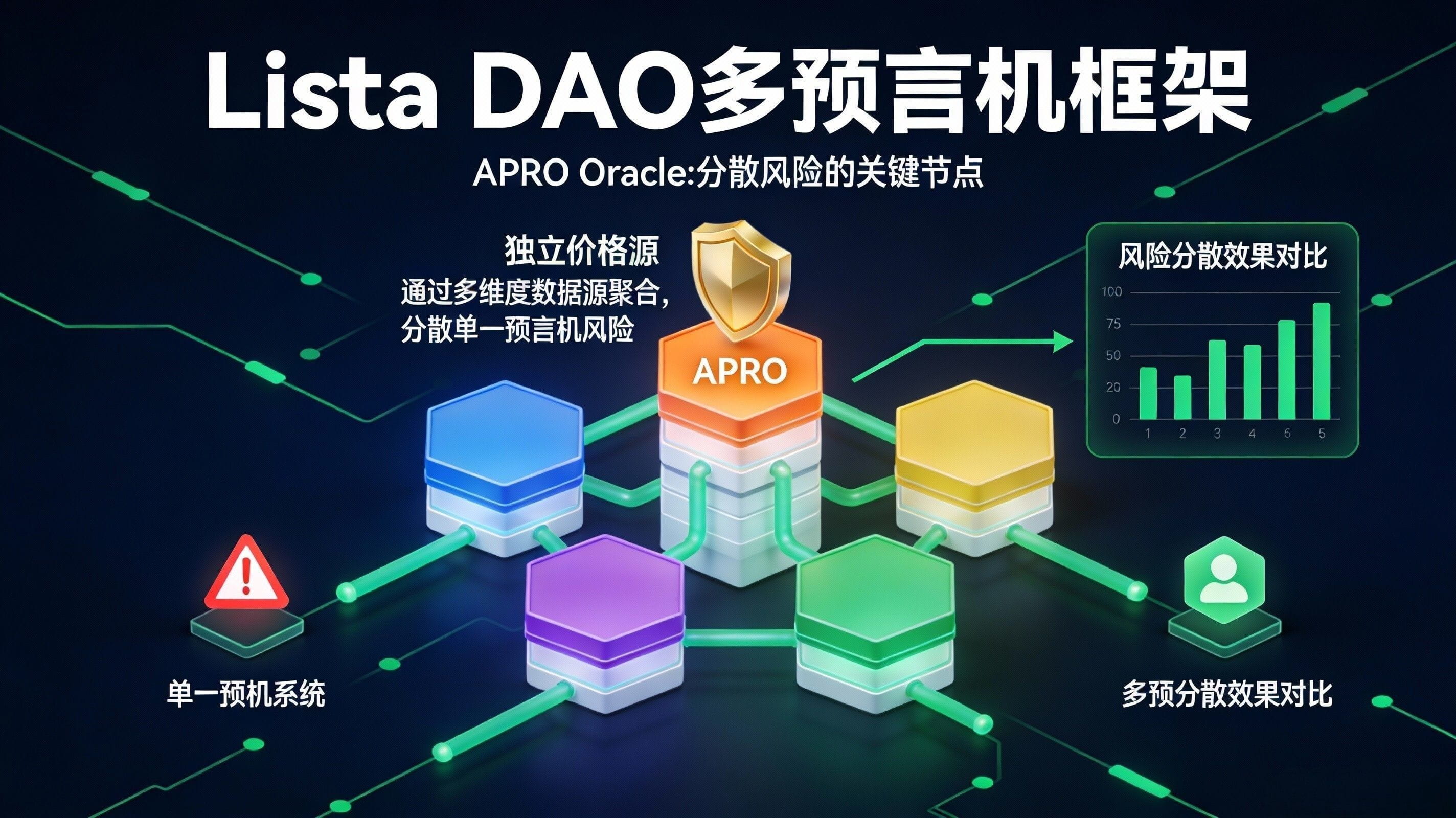
But the four words 'growth engine' cannot be just empty talk; they must be implemented in specific business areas. My favorite example is the Lista DAO, a typical BNBFi scenario, because it is a classic case of 'as long as the price feed is unstable, something big will happen': lending, staking derivatives, liquidation, interest rate curves—all rely on oracles as a lifeline. The announcement from Lista DAO specifically mentions that @APRO_Oracle has been integrated into its multi-oracle framework to expand the collection of independent price sources and enhance system robustness. Notice the wording: it does not treat APRO as a single point of dependency, but as part of the 'multi-oracle framework', with the goal of dispersing the risks of a single data source or mechanism. For BNBFi, this action of 'writing risk dispersion into the system structure' is essentially the growth engine: because the more stable the system, the more willing it is to open up higher capital efficiency, to accept more complex assets, and to pursue more aggressive product innovation.
So the rule change I want to clarify today is: in ecosystems like BNBFi, the value assessment of oracles will be more 'main chain-oriented'. In the past, when people selected oracles, they might have focused on 'who covers more, who updates faster'; now it is more about looking at a set of ecological synergy capabilities—whether you have been recognized by the main chain, whether you can seamlessly integrate into a multi-oracle architecture, whether you can provide auditable credible inputs in stablecoin and RWA narratives, and whether you can serve both DeFi and AI growth curves. By including APRO as an infrastructure provider in the narrative of stablecoins and real use cases, BNB Chain is actually telling the market: oracles are not just side components; they are the prerequisite for 'making capital efficiency sustainable in the long term'. This also explains why I prefer to view APRO as a dual form of 'infrastructure + growth engine': infrastructure addresses usability, growth engines address scalability, and the ecological narrative precisely amplifies the latter.

The impact on ordinary BNBFi users will be more intuitive and 'down-to-earth': you will reap benefits in two areas. The first is that the liquidation experience and slippage expectations will be more stable—you may not see on the interface 'you lost less because the oracle is more stable', but you will encounter fewer inexplicable abnormal triggers and less chain liquidations caused by price feeds getting stuck during extreme market conditions. The second is that the product supply will be richer—when protocol parties are more confident in accepting new assets, making more complex collateral combinations, and launching more granular interest rate and risk parameters, users will have more tools at their disposal, rather than always rolling APR in a few old assets. By looking at APRO within the multi-oracle framework of Lista, you can understand that 'stable price feeds' are not just a nice-to-have; they directly determine whether BNBFi's product boundaries can be expanded.
Finally, here is the most practical action guideline, which is also the most suitable for foreshadowing subsequent content: starting today, when you browse the announcements of BNB Chain ecological projects, deliberately look for one detail—whether 'oracle signature' is mentioned. It’s not about whether they use an oracle (almost all do), but rather who they specifically use, how they use it, whether there is a multi-oracle framework, and whether the data sources and risk controls are clearly stated. Once you develop this habit, you will gain early insights into the 'popularity' and 'sense of security' of many BNBFi projects: when more and more core protocols mention infrastructure like APRO in their announcements and incorporate it into a systematic framework, what you see is not just cooperation news, but rather the process of 'the ecosystem treating credible data as the foundation for growth'.


