
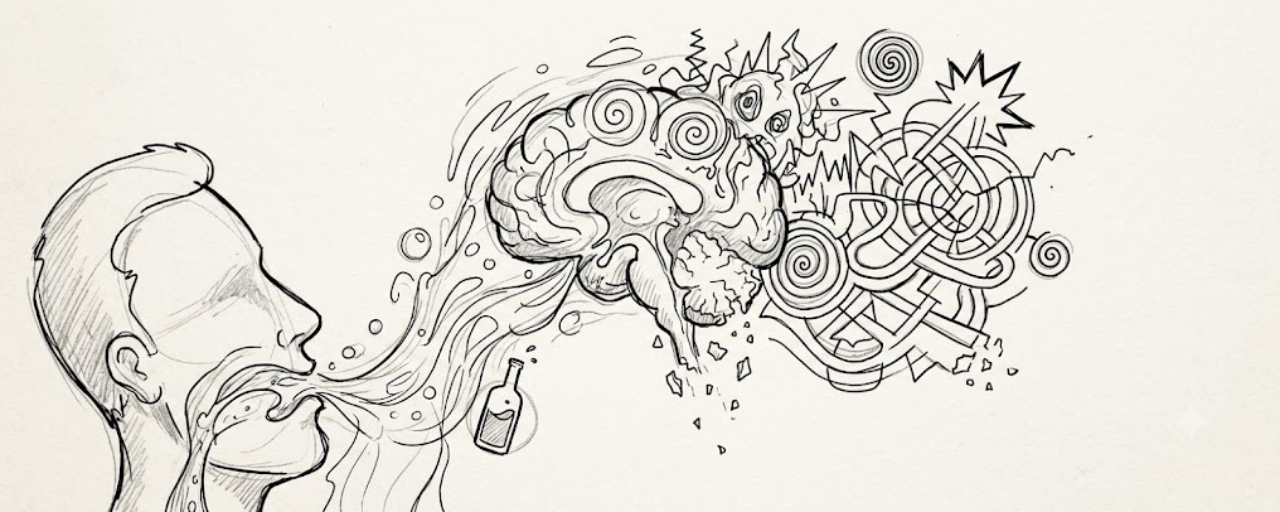

Have you ever seen someone who’s usually pretty honest and well-behaved, but after drinking, they seem like a totally different person—maybe even acting crazy or making a scene? Many people think that alcohol can at most damage the liver, and that with care it will get better. But the truth is that alcohol is most ruthless in one way: it directly ruins your brain. Today, let’s talk about this chilling reality—alcohol-induced “mental disorders.”
Don’t think that having a little drink for “relaxation” is a good thing, and don’t assume that having a strong urge to drink means you’re just lacking willpower. In medicine, this actually falls under the category of mental and behavioral disorders. If you feel you have to binge drink every day, the risk of mental problems will skyrocket. Long-term heavy drinking doesn’t just harm your body—it gradually distorts a person’s behavior and emotions, turning someone who was once normal into someone completely out of control.
Let’s trace the real path alcohol takes once it enters the body. When the liquid goes down your throat and you swallow, the first thing to be harmed is the gastrointestinal tract. Alcohol directly irritates the mucous membranes, wrecking the body’s first line of defense—then gastritis, gastric ulcers, and even gastrointestinal bleeding follow. Next, alcohol quickly seeps into the bloodstream, rushing to the head like it’s on a fast train. Most frightening of all, it can directly cross through the blood-brain barrier that protects the brain, entering with no delay and hitting the nervous system’s control centers hard.
Once alcohol enters the brain, it starts causing trouble immediately—slowing down or even interrupting signal transmission between neurons. In the short term, you may feel lightheaded, have slower reactions, and worse judgment; you may also become impulsive, irritable, and start speaking nonsense. But that’s only the beginning. Long-term heavy drinking is what really can be deadly. It damages the brain and cerebellum in every direction: cerebellar dysfunction can make people stagger while walking, and even getting to the bathroom can lead to tripping and falling. Worse still, long-term brain damage reduces brain volume and causes hippocampal atrophy. Look at those who have been drinking for decades—their brains shrink noticeably compared with other people, and they become severely poor at memory, with sluggish thinking.
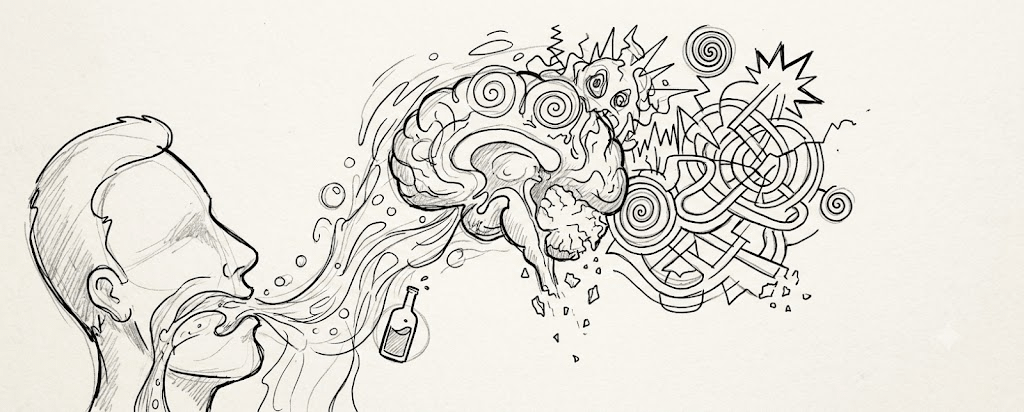
By the time it gets to this point, mental disorders are not far off. People may become overly suspicious, paranoid—even without any basis, suspecting their spouse of infidelity. They can experience hallucinations and delusions of being persecuted, and their temper can become as explosive as that of a mad person. Besides the brain, the liver’s hidden damage can be just as deadly. The liver is a “silent” organ; pain signals are weak. Alcoholic liver disease, fatty liver, cirrhosis, and even early-stage liver cancer often come with little to no sensation—so when you notice it, it’s usually already a major problem.
Alcohol’s damage to the body is also “in a chain.” It doesn’t just harm the liver—it also damages the pancreas and kidneys, greatly increasing the risk of hypertension, heart attacks, and brain infarctions. It can also lead to nutritional loss in the body, making your immune system weaker and weaker. Especially for middle-aged and elderly people and women, they are particularly vulnerable to this kind of harm. As the body’s functions decline with age, even a drink can be a serious blow; women have fewer enzymes that break down alcohol, so the harm is often more severe and is also much harder to reverse.
Never believe the nonsense that drinking a little every day is fine. Authoritative organizations like the World Health Organization have made it clear: there is no safe dose of alcohol at all—the safest amount is none. Alcohol is definitely a Group 1 carcinogen. Once you drink it, no matter how much, your body is taking on fatal threats.
There’s also the biggest lie: “a thousand cups and never gets drunk.” At first, you get drunk after a couple of liang. Later, you only start to feel it after half a jin. This isn’t your alcohol tolerance increasing—what’s happening is your body’s tolerance to alcohol is rising, which is an early warning sign of alcohol dependence syndrome. If you start skipping work to drink or secretly hiding alcohol, and the first thing you do in the morning is to look for alcohol—that’s essentially mortgaging your life.
Alcohol can cause severe dependence in the brain. Once you suddenly stop drinking, your body will immediately fight back—leading to withdrawal reactions such as hand tremors, palpitations, sweating, insomnia, and nausea. In severe cases, it can even cause whole-body convulsions, confusion, trigger epilepsy, and directly endanger life. When daily life pressure is high or people around you encourage drinking, it’s easy to fall deeper and deeper into the trap.
Let me say one last heartfelt thing: if you realize you can’t control your drinking and you can’t stop, don’t try to tough it out. You must go to the psychiatry department for professional treatment—stop the damage in time and prevent further harm to your brain. If you can drink less, do so as much as possible. If you can avoid it altogether, the best option is not to drink. That is the greatest responsibility you can have for yourself and your family.