
Preface
Stable, the deepest desire of civilization. Throughout thousands of years of human civilization, instability has always been the norm. Wars, famines, plagues, economic crises have played out in succession. In these instabilities, the demand for stability has arisen. The emergence of stablecoins is merely a repetition of the consistent pattern of civilization in the crypto world. The 2008 financial crisis exposed the instability of traditional finance, and thus, BTC appeared. However, BTC's volatility was too great, leading to the emergence of stablecoins.
Why is it called a stablecoin?
Understanding how unstable the crypto world is. In November 2013, Bitcoin broke through $1,000, setting a milestone new high. However, just six months later, the price halved to below $500, a decline of more than half. But this was already the most stable asset in the crypto world at that time. Others, such as Litecoin and Ripple, directly dropped by ~90%, not to mention the numerous coins that went bust or became worthless.
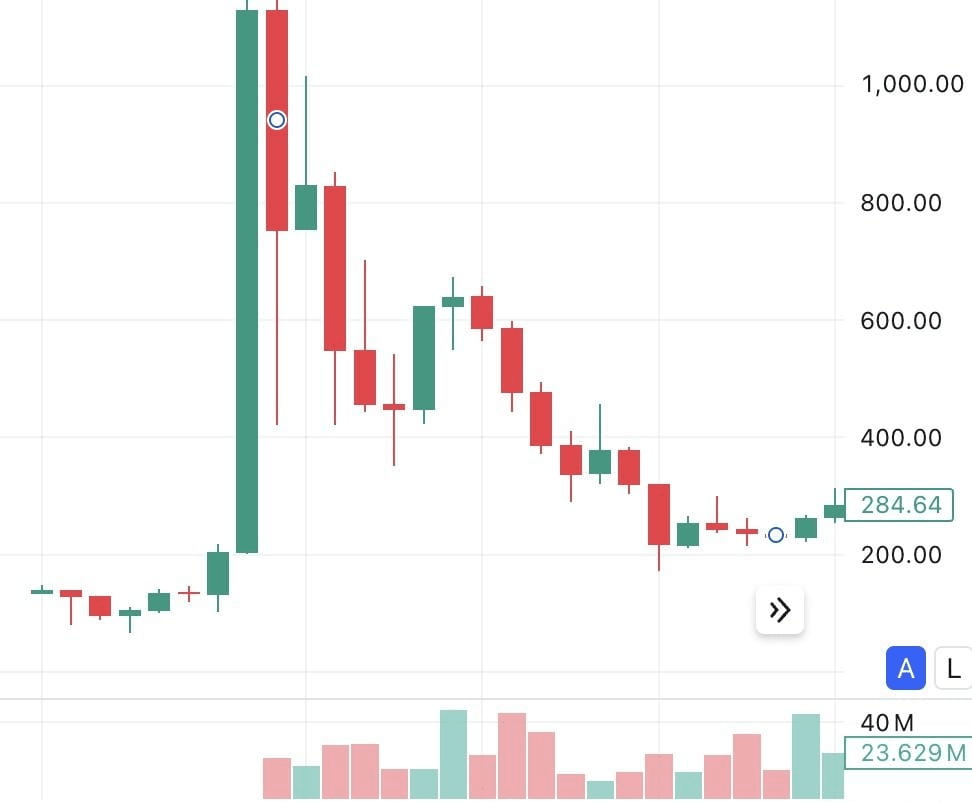
Extreme instability in core asset prices signifies overall ecosystem instability, further indicating an unstable credit system. The narrative of everyone governing together is not based on rationality and order but on a lack of accountability and chaos.
Therefore, stablecoins initially bear the expectations of the cryptocurrency world for the narrative of stability.
Stability is the cornerstone.
As mentioned earlier, the early narrative in the cryptocurrency world was singular, with asset prices often floating between heaven and earth. The entire ecosystem is stable and extremely scarce. A moment's difference can mean the actual transaction price has 'changed the world'. This situation persisted for years, gradually giving rise to a rigid demand for stability. Finally, in 2014, the currency known for its stability, the so-called stablecoin, was born. It maintained the decentralized narrative that the cryptocurrency world has always prided itself on while inheriting the stability characteristics of the traditional strongest fiat currency (the US dollar).
However, its emergence has not made the cryptocurrency world stable. Because whether stablecoins themselves can be stable is still subject to market testing, let alone stabilizing the entire circle. Maintaining stability requires a higher level of wisdom, greater costs, and longer time. But in any case, with the narrative of stability, the space for imagination has been opened.
By 2025, after more than 10 years of exploration and accumulation, stablecoins will have faced various risks while continuously improving and growing. They will have provided a safe haven for the entire cryptocurrency world under extreme market conditions. The exaggerated volatility of early years has clearly narrowed. The security provided by stablecoins cannot be overlooked. Recently, a Bloomberg report quoted Neha Narula, director of the MIT Media Lab, saying: 'The crypto industry still feels a bit like the Wild West. But what’s impressive is that the on-chain systems are running smoothly. No bailouts, no rollbacks.' This was in response to the sudden market crash in the cryptocurrency world on October 11, which caused panic, but the decentralized infrastructure of cryptocurrencies operated well, while centralized exchanges caused significant losses for users.

Only when stablecoins truly become stable is it possible to compensate for the missing value stability and payment efficiency issues between cryptocurrencies and traditional fiat currency systems. This is also the core factor that may allow stablecoins to undertake part of cross-border payments under official systems in the future and provide hedge currencies for countries with unstable fiat currencies.
Why do we need stablecoins?
In fact, our essential demand is for stability, not for currency. Stability is a systemic topic. As mentioned above, the factors that make the cryptocurrency world unstable include a singular narrative, price polarization, and too small a scale. However, the cryptocurrency world inherently has another potential for stability: cost control. Even the often criticized issue of imperfect regulation, in reality, as it develops, its ultimate cost compared to the redundant and complex systems of traditional finance will only be less. Additionally, the operating costs of decentralized systems are even better optimized.
In comparison, the current centralized financial system has piled up too many complex intermediaries to achieve stability. These consume vast human and material resources for regulation and maintenance every year. Even so, global customers, while sharing costs, may still face various unknown risks. For example:
Idle funds in cross-border payments;
Slow settlement. Transactions may be suspended or fail due to bank closures or holidays;
Unable to determine 'state consistency'. Because the states of all nodes cannot be synchronized and updated.
These risks are inherent diseases of the traditional financial system. They can only be patched repeatedly and cannot be eradicated. This means that, in the long run, the cost of maintaining stability will spiral upwards until it is ultimately overwhelmed. In 2024, a study on B2B payments showed that at any given time, approximately $11.6 billion is idly sitting in the system waiting due to slow settlement. This invisible waste, transmitted to the production end, doubles the harm.
Stablecoins operate publicly 24/7 globally, available for public auditing. They not only revolutionize the way of cross-border remittances but also achieve financial inclusivity through decentralized finance (DeFi). They make smart contracts feasible in the real world. Moreover, their most revolutionary capability is atomicity. This is something traditional finance cannot possess without completely being rebuilt. This characteristic ensures that stablecoin systems inherently possess the genes of stability.
Conclusion
Stablecoins are not perfect, nor will they be the endpoint of monetary history. But they represent a new stage in the search for stability throughout thousands of years of history. In the future, there may emerge currencies with even more stable structures, and we are witnessing this new starting point.
I am a little egg tart, follow me for daily updates on the latest news and operational analysis!#加密市场观察 $BTC
