

The Ethereum staking market has grown significantly since the Shanghai upgrade, with the current staking ratio of ETH reaching 24%. According to Nansen data, the amount of staked ETH reached a high of 29 million, worth approximately $65.67 billion. This upward trend is also reflected in the total value locked (TVL) of the liquidity staking market, which reached $31.43 billion according to Defillama, making it the leader in the DeFi space.
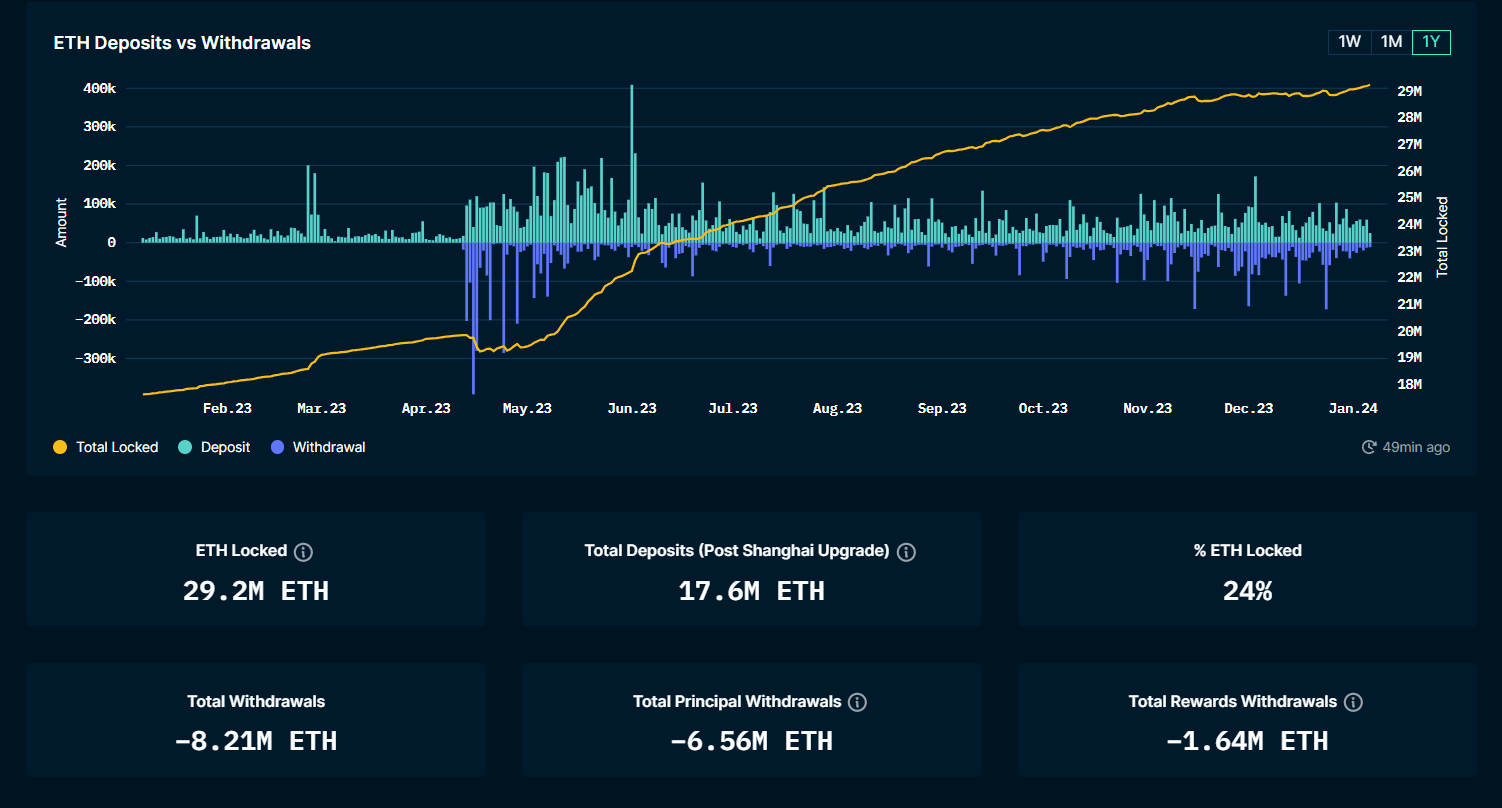
Source: Nansen (https://pro.nansen.ai/eth2-deposit-contract)
In 2024, TVL in the LSDfi protocol soared to $1.8 billion, with liquid stakes accounting for approximately 40% of all Ethereum staked.
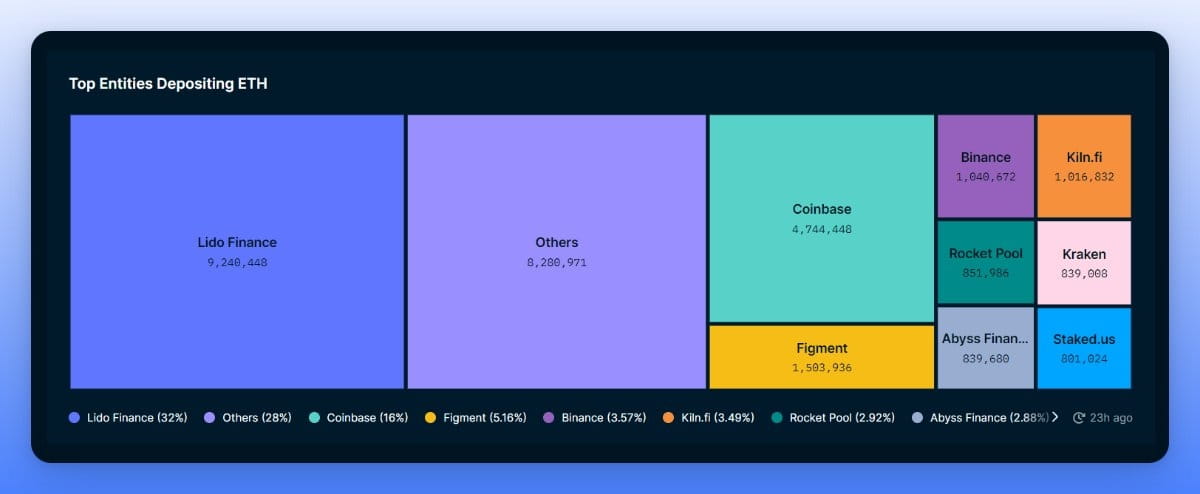
LSDFi (Liquid Staking Derivatives Finance) emerged in response to the popularity of Liquidity Staking Derivatives (LSD), aiming to maximize the interests of LSD holders by providing additional returns. However, according to Dune Analytics, the current TVL of LSDFi is relatively low at only $1.63 billion, indicating that it still has growth potential.
Next, Greythorn Asset Management will bring you three specific projects. Let’s take a look and study them together.
Prisma Analytics
Project Name: Prisma Finance
Project Type: LSDFi
Token Name: PRISMA
Cryptocurrency Ranking #: 1005
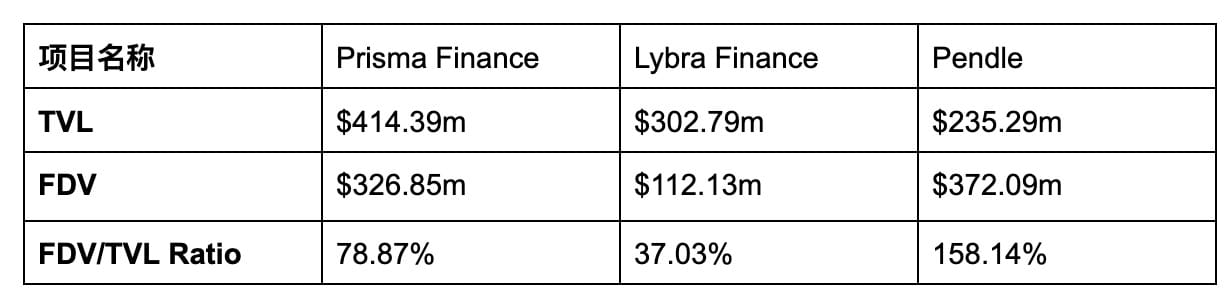
TVL: $414.39m
Market cap: $16.48m
Fully diluted valuation: $326.85m
Project Description
Prisma Finance is a DeFi platform focused on exploring the potential of Ethereum liquidity staking derivatives. Through Prisma, users can use liquidity staking derivatives (LSD) such as wstETH, rETH, cbETH and sfrxETH as full collateral to mint stablecoins (mkUSD).
The benefits of using Prisma Finance include:
Support multiple types of LSD as collateral: Currently, Prisma allows users to mint mkUSD using wstETH, rETH, cbETH, and sfrxETH.
Multiple benefits: In addition to the returns of LSD itself, users can also earn higher returns by minting mkUSD. Users deposit stablecoins into the stability pool and receive an annualized rate of return (APR) of up to 26.36%. In addition, by maintaining active mkUSD debt, users will also receive additional PRISMA token rewards every week.
Value storage: Due to its fully collateralized nature, mkUSD is an asset with a relatively stable value. At the same time, it can also generate considerable additional income for users.
Competitors:
Token Economy:
PRISMA is the governance token of the Prisma protocol, and its maximum total supply is 300 million. Users can earn PRISMA by doing the following:
Deposit into stability pool
Minting new mkUSD
Maintaining active mkUSD debt
Staking Curve/Convex LP tokens
PRISMA can be locked to earn protocol fees (minting/redemption fees and borrowing interest fees) and improve yield, and obtain lock-up weight, which can be used to vote on the allocation of PRISMA issuance, as well as vote on protocol ownership actions. The lock-up period can be up to 52 weeks.
Distribution
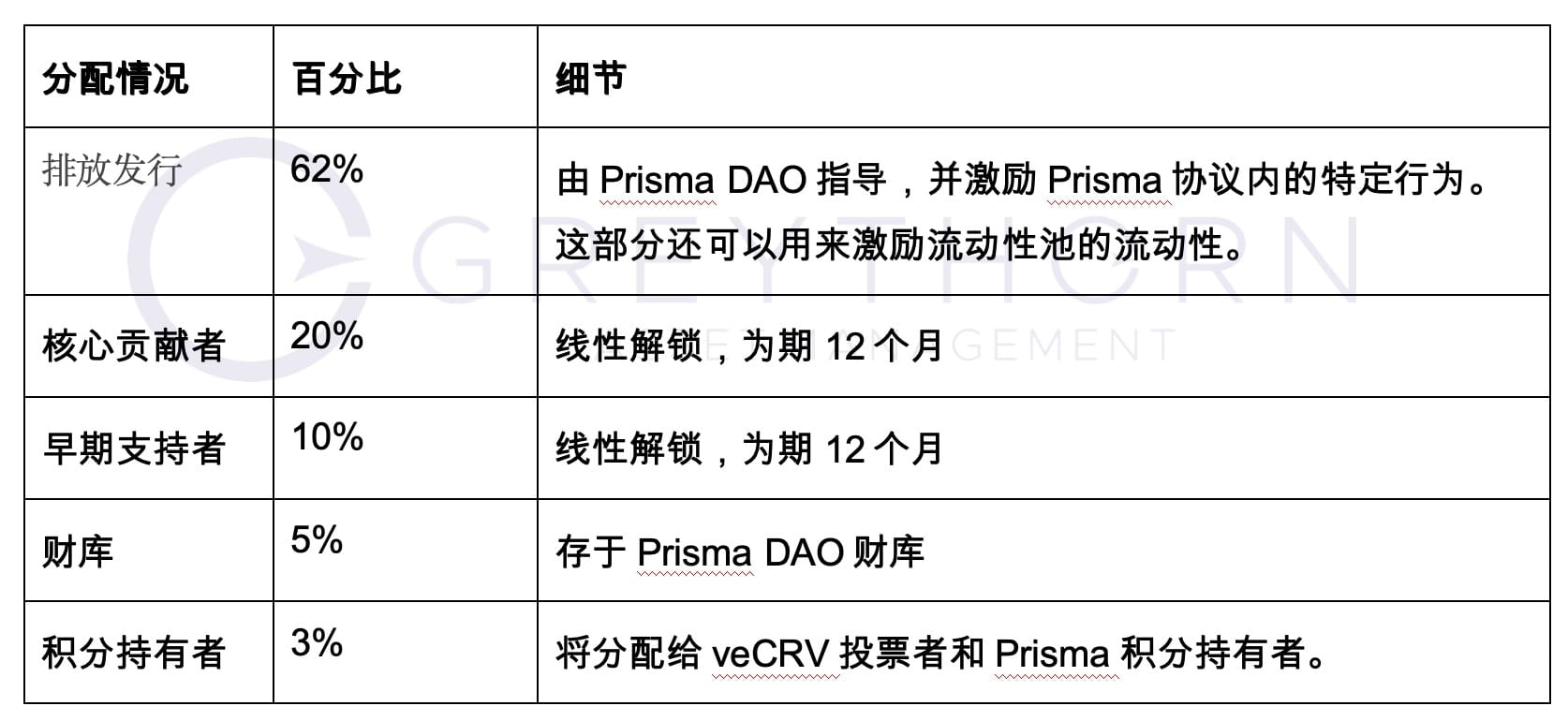
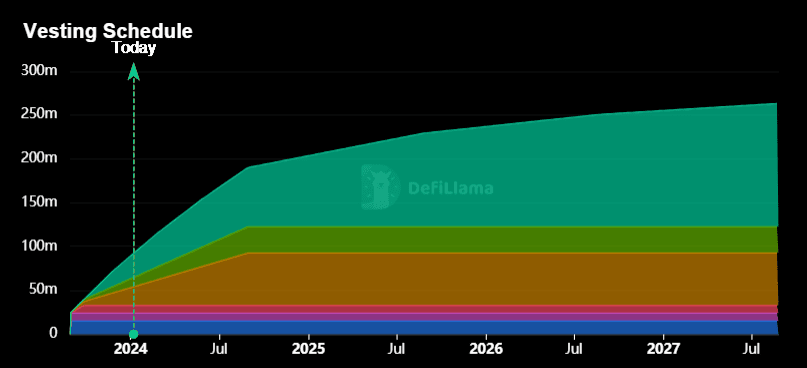
Source: DeFi Llama (https://defillama.com/unlocks/prisma-finance)
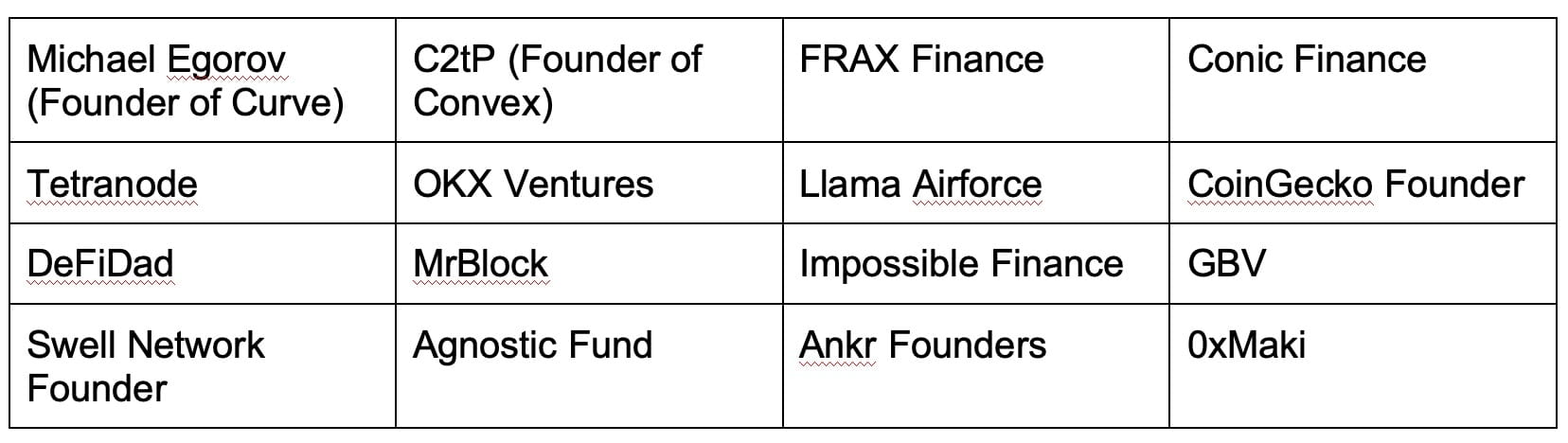
Investors at a glance:
Restake Finance Analysis
Project Name: Restake Finance
Project Type: LSDFi
Token Name: RSTK
Cryptocurrency Ranking #: N/A
TVL: $4.7m
Market cap: $36.7m
Fully diluted valuation: $192.5m
Project Overview
Restake Finance is a decentralized finance protocol that revolutionizes the staking space by providing a modular liquidity staking solution for EigenLayer. This innovative approach enables users to harvest staking rewards on Ethereum and EigenLayer without having to lock up assets or deal with complex infrastructure. Managed by a decentralized autonomous organization (DAO), Restake Finance utilizes RSTK tokens for governance and practical applications, focusing primarily on yield-generating strategies.
A key feature of Restake Finance is its ability to facilitate liquidity re-staking of LSTs (such as stETH) within EigenLayer by using its newly launched Re-staking Ether token (rstETH).
The process is very straightforward: users deposit their LSTs into the protocol, and in exchange, they receive rstETH. This rstETH represents a tokenized form of Ethereum re-staking, essentially playing the role of Liquidity Re-staking Token (LRT). Holding rstETH allows seamless access to Ethereum staking rewards (estimated to be between 3%-5%), as well as rewards on the EigenLayer upper layer (estimated to be over 10%).
From a user perspective, LSDFi provides a unique opportunity to reinvest earnings, which not only allows them to continue to accrue interest native to Ethereum, but also allows them to participate in other active validation systems. EigenLayer’s capabilities bring additional risk-adjusted returns, which is an added benefit.
Token Economics
1) $RSTK → Utility and governance token for the Restake Finance ecosystem.
The maximum supply of RSTK is 100 million tokens.
The value of RSTK will reflect the success of EigenLayer and is directly related to EigenLayer's revenue. As EigenLayer's revenue increases and its modules expand and become more widely used, RSTK holders will benefit from greater revenue accumulation on the Restake Finance platform.
Regarding the fee structure, Restake Finance implements a fixed 10% fee on the EigenLayer rewards generated by its platform. This fee is divided into two parts: half of it, or 5% of the total EigenLayer rewards, is issued to stakers to reward them for their investment and participation. The other half, also 5% of the total rewards, is used for the platform's treasury. This distribution is essential to cover operating costs, thereby maintaining and promoting the growth of the platform.
use
In version V1.0, users can:
Hold RSTK to participate in the governance of Restake Finance
Stake RSTK to earn a portion of the protocol revenue
Stake RSTK to increase EigenLayer local revenue
Provide RSTK liquidity to gain additional earnings boost.
2) sRSTK → Tokenized form of staked RSTK
It can be obtained by staking RSTK tokens or through liquidity incentives. It maintains the same value and supply cap as RSTK, but differs in that it cannot be traded or transferred. However, sRSTK holders have the right to governance and share in the DAO.
To ensure alignment with long-term goals, sRSTK comes with a mandatory 45-day unlocking period. This period reinforces holders’ commitment to protocol governance and shared revenue generation.
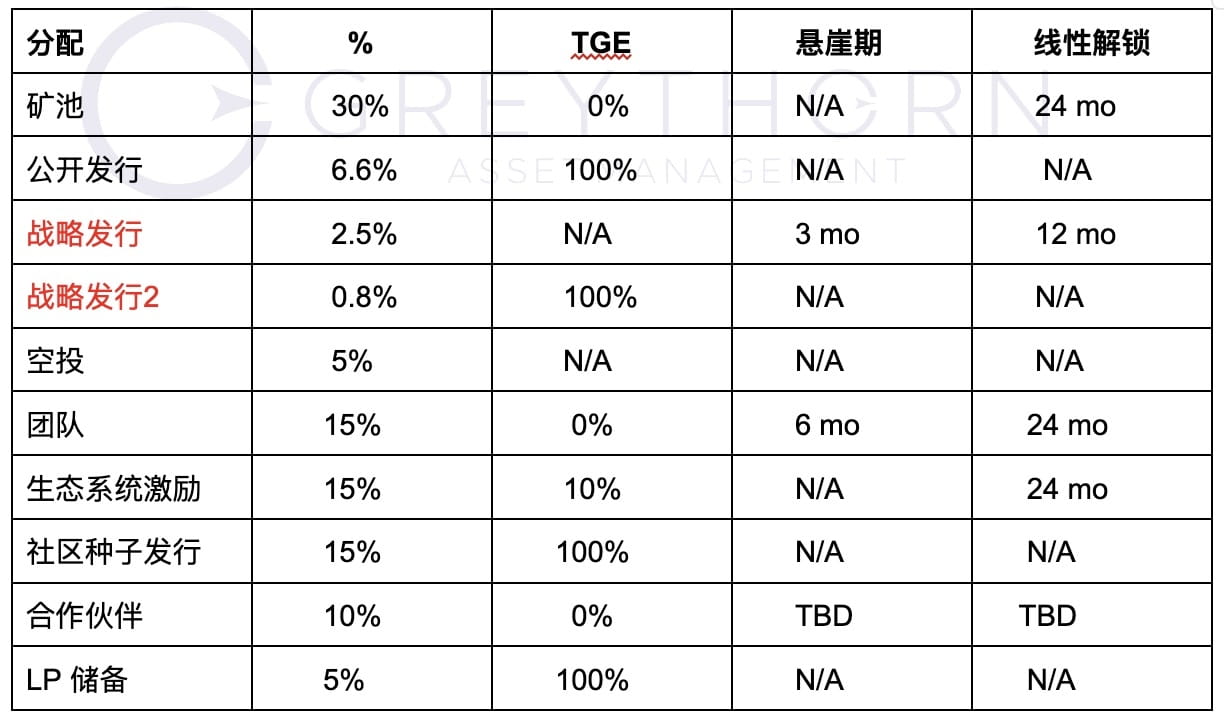
Allocation ($RSTK)
Competitors
Restake Finance is a leader in the modular liquidity staking space on EigenLayer, especially with no direct competitors in token-based competition. EigenLayer's role in this space allows us to assess the total addressable market (TAM). The focus here is on first-layer (L1) blockchains outside of Ethereum, especially through active validation services (AVSs).
Staking rewards for top proof-of-stake (PoS) networks outside of Ethereum showed a remarkable 140% compound annual growth rate (CAGR) from Q1 2020 to Q4 2022. Despite a significant market decline in 2022, the three-year CAGR is still an impressive 37%, highlighting the growth potential of this nascent segment.
By the end of 2022, staking rewards for the top 25 PoS chains reached approximately $3 billion, and it is expected that this figure could rise to over $25 billion by 2030, assuming a 37% CAGR. If EigenLayer captures 10% of these rewards, it would be facing a potential market of $2.5 billion by 2030. The growth prospects for both current and new PoS systems are impressive, boding well for EigenLayer and Restake Finance in the dynamic blockchain and staking space.
Bullish fundamentals:
First-mover advantage: Restake Finance is the first protocol to launch modular liquid staking for EigenLayer. As a pioneer in modular liquid staking, especially in the application of EigenLayer's unique approach, Restake Finance benefits from early entry into this market segment. This position enables them to build a strong brand, attract early adopters, and set industry standards.
Innovative Technology: The technology supports re-staking and modular staking solutions, representing a significant advancement in the staking ecosystem. This innovation may appeal to users seeking more flexibility and efficiency in their staking operations.
Potential Market Size: The staking market, especially outside of Ethereum, is growing rapidly. With lucrative staking rewards and increasing interest in Proof of Stake (PoS) networks, the total addressable market for the services provided by EigenLayer and Restake Finance is expanding.
Strong Revenue Model: Restake has a model that potentially allows it to capture a percentage of staking rewards, providing a clear path for revenue generation, which is critical to long-term sustainability.
Bearish fundamentals:
Market Volatility: The cryptocurrency market is known for its high levels of volatility. Significant fluctuations in market prices may impact staking rewards and overall interest in the staking platform.
Regulatory Risk: The regulatory environment for cryptocurrencies and blockchain technology is still evolving. Potential regulatory crackdowns or adverse policies could negatively impact the operations of platforms such as EigenLayer and Restake Finance.
Technical Challenges: As a pioneer in a complex technological field, EigenLayer and Restake Finance may face unforeseen technical challenges.
User Adoption Barriers: Convincing users to switch from traditional staking methods or other platforms to EigenLayer and Restake Finance may be challenging, especially if users are wary of new technologies or platforms.
Libra Finance ($LBR) Research
Project Name: Lybra Finance
Project Type: LSDFi
Token Name: $LBR
Cryptocurrency Ranking #: 781
TVL: $296m
Market cap: $27.7m
Fully diluted valuation: $54.6m
Project Overview
Lybra, a decentralized platform, focuses on stabilizing the cryptocurrency market through Liquid Staking Derivatives (LSD). It uses Ethereum Proof of Stake and stETH from Lido Finance. The platform offers a unique stablecoin, eUSD, which is backed by ETH assets and generates stable interest for holders. Users receive a stable income in eUSD from their deposited ETH and LSD income from stETH. When users deposit ETH or stETH and mint eUSD, they will receive stETH income, which is then converted into eUSD and distributed to them.
Lybra Finance chose to conduct an Initial DEX Offering (IDO) instead of traditional venture capital financing and successfully raised $480,000 with a return on investment (ROI) of 11.89 times.
Currently, users can enjoy an annualized yield (APY) of approximately 6.43%.
Lybra V2 -
In July/August 2023, Lybra Finance launched peUSD, the Omnichain DeFi version of eUSD, enhancing its ecosystem. The V2 update allows for the use of a wider range of Liquidity Staking Tokens (LST) such as rETH and WBETH as collateral for eUSD and peUSD, adding flexibility. A distinctive feature of V2 is the conversion of eUSD to peUSD while retaining accumulated interest, which is beneficial to protocol stability and the use of flash loans.
The update enables esLBR token holders to participate in DAO governance and introduces new revenue streams including service fees and repayment fees that will benefit esLBR holders, in addition to an innovative bounty program and a stability fund to maintain the eUSD peg.
Token Economy -
LBR is an ERC-20 token with a supply cap of 100 million, supporting staking, governance, and reward functions for minting and liquidation.
LBR price, as of January 9, 2024: $1.10
Circulating Supply: 24,949,715
Total Supply: 49,173,734
Max Supply: 100,000,000
Network:Arbitrum (ARB)、Ethereum (ETH)
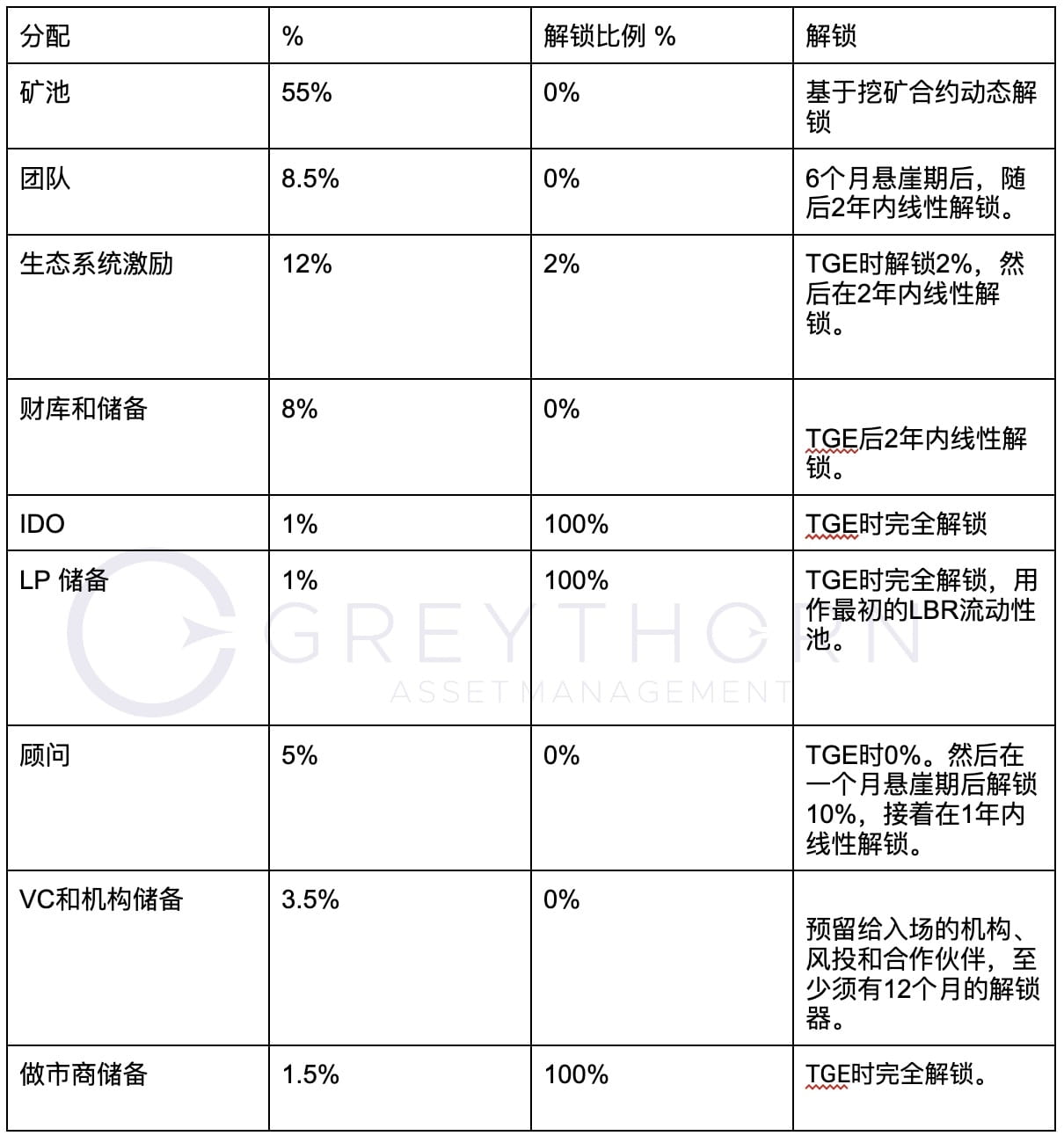
Token Allocation:
Token usage:
Governance with esLBR: esLBR holders actively participate in shaping the direction and development of the Lybra protocol.
Yield Enhancement: esLBR holders receive 100% of the protocol’s revenue, increasing their earning potential.
Ecosystem Incentives: The Lybra ecosystem provides rewards and grants to encourage contributions from all types of participants.
Resource management: Strategic handling of finance and revenues ensures a sustainable, resilient ecosystem.
esLBR is a managed LBR with the same value and subject to the total supply of LBR. It cannot be traded or transferred, but grants voting rights and a share of protocol revenue. It is mainly obtained through mining rewards:
esLBR holders can convert their tokens to LBR within a 90-day linear unlocking period. Locking LBR or esLBR can increase the esLBR emission in the incentive pool by up to 1.5 times.
Lock Time

route map
Expanding to L2, targeting the development and expansion of perpetual exchanges.
Lybra War Phase 2.
New Lybra Grant.
Expand LST as collateral.
Expand new partnerships.
DAO - proposal driven.
Automatic loan repayment feature.
Competitors -
Based on current data, Lybra Finance (LBR) holds a prominent position in the Liquidity Staking Total Value Locked (LSD TVL) market with a market share of $294.81 million or 18.087%. Additionally, a large amount of stETH is deposited within the ecosystem, totaling $16,538,780.
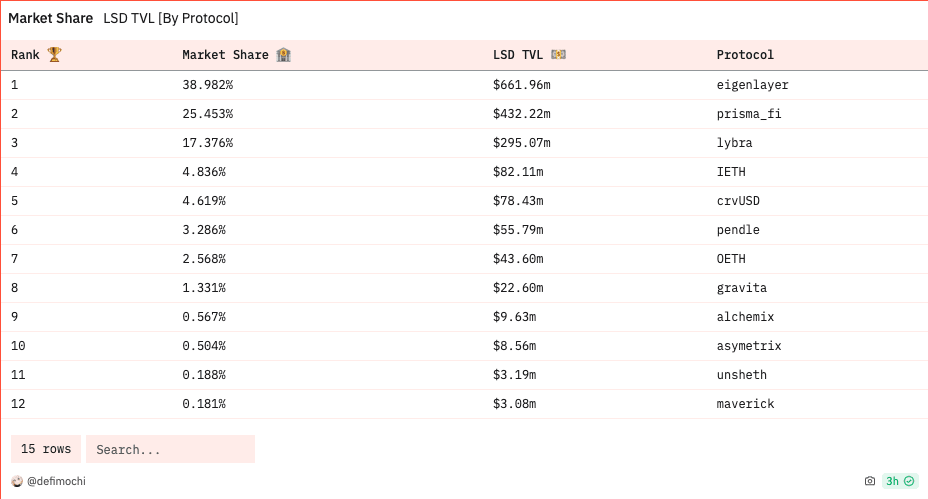
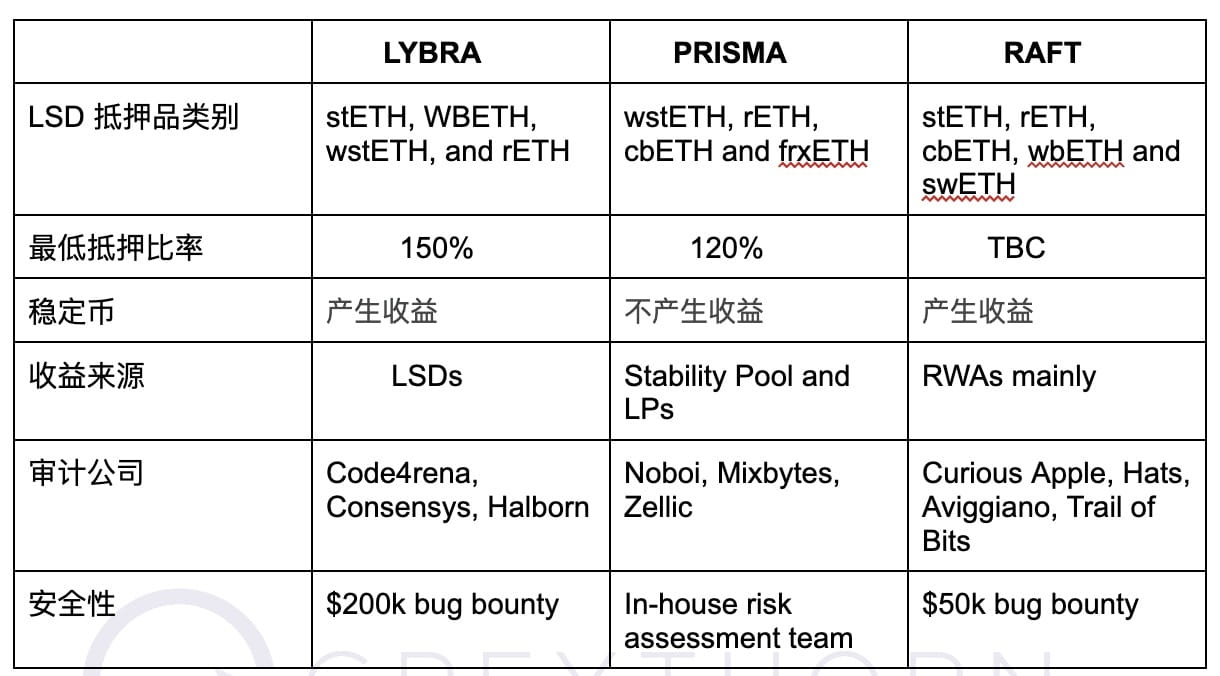
Since Lybra launched its 2.0 update, it has become the leading protocol in the LSDfi space, especially in lending. So let’s compare the various current protocols in this space, including Lybra, Prisma, and Raft.
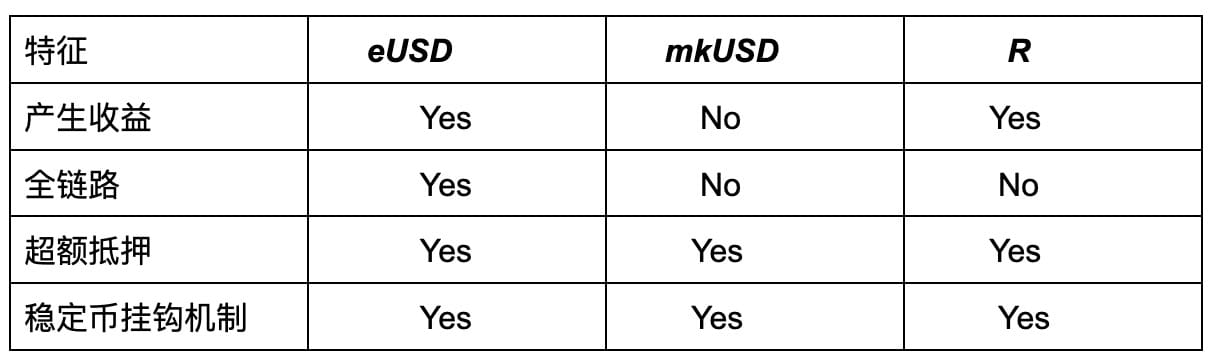
Stablecoin usage
Bullish fundamentals -
The LSDfi field is still new and growing.
Lybra stands out due to its ability to work across chains, enabling it to reach a larger market.
Lybra’s revenue-sharing approach helps align the interests of its holders and users with the success of the protocol.
Lybra appears to be more appealing to a wider audience with its simpler concept of borrowing interest-generating stablecoins and lower leverage options.
Bearish fundamental factors -
Its bug bounties are relatively small relative to its TVL size.
The youthfulness of the sector could also pose a risk. Lybra Finance could lose market share if a stronger competitor emerges that offers better rates, more features or greater security.

Quote -
Prisma Finance
Prisma Protocol. (n.d.). Prisma Protocol - Company. Prisma Protocol. Retrieved January 08, 2023, from: https://docs.prismafinance.com/
Prisma Protocol Twitter Account. (n.d.). Prisma Protocol - Company Socials. Retrieved January 08, 2023: https://twitter.com/PrismaFi/status/1663908241481318403
Restake Finance
Restake Finance Protocol. (n.d.). - Company. Restake Protocol. Retrieved January 08, 2023, from: https://restakefinance.com/
Lybra Finance
Lybra Finance Protocol. (n.d.). Lybra Protocol - Company. Retrieved January 08, 2023, from: https://docs.lybra.finance/lybra-finance-docs-v2/background/introduction
Dune Analytics (n.d) Lybra Finance Stats. Retrieved January 08, 2023, from : https://dune.com/lybra-finance/lybra-finance
Important Notices and Disclaimers
This presentation has been prepared by Greythorn Asset Management Pty Ltd (ABN 96 621 995 659) (hereinafter referred to as Greythorn). The information in this presentation should be considered general information and not investment advice and financial recommendations. It is not an advertisement and is not an offer or solicitation to buy or sell any financial instrument or to participate in any particular trading strategy. In preparing this document, Greythorn has not taken into account the investment objectives, financial situation or particular needs of any recipient who may receive or read this document. Before making any investment decision, recipients of this presentation should consider their own personal circumstances and seek professional advice from their accountant, lawyer or other professional adviser. This presentation contains statements, opinions, forecasts, projections and other materials that are based on various assumptions (forward-looking statements). Greythorn has no obligation to update the information. These assumptions may or may not prove to be correct. None of Greythorn, its officers, employees, agents, advisers or any other person mentioned in this presentation makes any representation as to the accuracy of any forward-looking statement or the likelihood of realization of the assumptions on which it is based. Greythorn and its officers, employees, agents and advisers make no warranty, representation or guarantee as to the accuracy, completeness or reliability of the information contained in this presentation. Greythorn and its officers, employees, agents and advisers exclude liability for any loss, claim, damage, cost or expense arising out of the information contained in this presentation to the extent permitted by law. This presentation is the property of Greythorn. The recipient of this presentation agrees to keep its contents confidential and agrees not to reproduce, make available, disseminate or disclose any information relating to its contents without written consent.