
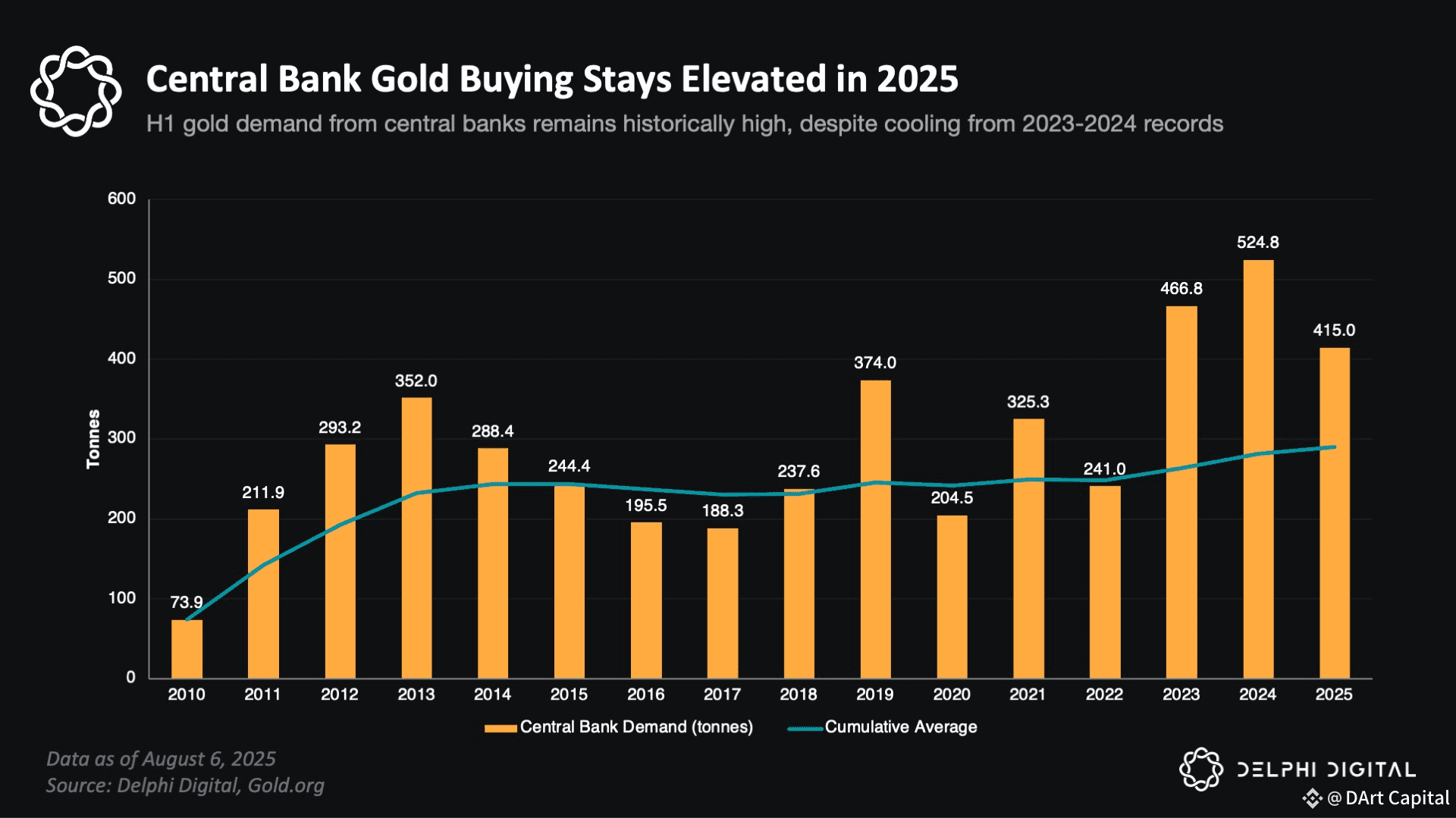
Have you heard the saying "money never sleeps"? Well, it seems that central banks around the world are also not sleeping! 😴 The latest data shows that they are very busy hoarding gold. Although we see gold prices fluctuate, these central banks are actually making gold their "secret tactic".
Let's take a look at the chart together, shall we? 😊
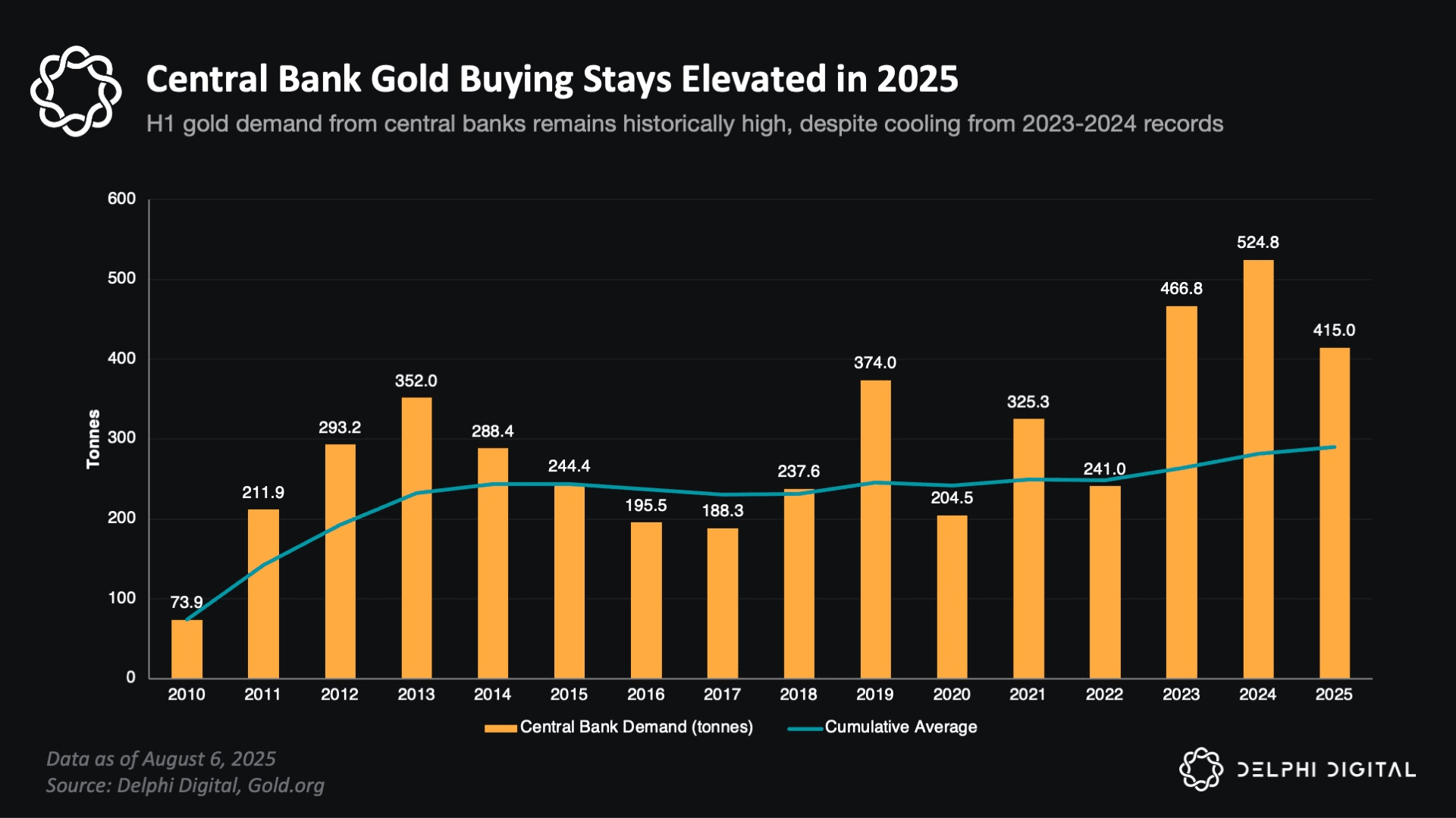
Gold Remains the 'Champion' Amid Uncertainty 👑
The chart clearly shows that gold purchases by central banks have skyrocketed in recent years. In 2023, purchases reached 466.8 tons, then broke the record again in 2024 with 524 tons. Although there was a slight decrease in 2025, the demand remains at historically very high levels.
It's like, when everyone is confused and anxious because the global economy is uncertain, these "big players" are actually rushing to gold! Why? Because gold is considered the safest asset and can protect their wealth in times of crisis. 🛡️
Why Gold, and Not the Dollar? 🧐
There are two main reasons why this trend is very important:
* Hedge Against Uncertainty: Central banks see gold as a protector or "guardian" of wealth from economic turmoil, inflation, and political uncertainty around the world.
* Reducing Dependence on the US Dollar: This is the most interesting point! For a long time, the US Dollar has been the main currency used for foreign exchange reserves. But now, many countries, especially in Europe, are starting to increase their gold reserves to reduce dependence on the US Dollar. They want to diversify their wealth into other assets.
What Does It Mean for Us?
This phenomenon is an important signal that a shift in global economic power is happening behind the scenes. Major players no longer fully trust just one currency. They are seeking "help" from other assets, one of which is gold, to maintain stability.
This could also be a signal that alternative assets, such as Bitcoin and other cryptocurrencies, may also gain more attention from major investors in the future. 🤫

