
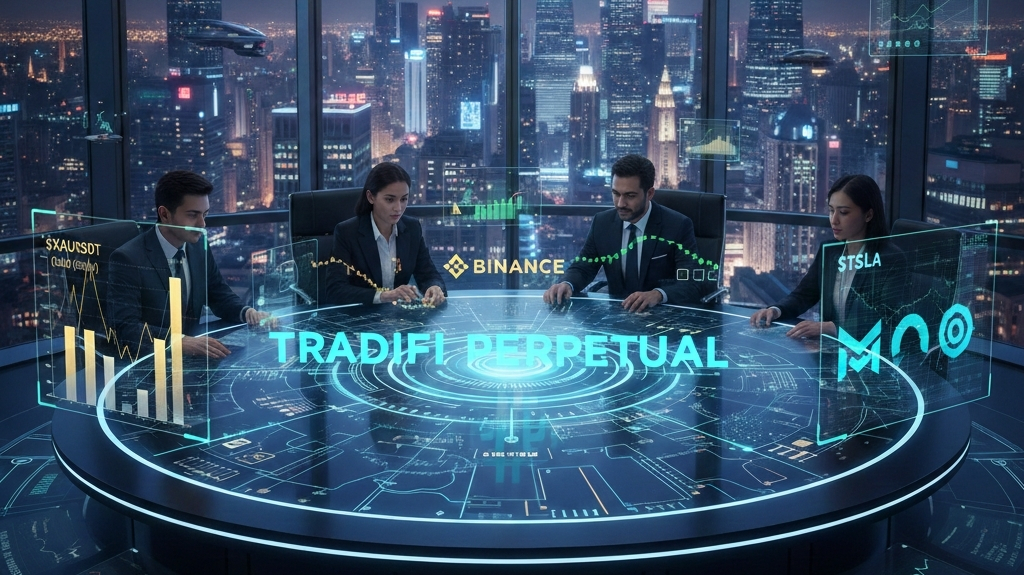
Historically, the financial system has operated separately. The stock trader in New York, the commodities trader in London, and the cryptocurrency enthusiast in the digital ecosystem are parallel worlds. However, we are witnessing a paradigm shift. Our Binance platform, under its new vertical of TradFi Perpetual Contracts, is not only listing assets; it is breaking down the barriers between traditional finance (TradFi) and digital finance.
What is Binance TradFi?
In theoretical terms, it is the synthesis of traditional underlying assets within a crypto-native settlement infrastructure. In practical terms, they are perpetual futures contracts that track the price of "real world" assets (commodities, indices, or stocks) but are traded, guaranteed, and settled exclusively in USDT.
Unlike traditional markets, these contracts have no expiration date and allow leveraged exposure to global markets without the need to leave the Binance wallet.
Advantages: The Triumph of Efficiency.
Availability 24/7: While Wall Street closes on weekends and has rigid hours, TradFi contracts on Binance allow for real-time reactions to macroeconomic news, for example, on a Sunday at 3:00 AM.
Unified Settlement: You do not need an account with a stockbroker and another with an exchange. Your collateral in USDT serves to buy Bitcoin and, simultaneously, hedge with Gold.
No Entry Barriers: Allows fractional trading of assets that otherwise would require institutional capital or bureaucratic processes for opening international accounts.
Disadvantages: The Risks of the Synthetic Model.
Absence of Physical Ownership: Trading (Gold) does not mean you own the metal. It is a contract for price difference; there is no physical delivery or shareholder rights in the case of stocks.
Risk of Deviation (Tracking Error): Although Binance uses funding rate mechanisms to align the contract price with the real market, during times of extreme volatility there may be slight discrepancies.
The Current Catalog: What can we trade today?
At the beginning of 2026, Binance has consolidated a robust offering focused on precious metals and the first "blue chips" in equities:
1. Metals (Commodities):
$XAU (Gold): The ultimate refuge, now with the liquidity of the Binance engine.
$XAG (Silver): High volatility for short-term strategies.
$XPT (Platinum) and $XPD (Palladium): Recently integrated for industrial diversification.
2. Stocks (Equities):
$TSLA (Tesla), $INTC (Intel) and $HOOD (Robinhood): The first stock contracts that allow crypto traders to rotate capital into the tech sector frictionlessly.
Upcoming Listings: What to expect in the pipeline?
Institutional demand analysis suggests that Binance's radar is aimed at:
Global Indices: Contracts on the S&P 500 and Nasdaq 100 are the logical steps to complete the macro offering.
Energy: Crude Oil (WTI) is in the sights of traders seeking protection against geopolitical inflation.
Wholesale Forex: Pairs like EUR/USDT or JPY/USDT to capture central bank monetary policy movements.
Importance:
The relevance of TradFi in Binance lies in the correlation. In an environment of high inflation or geopolitical instability, Bitcoin often acts as a "digital gold," but not always perfectly.
The ability to execute a Long BTC / Short Gold (or vice versa) strategy on a single screen, with a single settlement currency and instantly, gives retail traders hedging tools that were previously exclusive to hedge funds in London or New York.
We are facing the definitive maturation of the ecosystem. Binance is no longer just a "currency exchange"; it has transformed into a Global Financial Hub. For the smart trader, ignoring these instruments is ignoring half of the available tools to protect and grow their wealth.