
The gradual decrease in China's exposure to USD-denominated assets is becoming the new focal point of the macro market. With crypto, this could be the spark for another liquidity squeeze – a factor that always directly affects $BTC.
🔷 New warning signals from Beijing
On February 9, Bloomberg reported that Chinese regulators have recommended commercial banks limit their holdings of U.S. Treasury bonds, citing concentration risks and volatility.
According to SAFE, by September, the Chinese banking system held about 298 billion USD in USD-denominated debt assets. However, the market does not know exactly how much of this is Treasuries.
At the same time, data from the U.S. Treasury shows that the amount of Treasury bonds held by mainland China has decreased to 682.6 billion USD – the lowest level in over a decade.
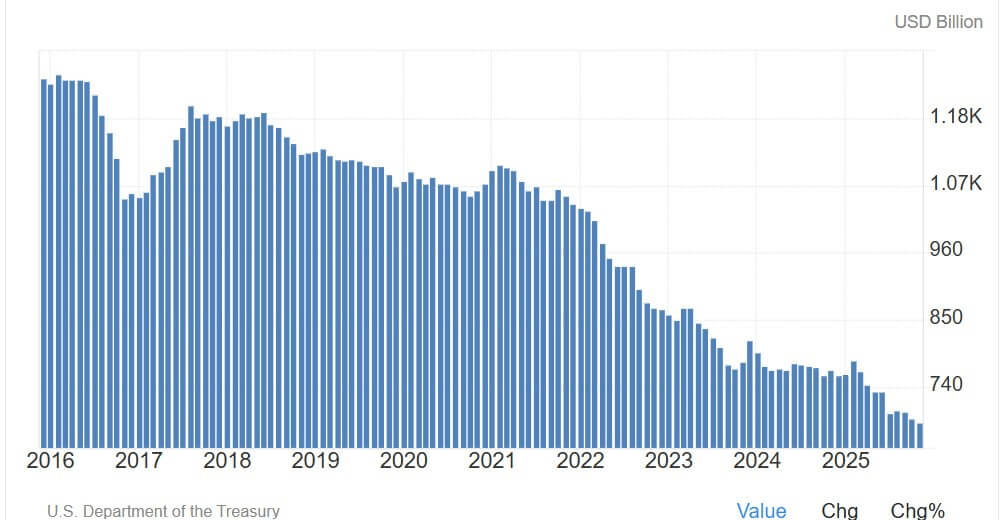
👉 Clear message: demand from China is gradually weakening.
🔷 Why is this important for Bitcoin?
China itself is not large enough to 'crash' the nearly 29 trillion USD U.S. bond market.
But:
If foreign buyers withdraw
yields will have to rise to attract new capital
this tightens financial conditions
And that is precisely the environment where high beta assets like crypto often face disadvantages
🔷 The risk is not in the yield level but in the speed of increase
The 10-year yield is currently around 4.2% – not a crisis yet.
However, if a lack of buyers occurs, the surge could become uncontrollable, triggering:
reducing leverage in the interest rate market
pressure on stocks
and the sell-off spills over into crypto
Some studies indicate that large-scale foreign capital outflows could push yields up by 25–100 basis points in a short time.
🔷 Key variable: real yield
After 2020, $BTC often traded as a liquidity-sensitive asset.
Currently, the 10-year TIPS yield is around 1.9%, meaning the opportunity cost of holding Bitcoin is higher.
Even in the absence of a crisis, moderate tightening is enough to make the market hesitate.
🔷 Scenarios traders are watching
1️⃣ Gradual orderly reduction
Holdings decrease due to maturities, yields rise slightly → pressure on crypto at moderate levels.
2️⃣ Strong repricing of term premium
Real yields rise → risk appetite weakens → $BTC is easily sold.
3️⃣ Liquidity shock
Rapid sell-offs cause strong dumps, but the possibility of policy intervention afterward.
4️⃣ Stablecoins absorb part of it
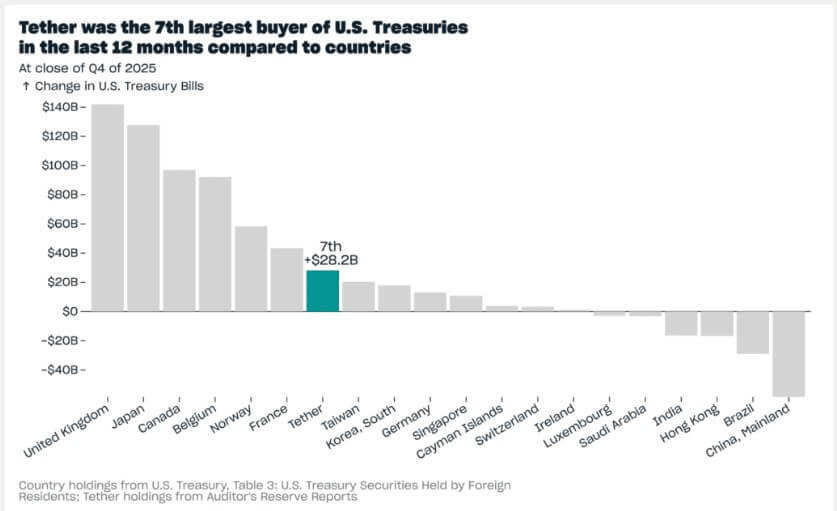
Stablecoin issuers like Tether are now significant buyers of Treasury bills, which could help fill the demand gap.
🔷 The reflective aspect that the crypto community always remembers
If yields rise to a level that threatens the stability of the bond market, policymakers could very well deploy liquidity support tools.
In previous stages, the initial sharp decline of Bitcoin often set the stage for a recovery phase when money returns to the system.
Currently, the figure of 298 billion USD is not a definite sell signal.
But it is a reminder that:
⚠️ USD liquidity is becoming more fragile,
and $BTC will be the assets that react fastest if any cracks appear.