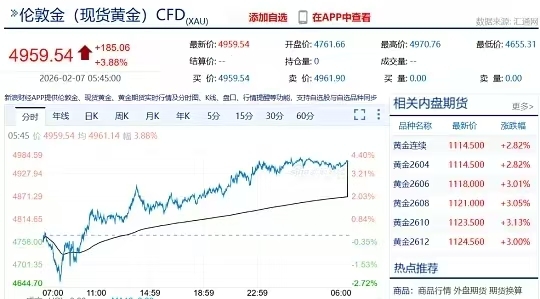
A warning to gold holders, the ultimate hunt by the dollar against gold may have already begun; this is the final chapter of a historical script, the 'patricide' of the dollar that is half a century late.

Currently, gold is surging, shaking the foundation of dollar hegemony, as global capital abandons U.S. Treasuries to frantically buy gold. Meanwhile, the U.S. Treasury will face $6.5 trillion in maturing debt in June 2026, needing to suppress gold prices and boost Treasury bonds before the end of May.

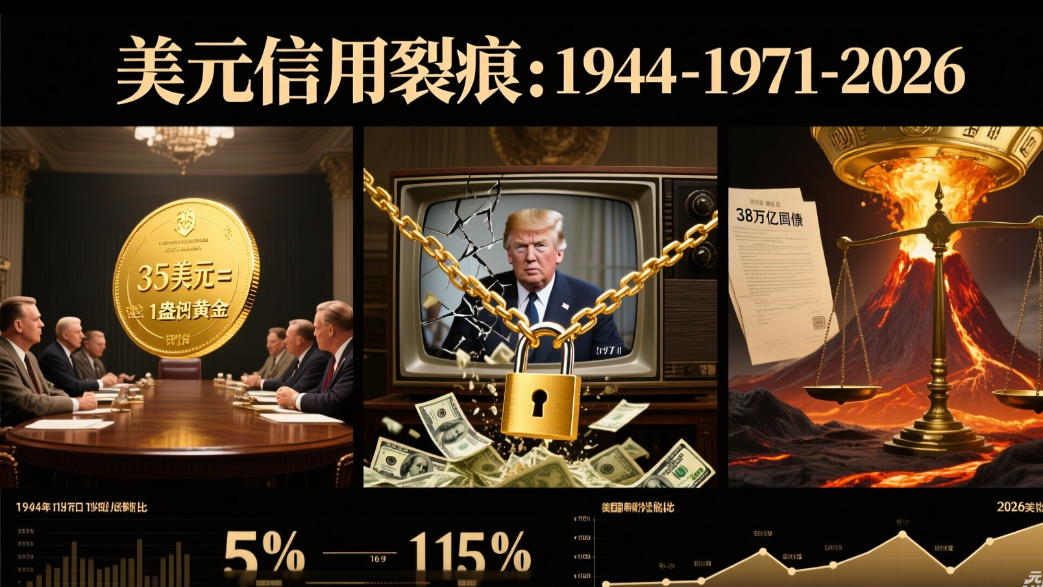
Tracing back to history, the Bretton Woods system bound the U.S. dollar to gold at $35 an ounce. In 1971, the dollar decoupled from gold, leading to unrestrained money printing. The asset bubble crisis caused the share of U.S. manufacturing to drop from 51% to 15%. In 2026, the situation reversed, and under Trump's tariff impact, global capital abandoned U.S. Treasuries to buy gold. U.S. national debt exceeded $38 trillion, with interest payments surpassing $1 trillion, revealing cracks in the dollar's credibility.
In response to the refinancing of national debt, the White House and Wall Street have launched a combination of measures, hyping up the nomination of a hawkish chairman, manipulating risk-averse sentiment, and raising margins, which has led to a frantic decline in gold futures. However, the physical gold market is disconnected from futures, with global central banks continuously increasing their holdings. The U.S. can manipulate futures prices, but it cannot change the fundamental tight supply and demand of physical gold.

In the short term, gold prices will be manipulated by capital, but as long as the U.S. dollar credit crisis remains unresolved and global dollarization continues, the long-term value of gold will not change. Futures are Wall Street's casino, while physical gold is the hard currency; the U.S. dollar cannot sever the fundamental value of gold.