Here are the main factors to keep in mind:
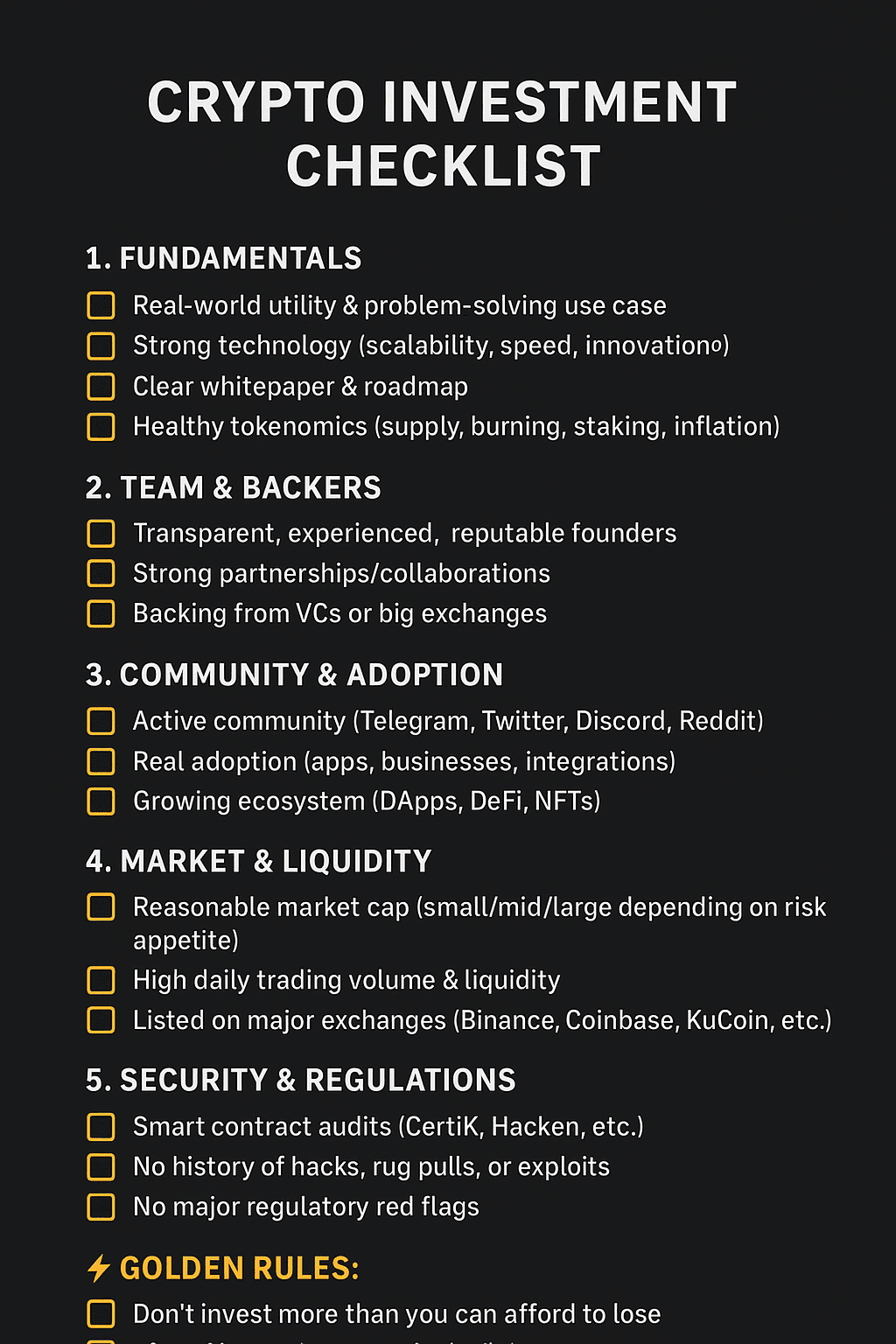
1. Fundamentals of the Project
Utility & Use Case → Does the project solve a real-world problem? Or is it just hype?
Technology & Innovation → Is it offering something new (scalability, speed, privacy, interoperability)?
Whitepaper & Roadmap → Transparent plan, clear goals, realistic timelines.
Tokenomics → Supply limit, inflation rate, burn mechanisms, staking rewards, distribution.
2. Team & Backers
Founders/Developers → Are they reputable, experienced, doxxed (known identity) or anonymous?
Partnerships → Are there strong institutional, business, or blockchain partnerships?
VC / Investor Support → Big venture capital or exchange support adds credibility.
3. Community & Adoption
Community Size → Active users on Telegram, Discord, X (Twitter), Reddit.
Adoption → Are businesses, apps, or people actually using it?
Ecosystem Growth → DApps, NFTs, DeFi, integrations.
4. Market & Liquidity
Market Cap & Circulating Supply → Higher cap = safer, lower cap = riskier but higher reward.
Volume & Liquidity → Can you buy/sell easily without big price impact?
Exchange Listings → Is it listed on big exchanges (Binance, Coinbase) or only small ones?
5. Security & Regulations
Audit → Has the smart contract been audited (CertiK, Hacken, etc.)?
Security Track Record → Any hacks, rug pulls, exploits?
Regulation Risks → Is the project at risk of being banned/targeted legally?
6. Market Timing & Sentiment
BTC Dominance → Altcoins usually move when BTC is stable or bullish.
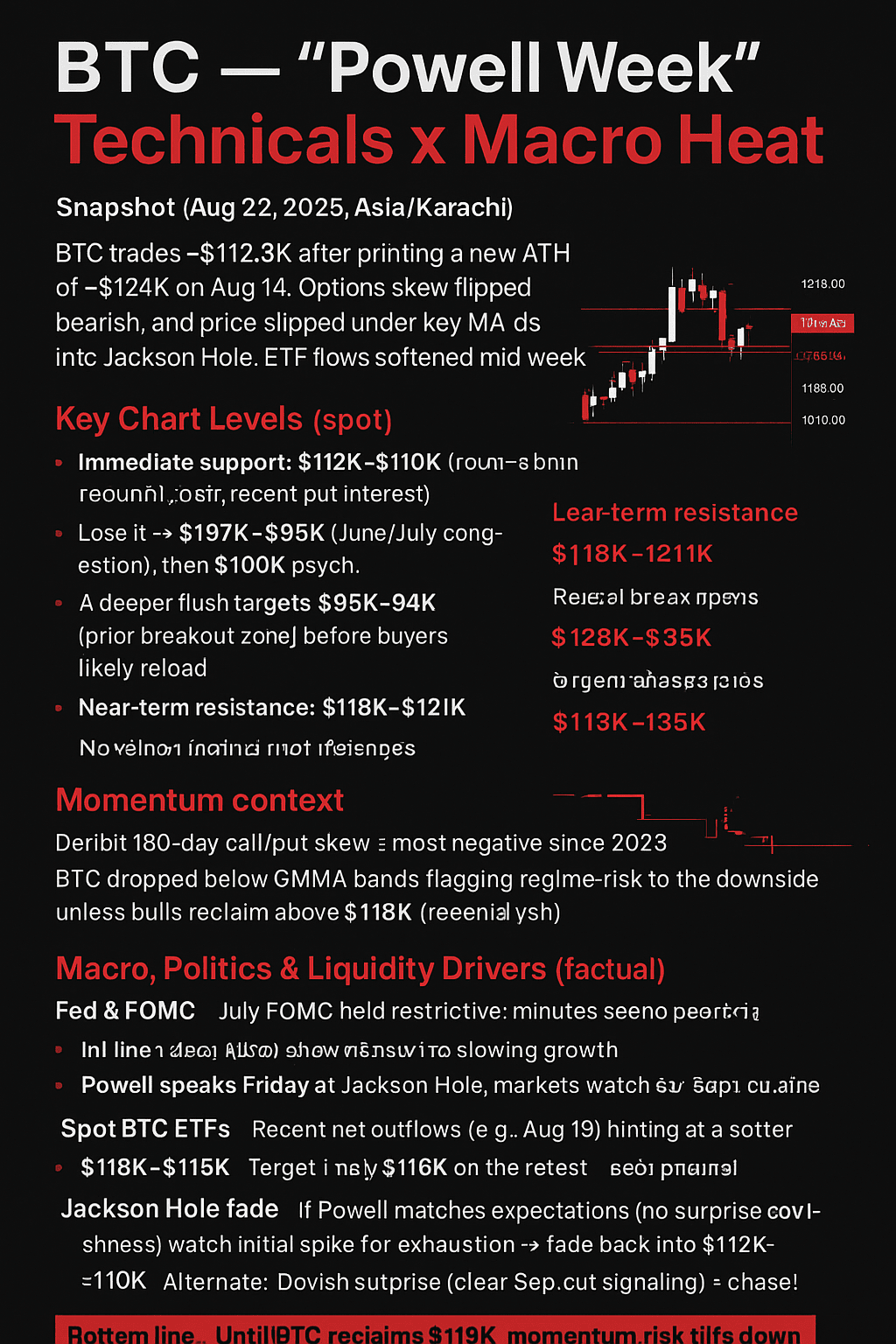
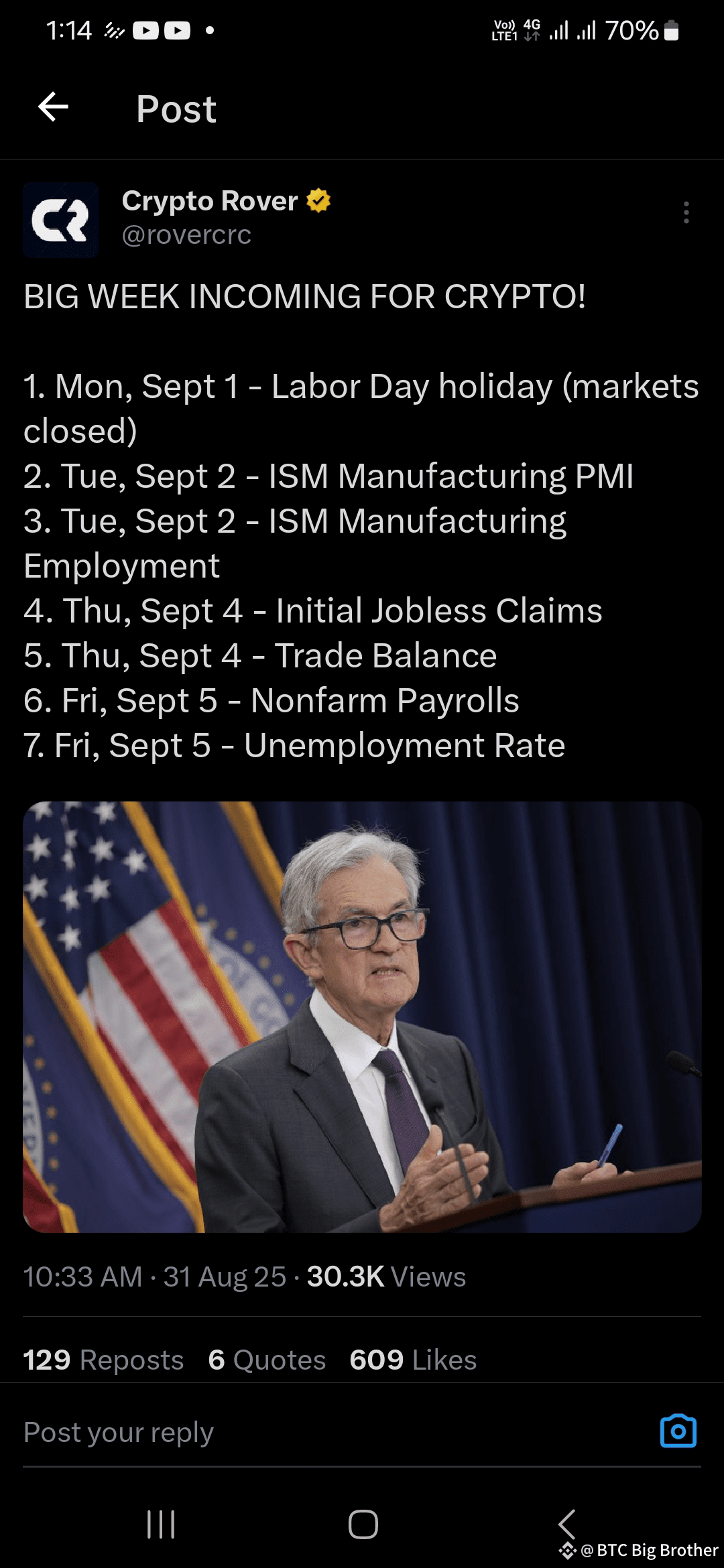
Global News/Events → Fed decisions, regulations, ETFs, adoption news.
Hype Cycles → Social media trends, influencers, news pump.
✅ Golden Rule:
Never invest just because of hype. Always balance:
Low-risk coins (BTC, ETH, top 10) for stability.
Mid-risk coins (SOL, ADA, AVAX, etc.) for growth.
High-risk small caps only with money you can afford to lose.